This page documents the traffic signals made by Horni Signal Manufacturing Corp. of Newark, NJ and New York, NY. Horni manufactured all sorts of mechanical equipment for civilian traffic control, fire safety, and for military applications from 1924 to 1947.
The Type 250 Signal (mid 1920s)
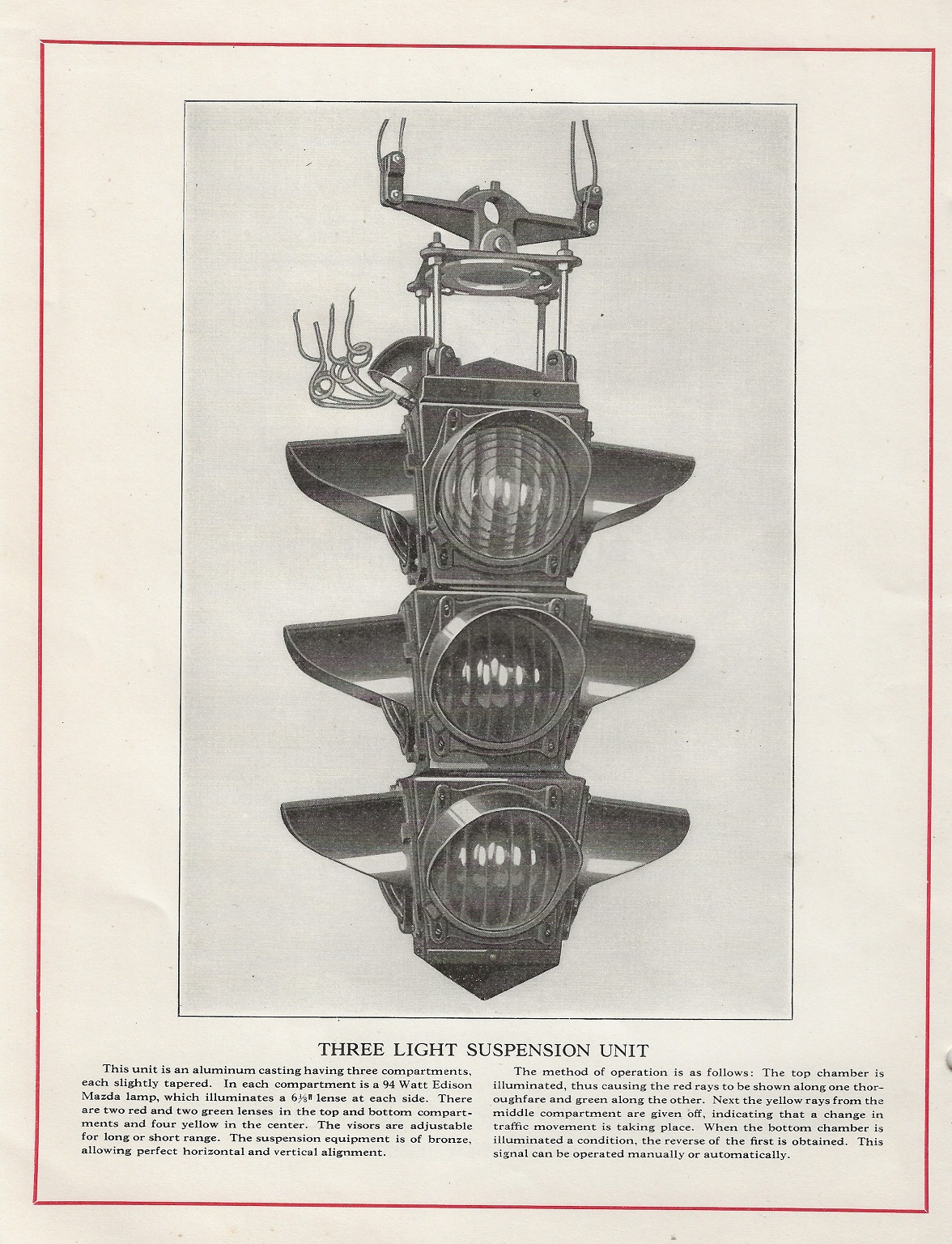
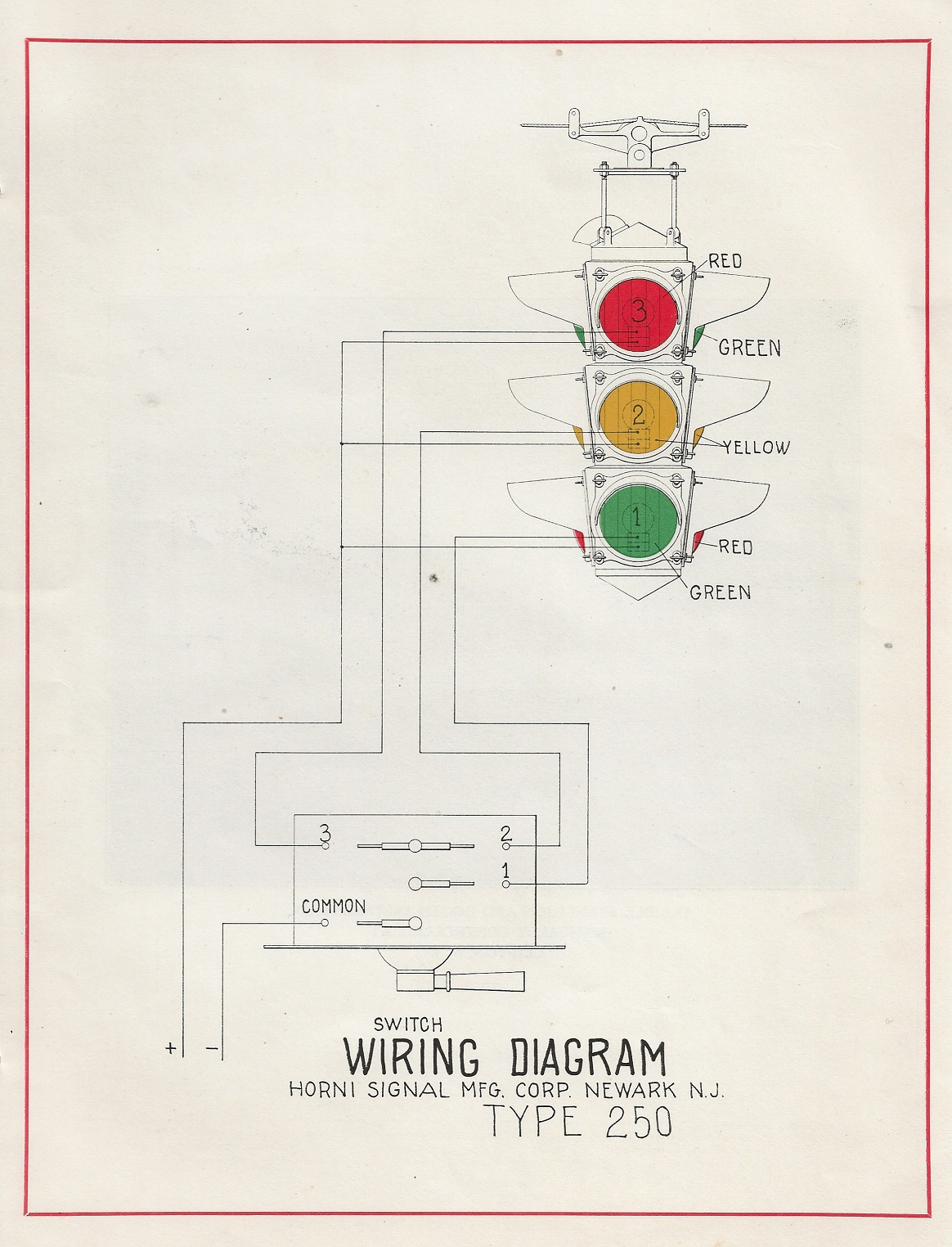
The Type 250 had tapered single-bulb 4-way sections with 6 3/8″ Fresnel-type lenses.
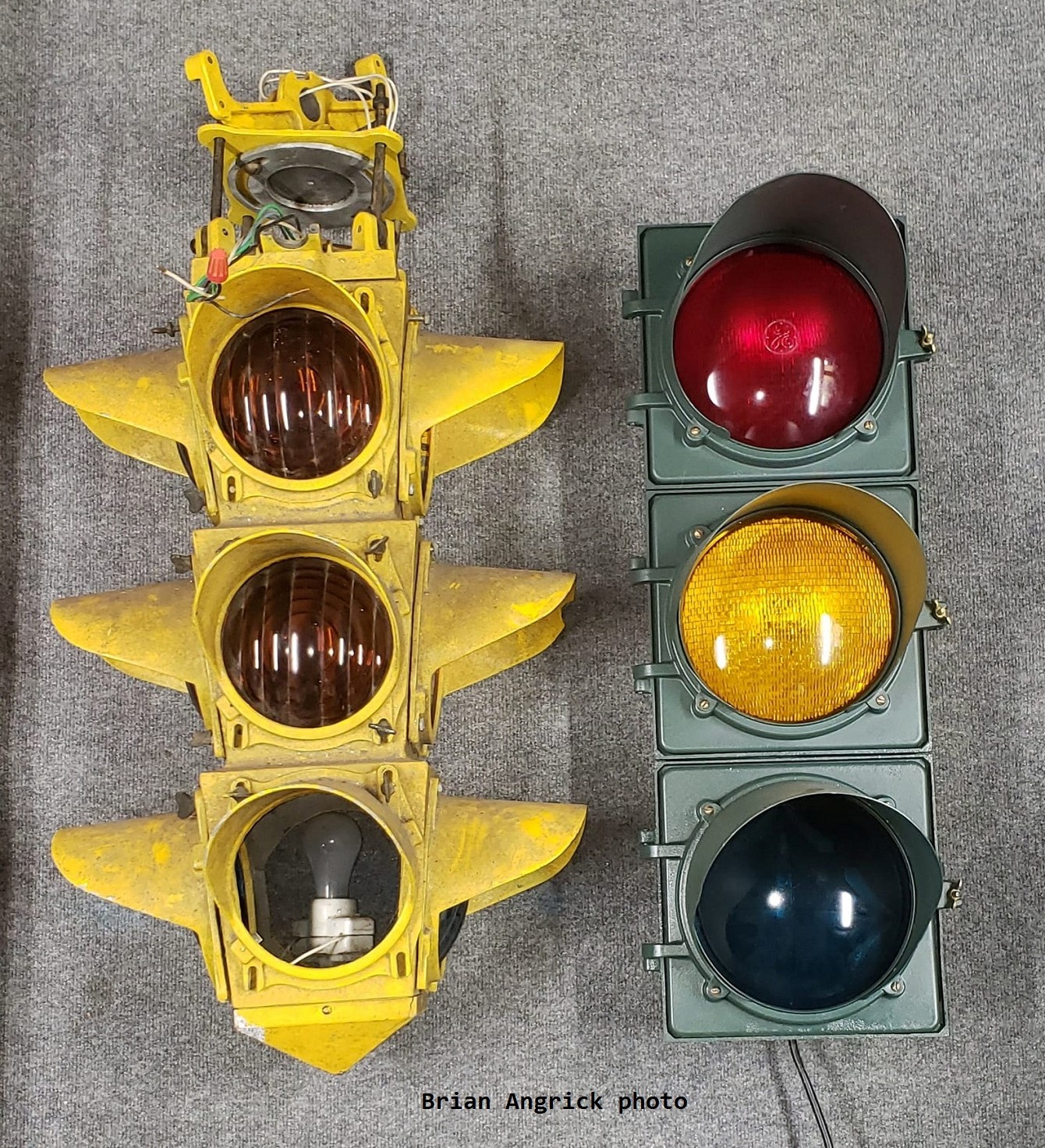
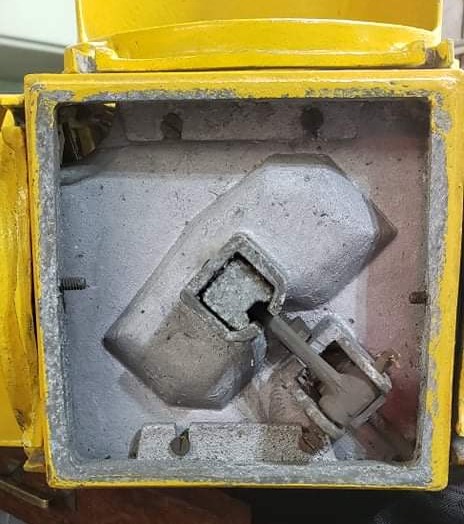
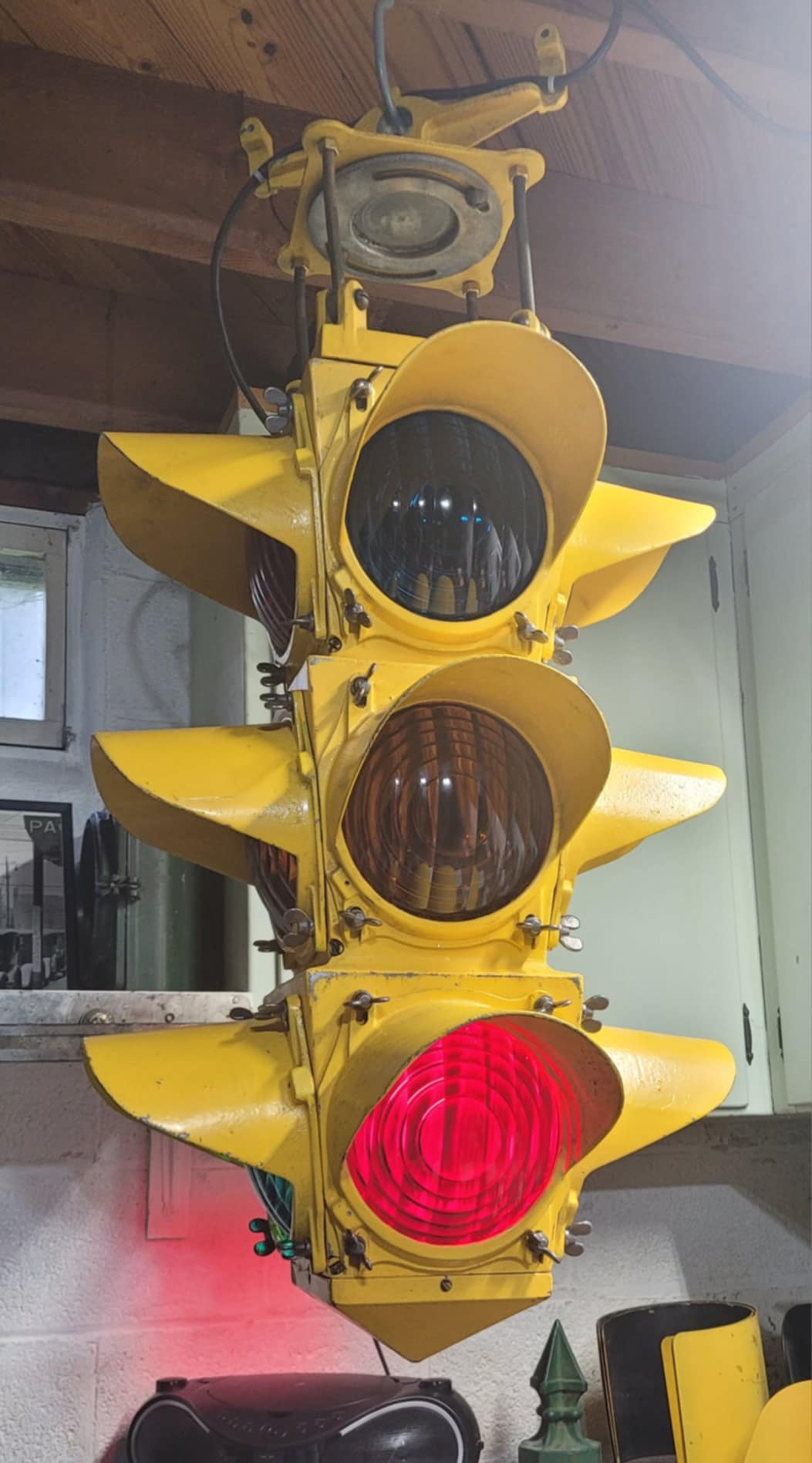
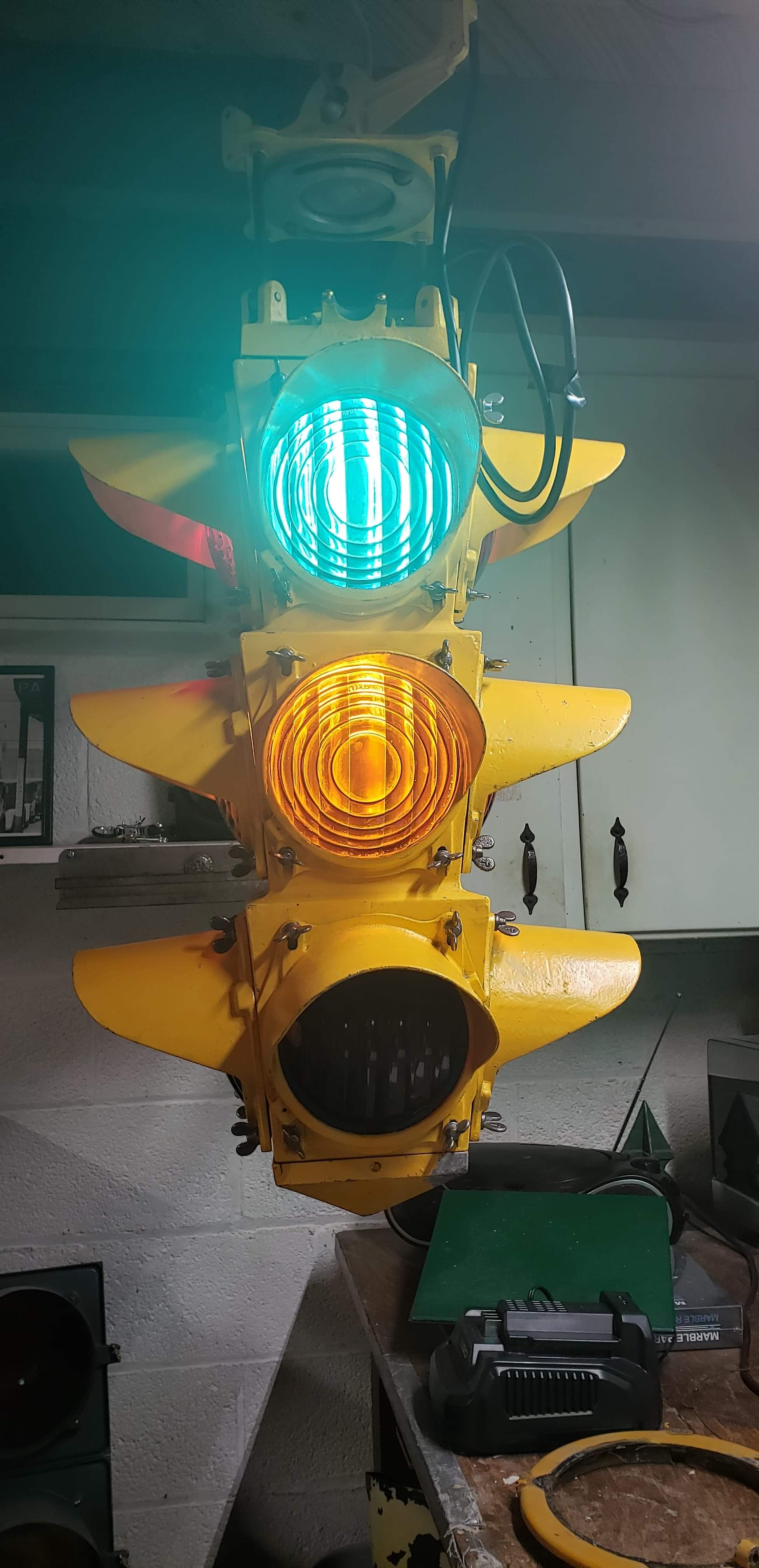
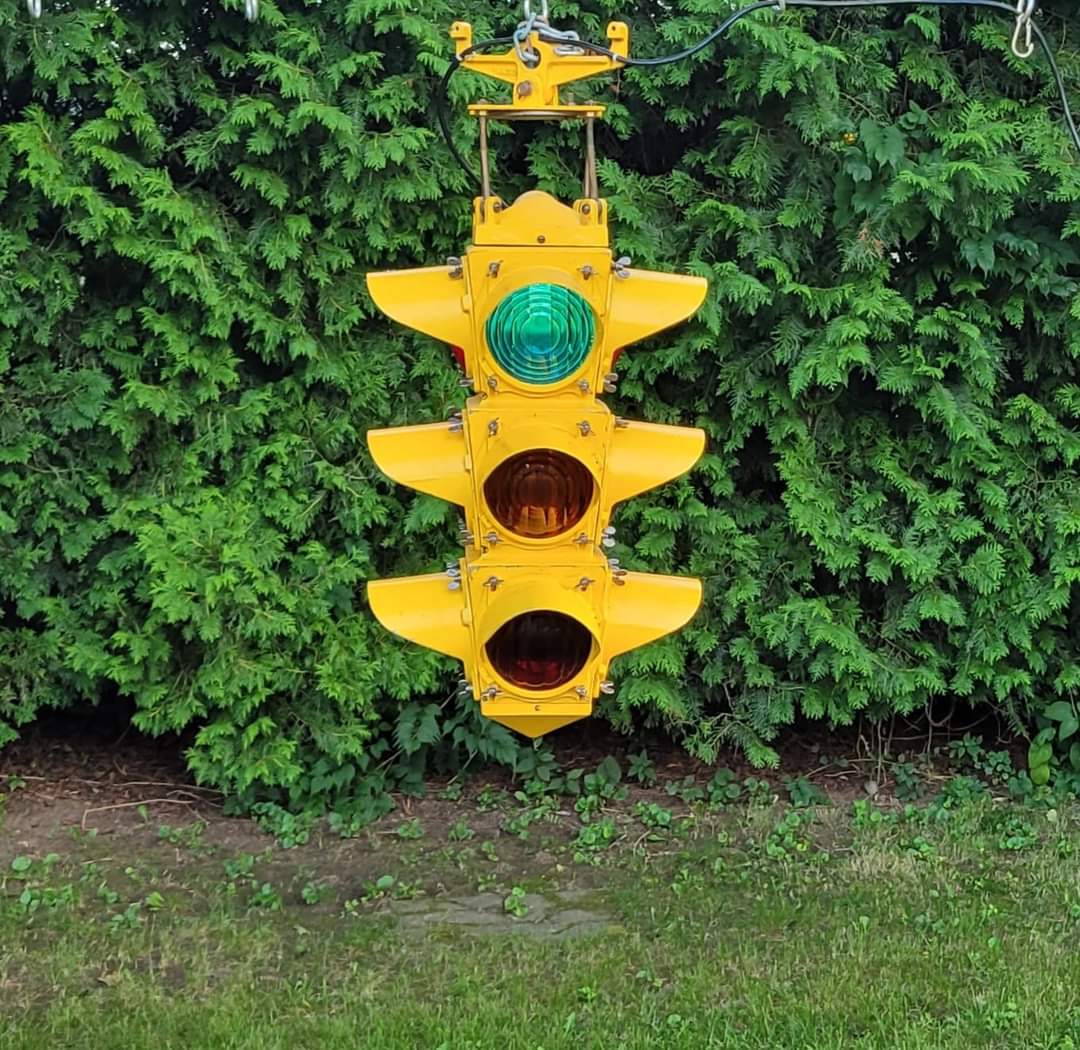
New York State collector Brian Angrick has found the only Horni Type 250 signal I know of in existence. Above you can see it’s small size in relation to an 8″ lens signal. The second photo above shows the underside of the floor of one of the sections where the height of the lamp socket can be adjusted by way of a threaded rod that extends through the corner of the housing.. Brian was able to get one of 3 missing doors cast at a foundry before it closed. He got the other two 3-D printed and is looking for a foundry to cast those. He is also still on the hunt for three red Corning Spredlite lenses to complete the light.
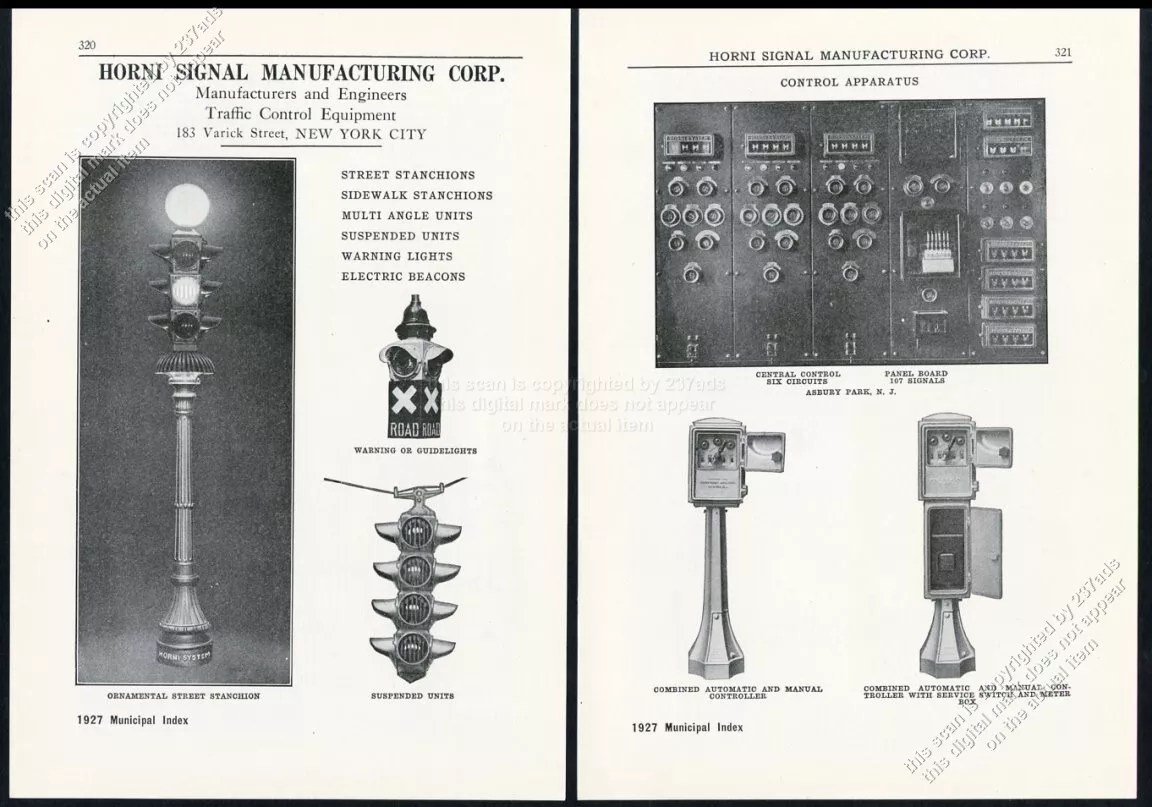
1927 trade ad featuring the Type 250 signal
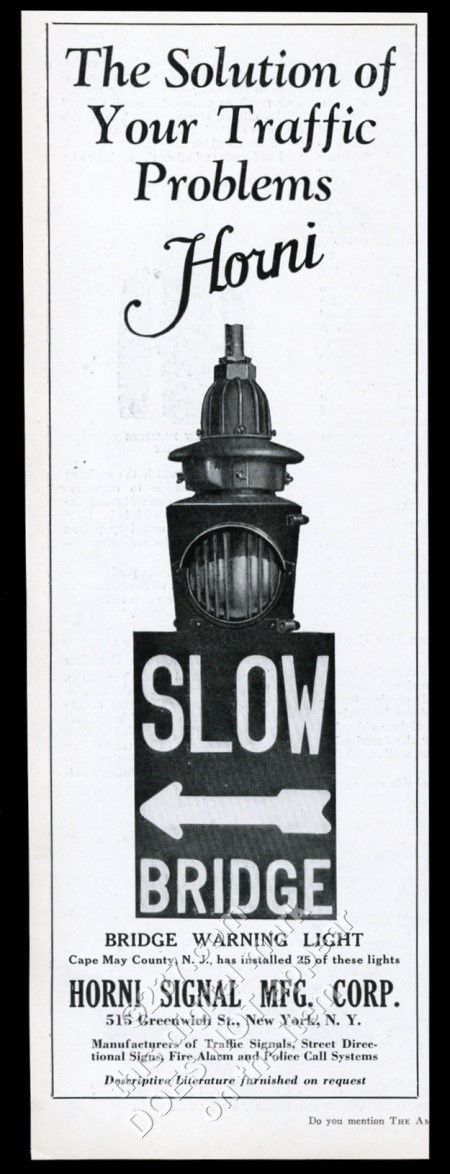
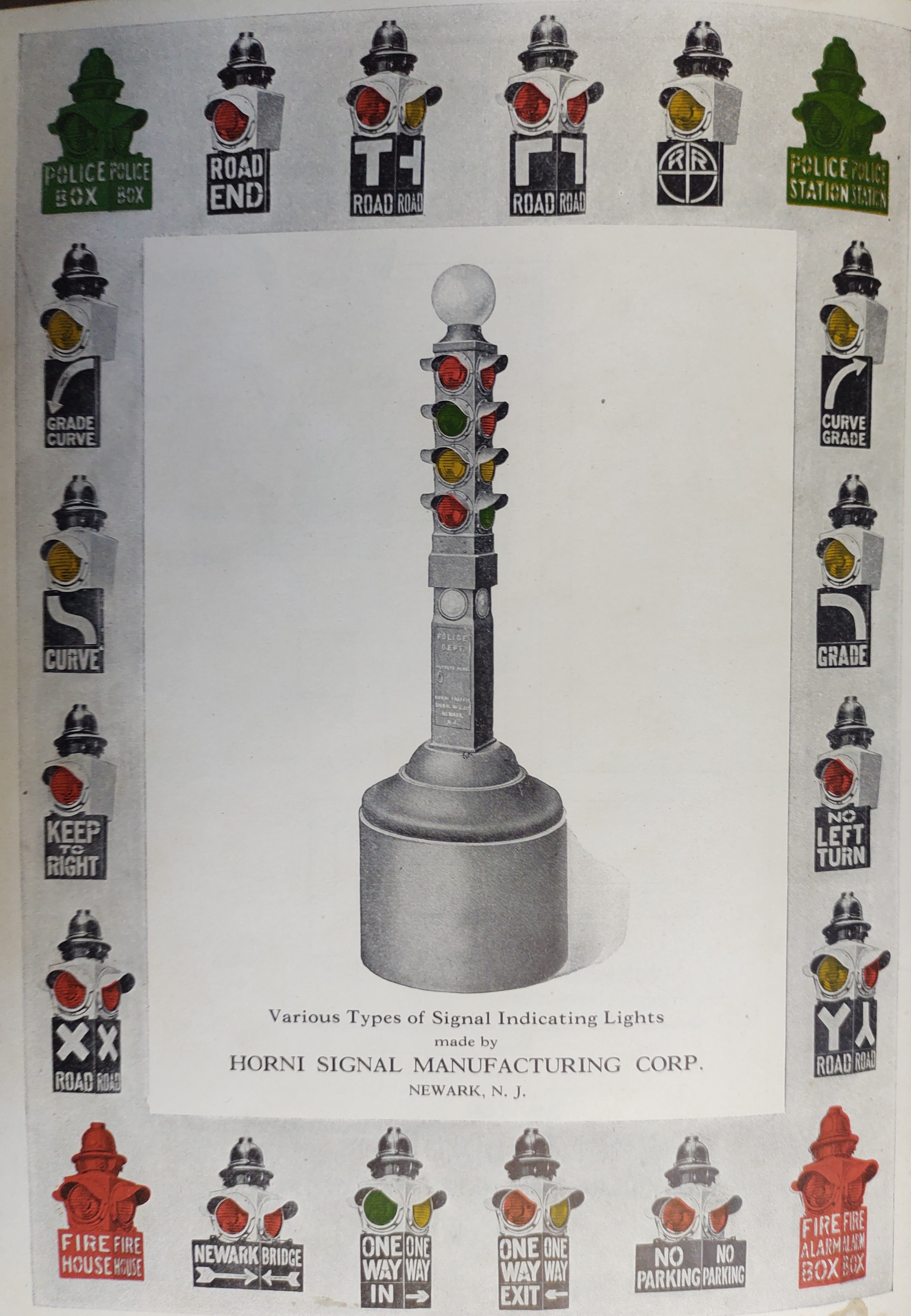
I am not sure if the single-section beacons in the drawings above were referred to as “Type 250” or not, but they are of a similar size and shape. The door/visors are certainly more “trimmed down”. The stanchion in the drawing on the right shows a 4-section stack with an accurate depiction of the lenses – the top section being red all-around, which I assume was used for a night time or ad-hoc all-way flashing STOP.
The Type 950 Signal (mid 1920s)
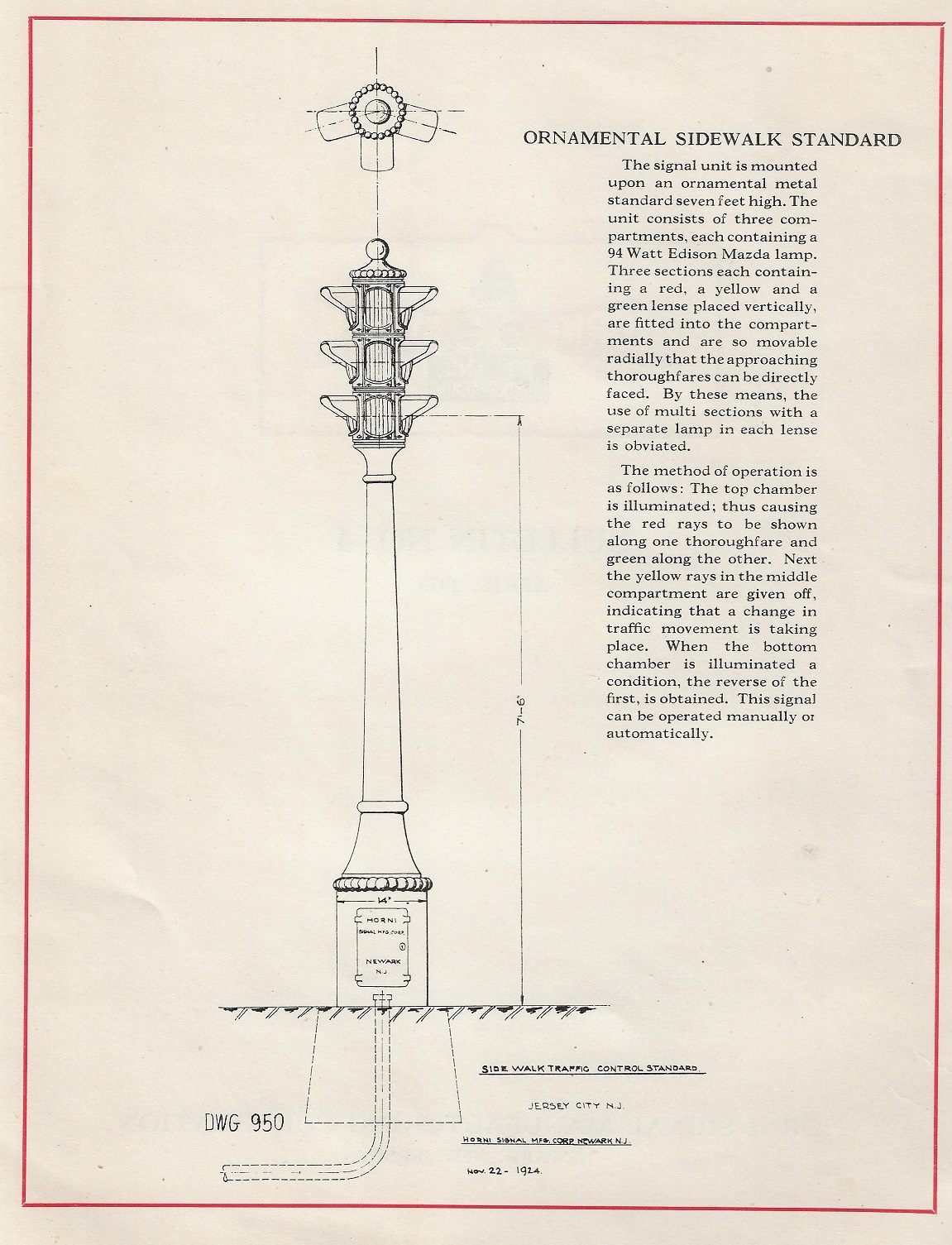
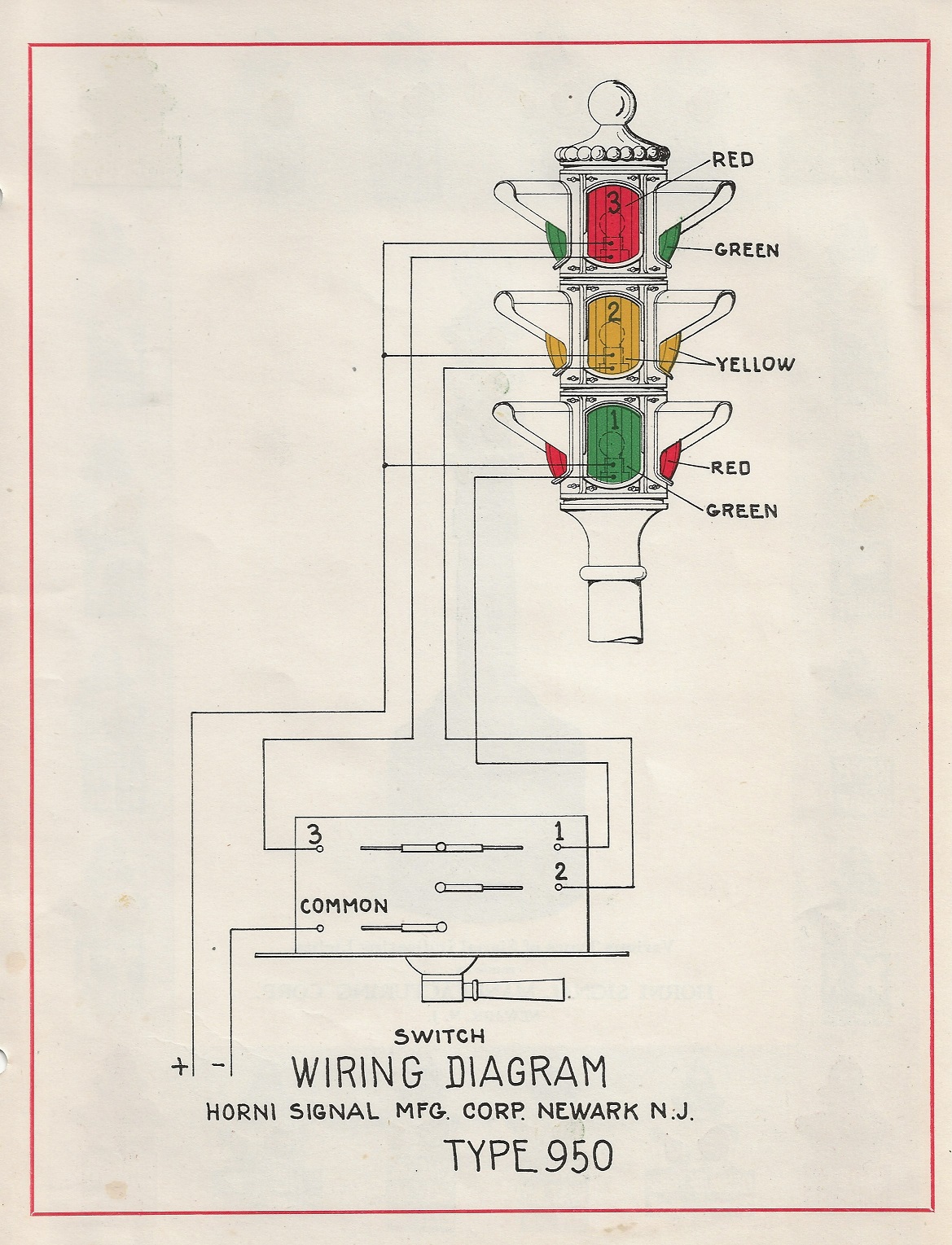
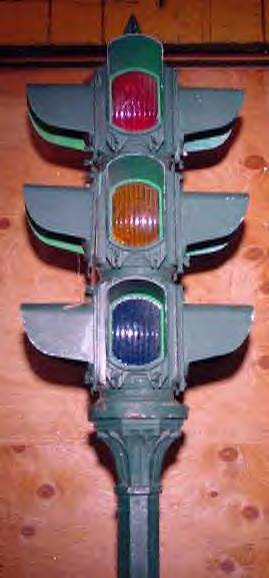
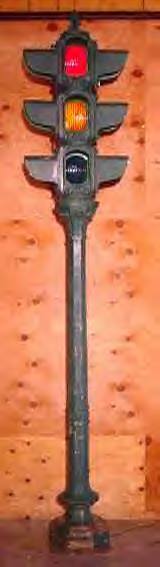
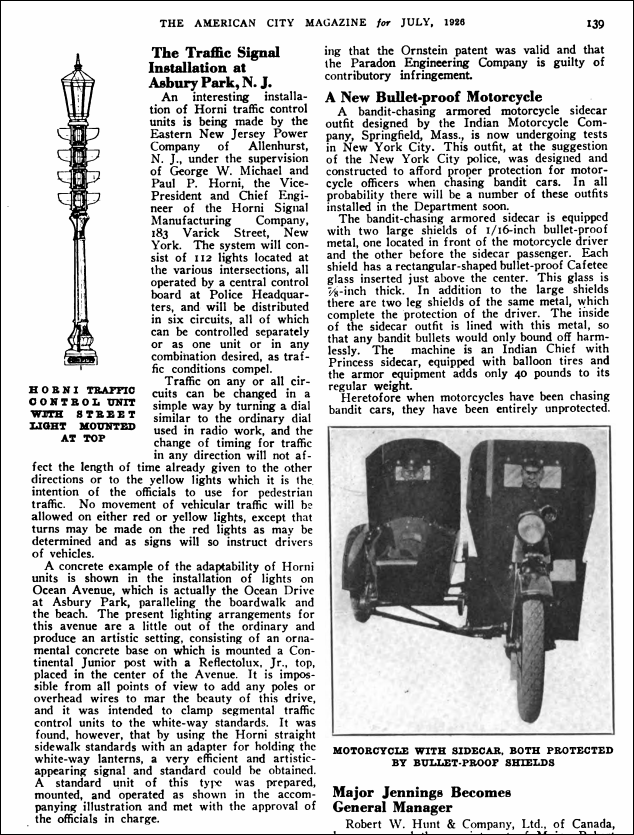
The Type 950 referred to an entire ornamental signal stanchion with a built-in multi-directional signal comprised of single-bulb sections and unusual, truncated Fresnel-type lenses. The Type 950 had a unique design that appeared like a fixed-face unit, but allowed for adjustable aim. This ornamental design filled a niche for scenic boulevards like Ocean Ave in Asbury Park.
The photos on the right, of what appear to be some variation of a Type 950, were saved from an eBay auction. I don’t recall how much it sold for
The Type 491 Signal (mid 1920s)
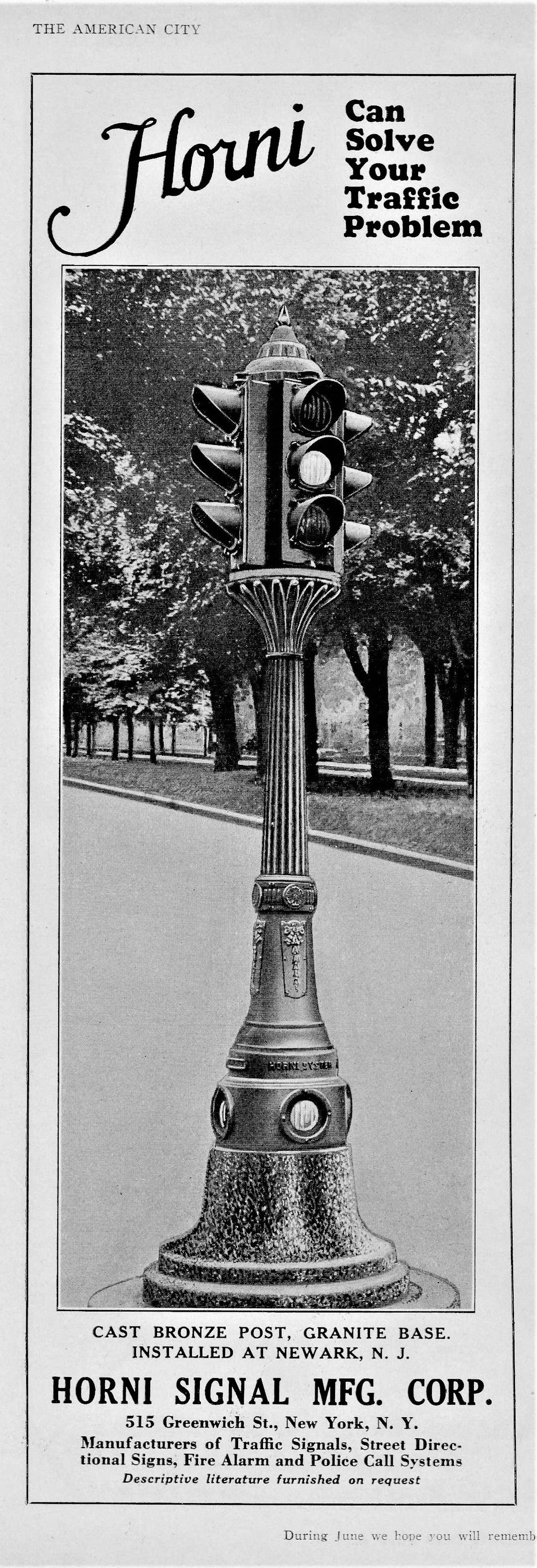
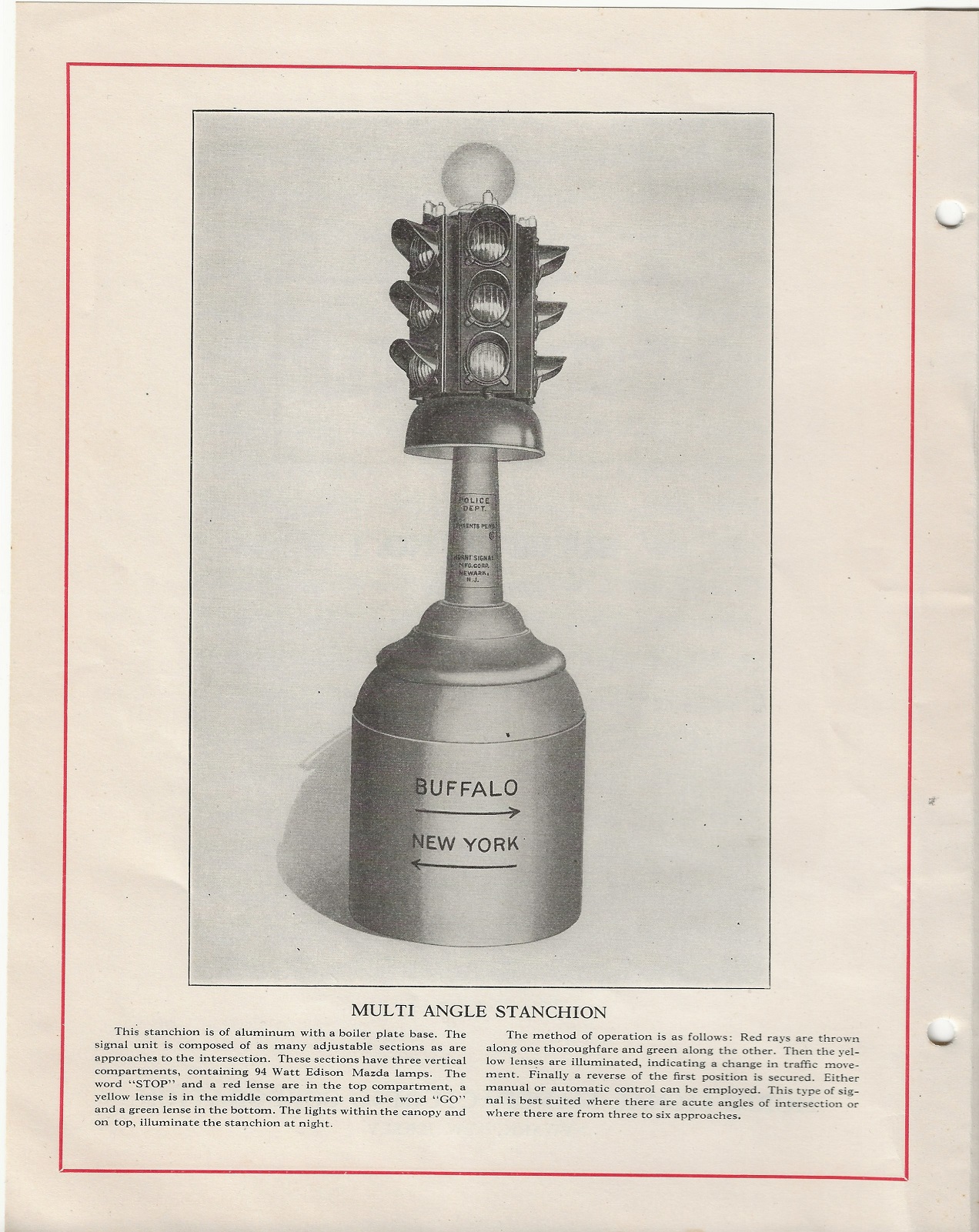
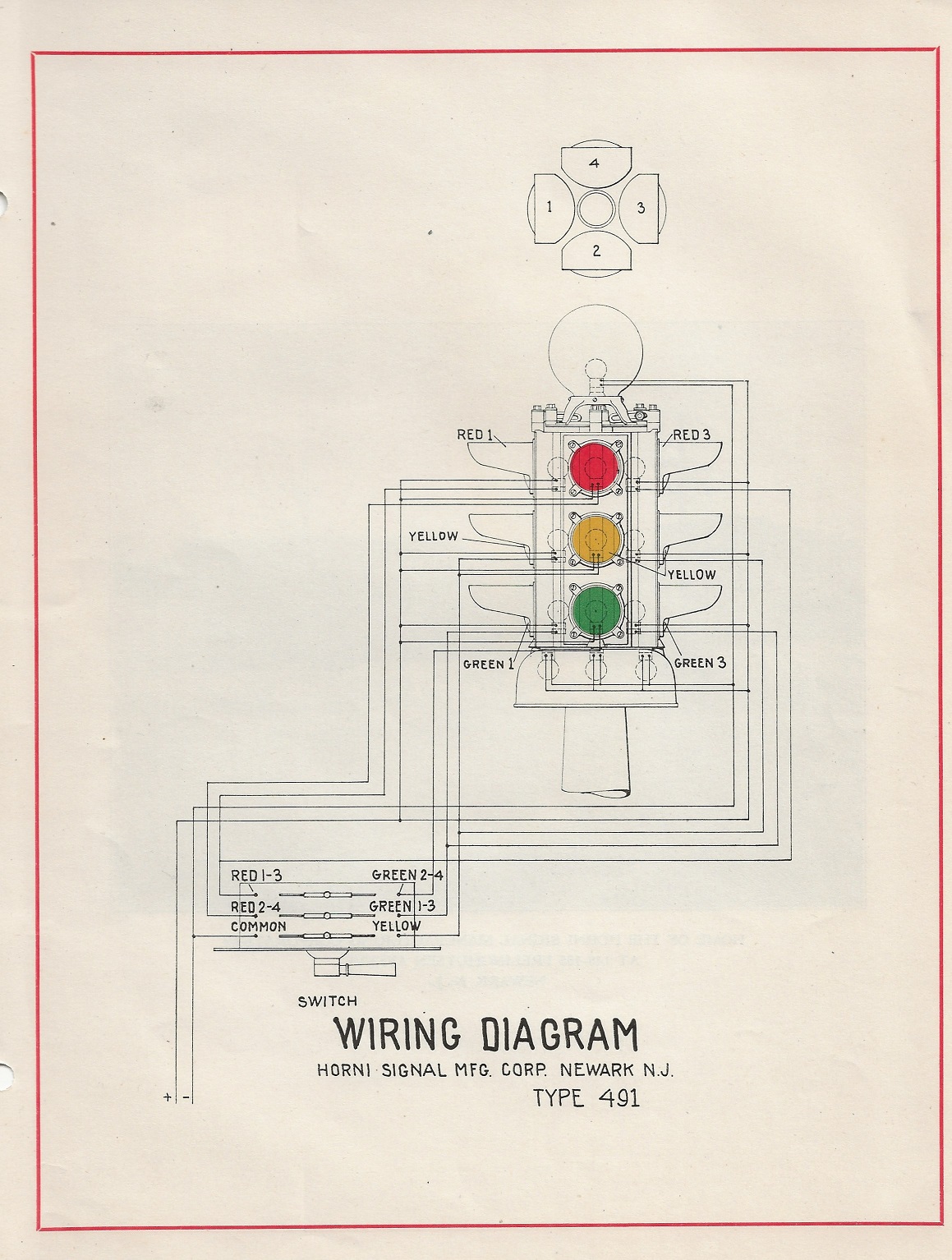
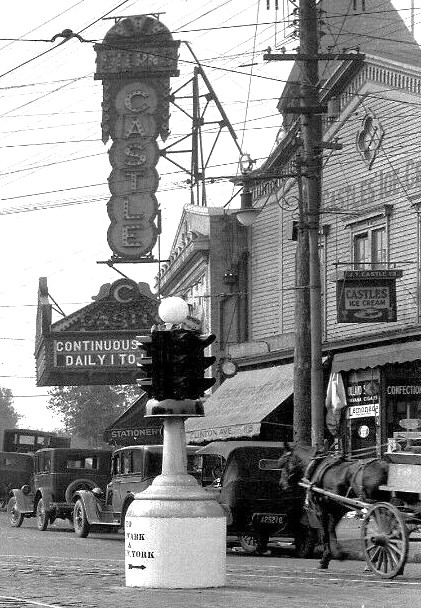
The Type 491 also refers to a stanchion set-up, but with adjustable heads which ostensibly could be attached to poles and masts without the stanchion. I am not sure of the lens size, but I believe they were the standard 8 3/8″ diameter. As with the other signals of this period, there lenses were Fresnel-type, with no reflector system behind them.
1928-1936: Corner-Hinged Signals, Solid Body
First Horni signals with reflectors – adjustables have a solid cast body
Re-branded as Ruleta in New York City
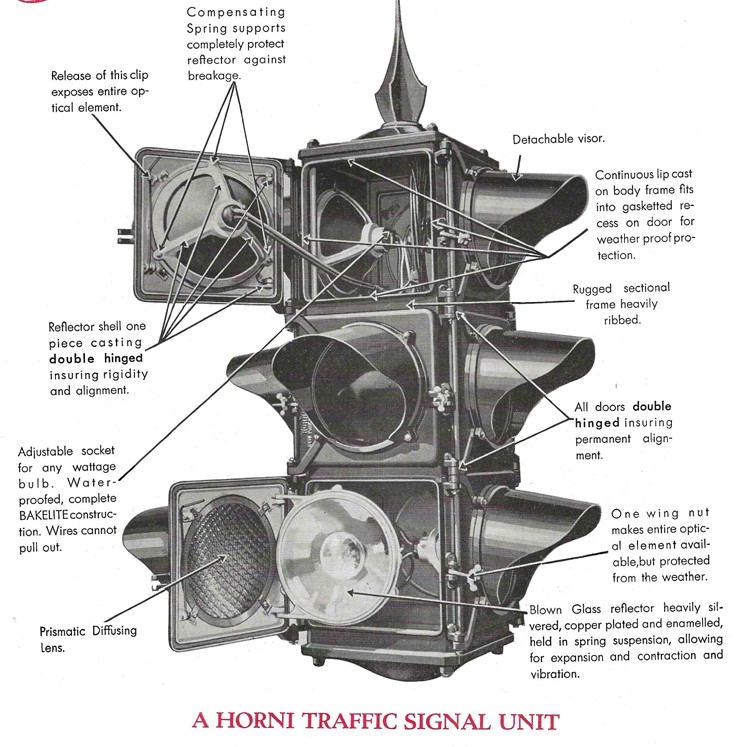

Around 1928, Horni offered new line of signals featuring 8″ lenses on hinged doors. These signals had a unique look with hinges located at the corners of the doors, and hinge bosses radiating diagonally from the lenses to the corners. Each lens was illuminated by its own light bulb centered in a glass reflector, thus ending the era of single-bulb 4-way sections and the use of Fresnel lenses. The adjustable signals were cast with a solid, tub-shaped body.
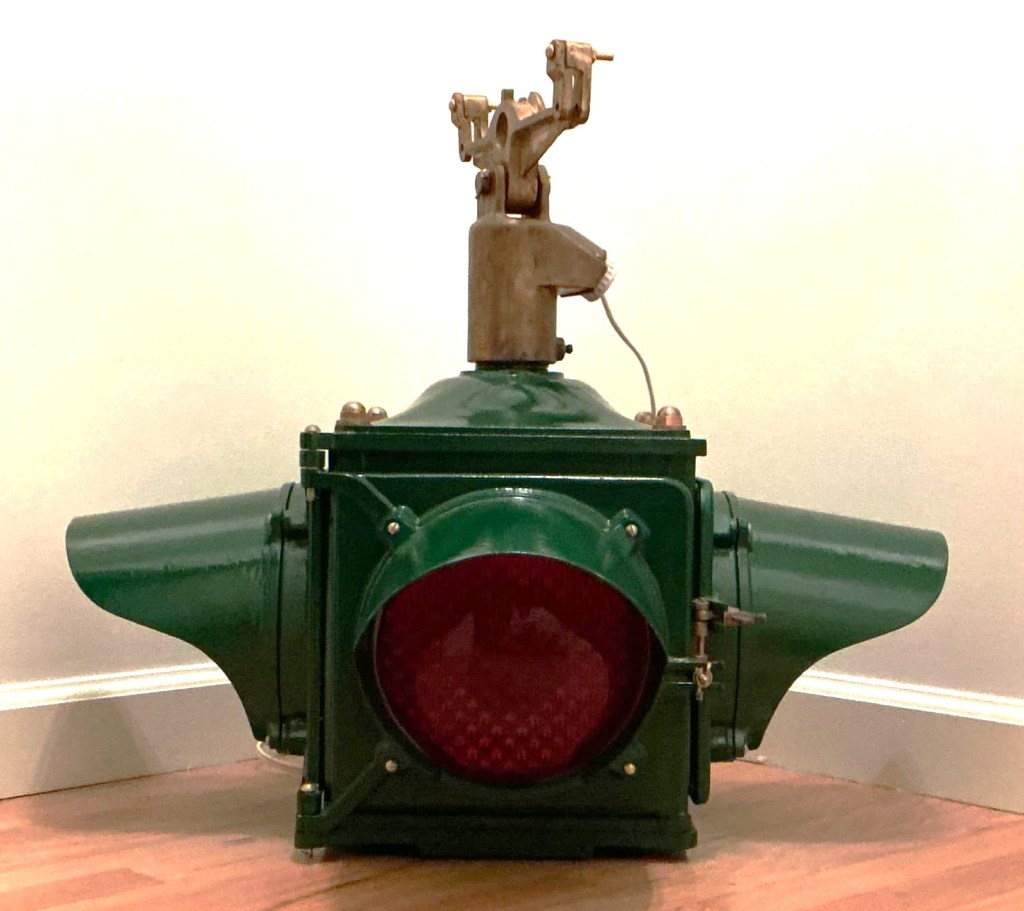

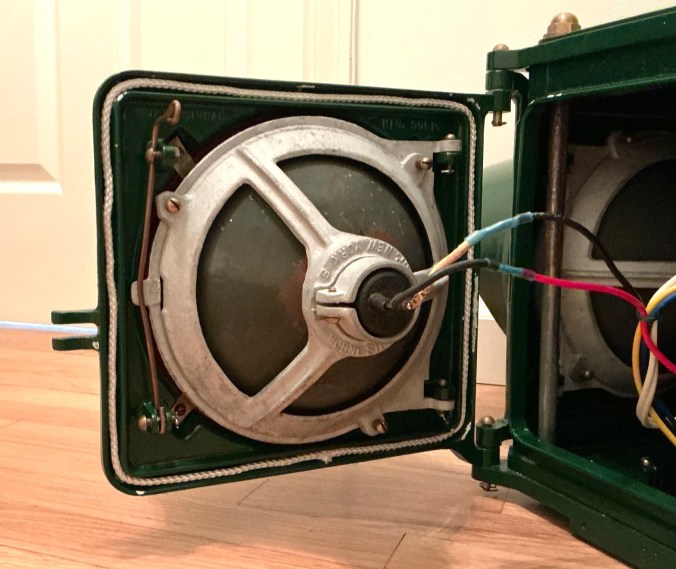
The 4-way Horni beacon signal above was stored for years under a deck in northern New Jersey and was recently acquired by collector Kasey J in rather rough shape. Kasey and his Dad have done a lot of work to restore a number of beautiful pieces like this one. The brass hanger assembly makes this one extra special.
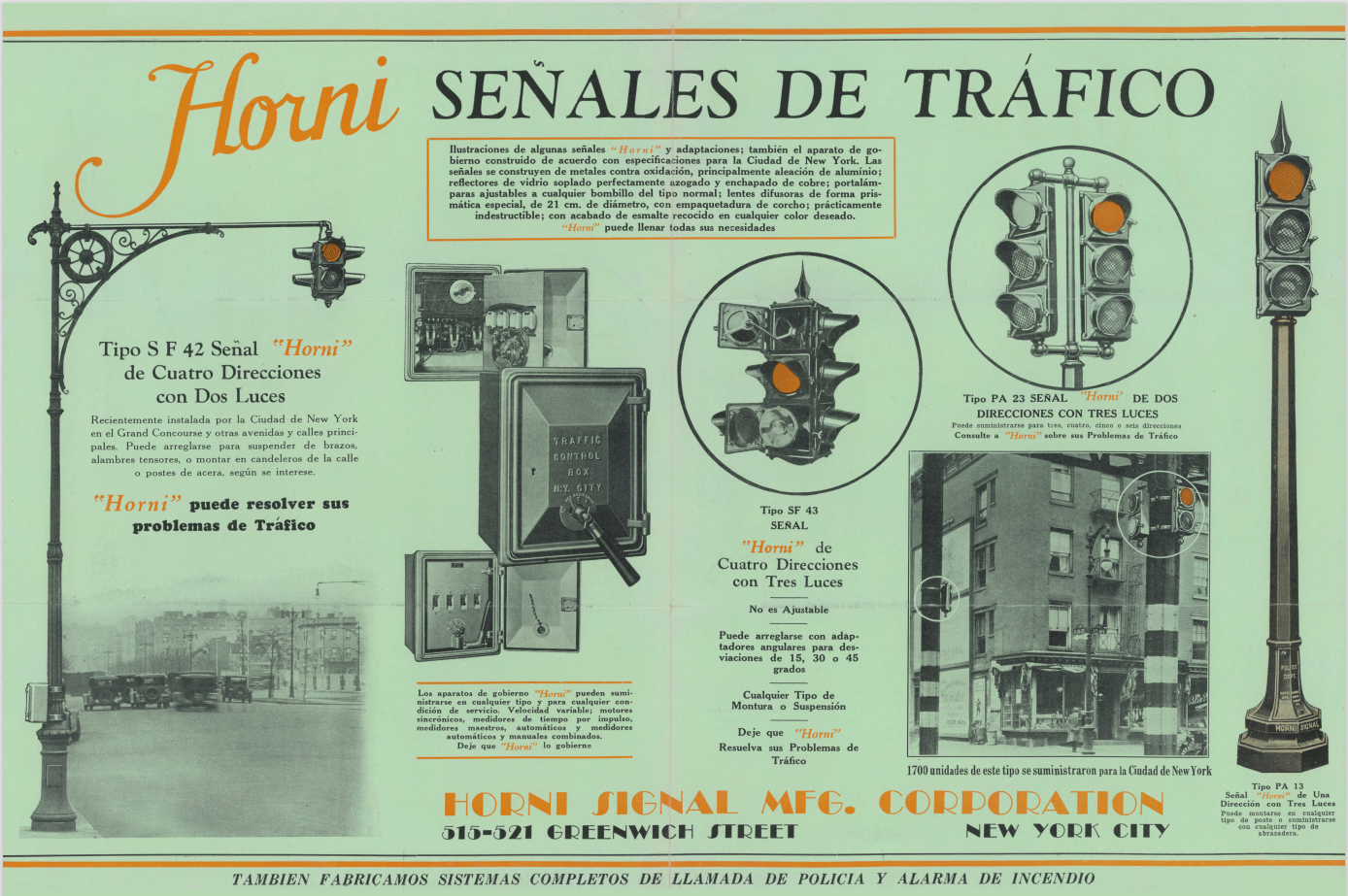
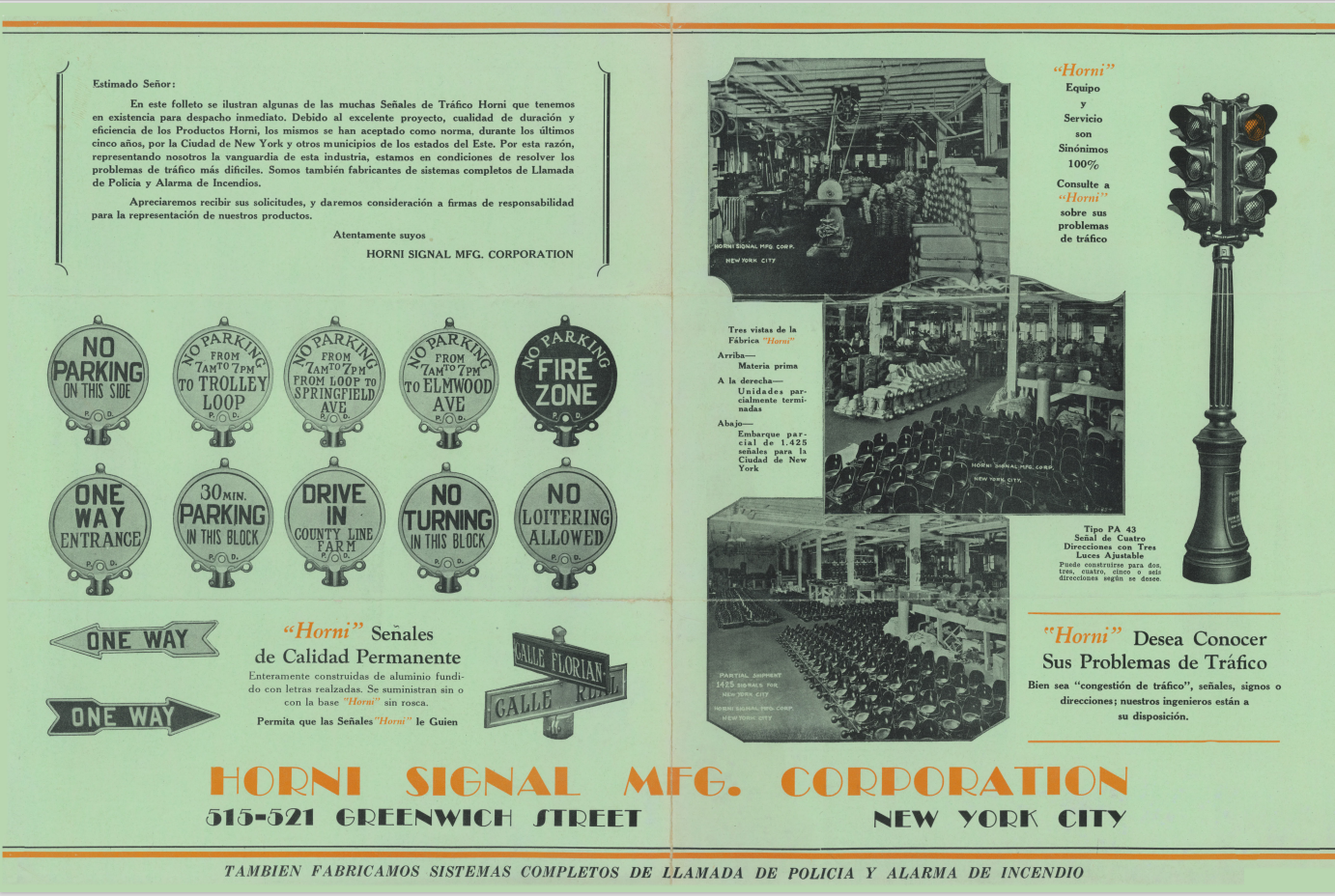
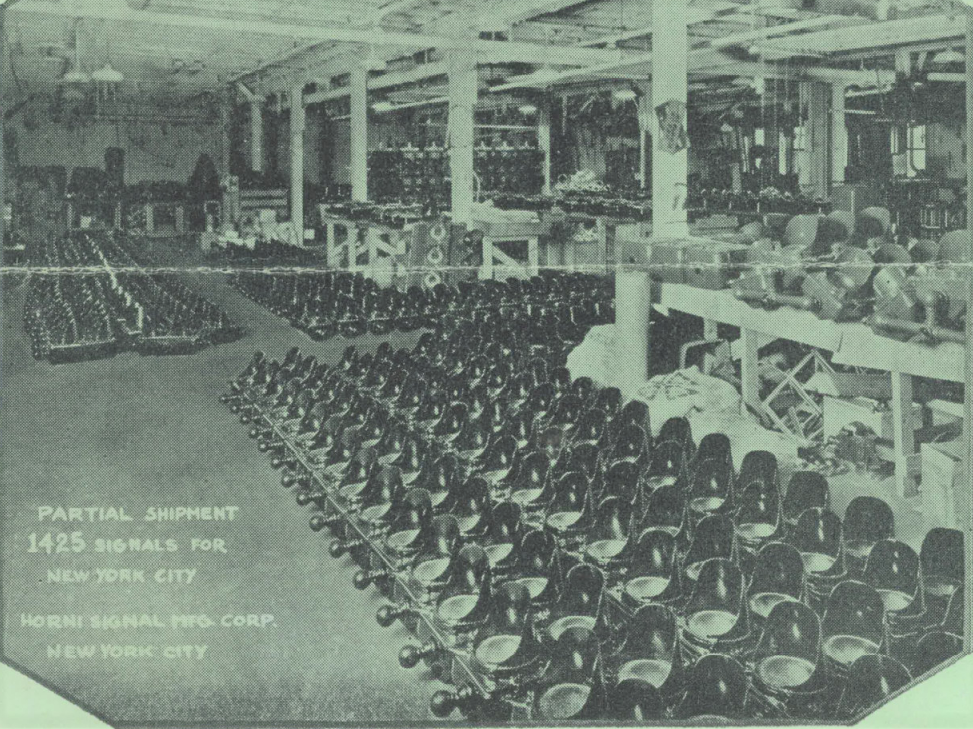
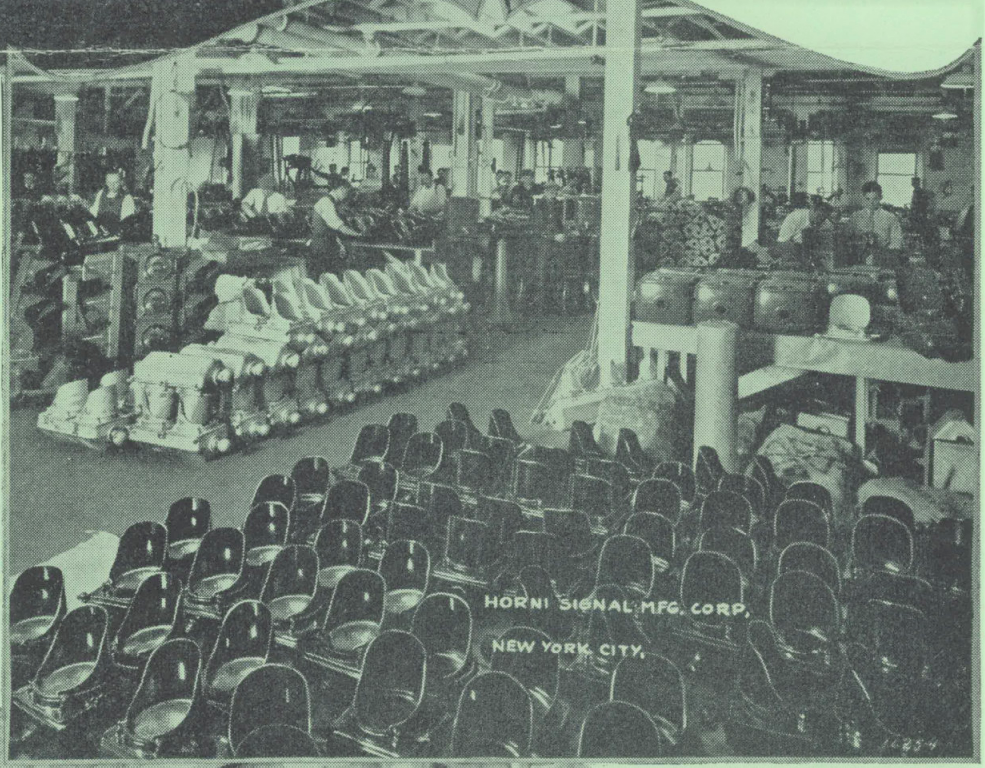
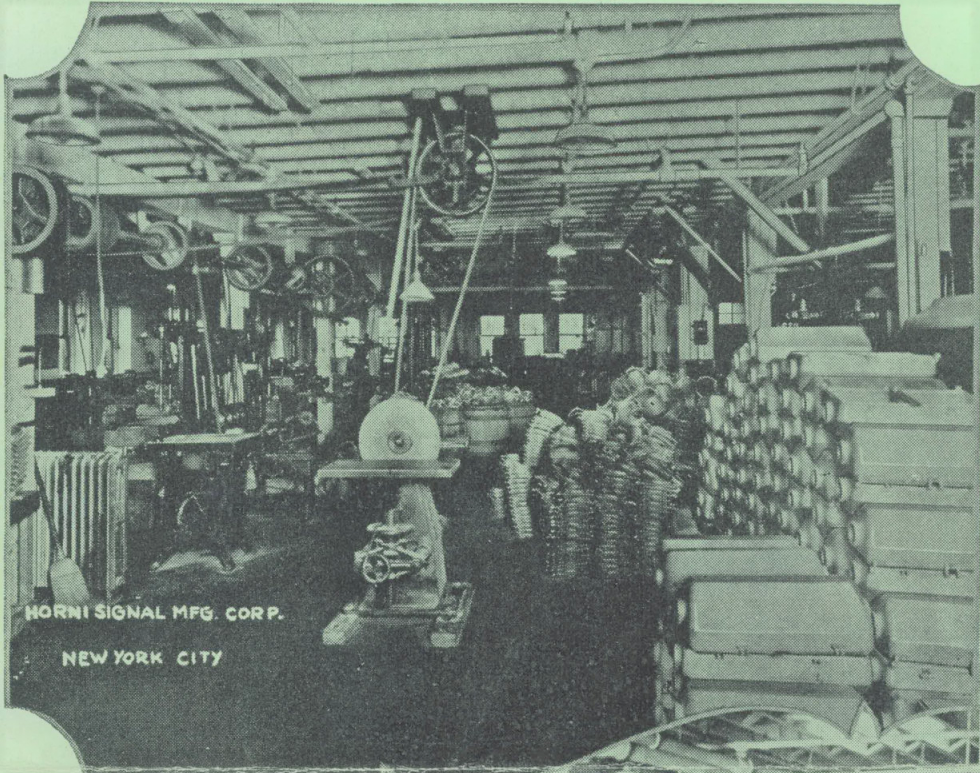
Corner-hinged Horni signals had a widespread distribution in the Northeastern US, and, as evidenced by the 1928 Spanish ad above, an international presence as well. The wonderful factory photos on the second page of the ad (detailed above) show some of the early 2-color Hornis ready for delivery to the City of New York. A big thank you to collector Brian Angrick for providing the scans of this fabulous ad!
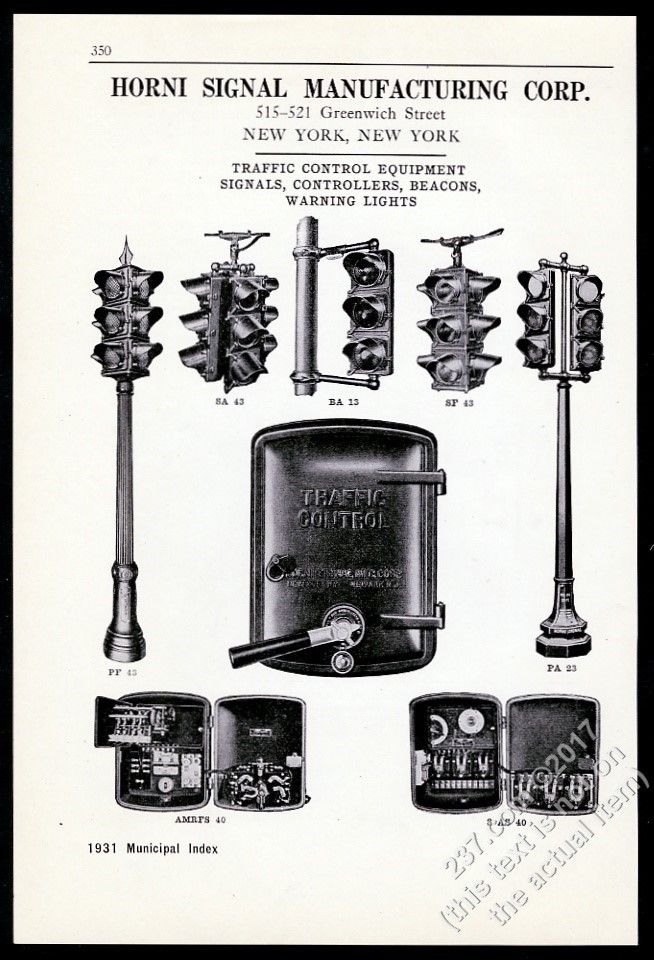
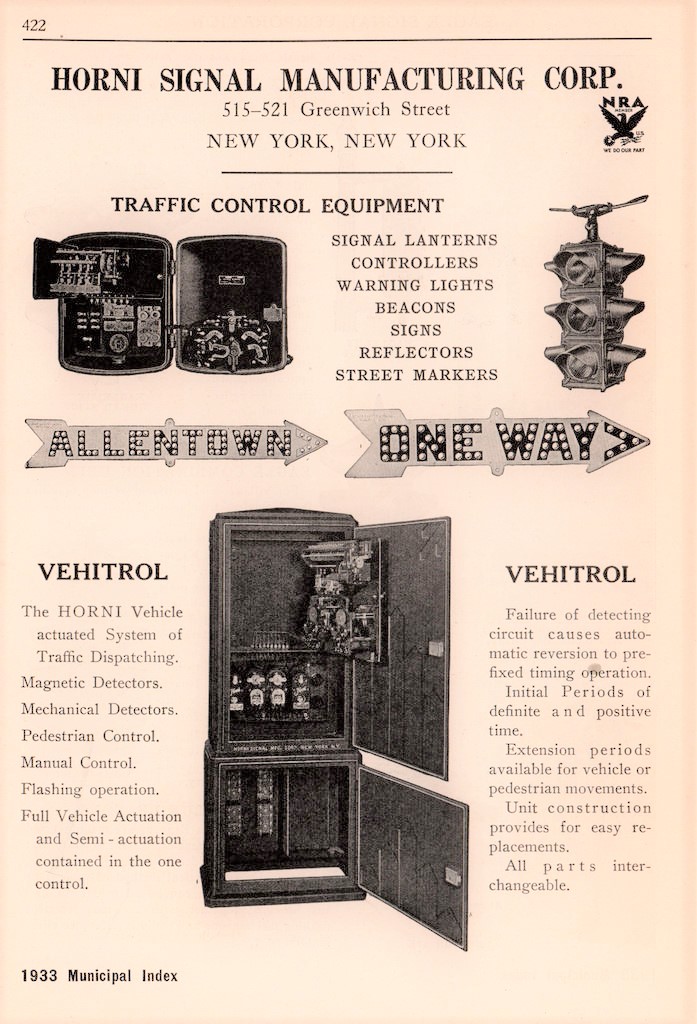
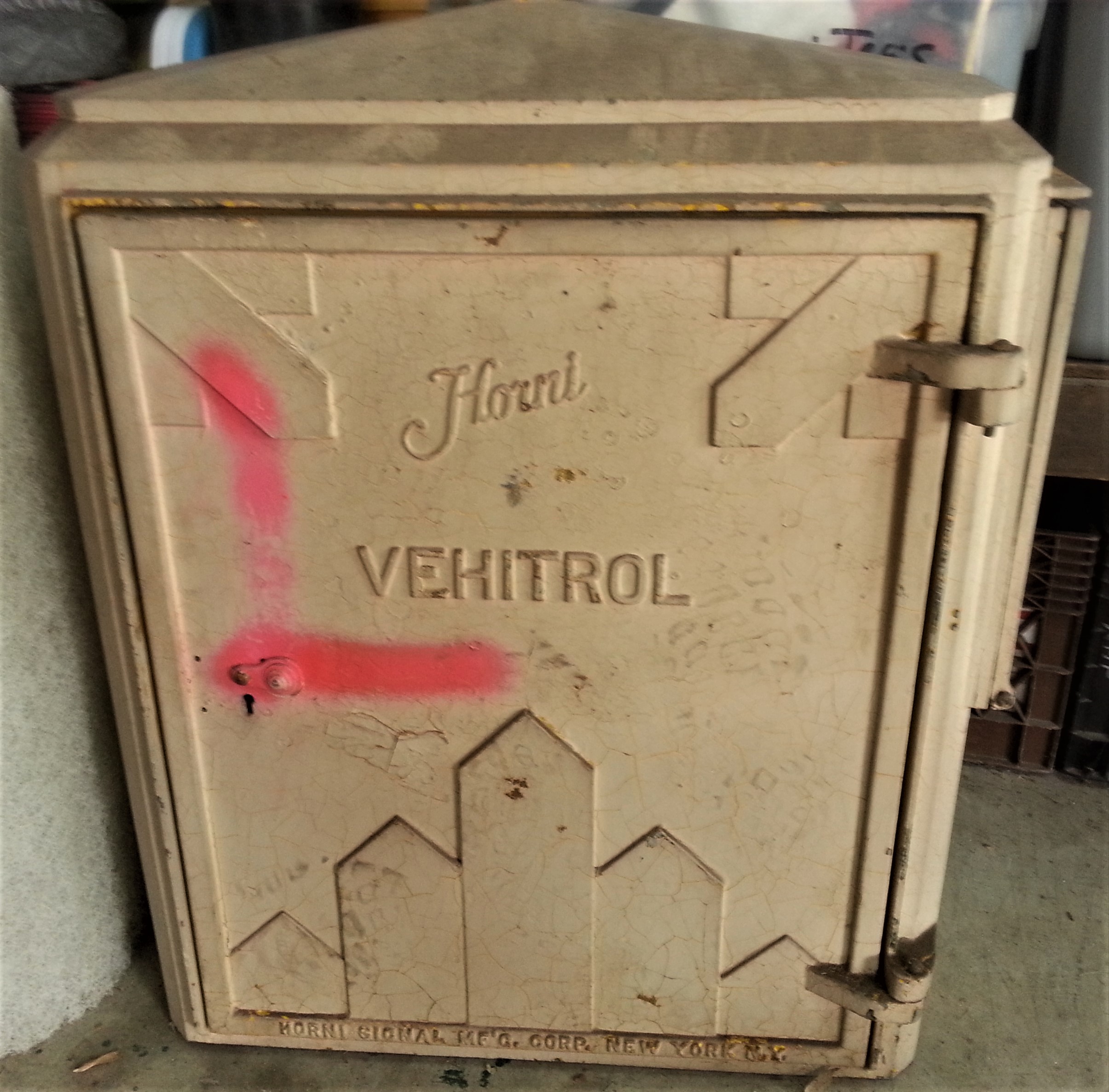
American ads above from the early 1930s show Horni’s corner-hinge style signal heads, cateye signs, and electromechanical controllers, including the super-modern Vehitrol actuated control system. Collector Mike Kuklinski owns the wonderful Vehitrol cabinet on the right that was used in Cicero, IL.
A Ruleta Footnote
At some point after Horni retired their solid-cast signals, they either sold or otherwise passed those signal castings to The Ruleta Company, which continued supplying them in New York City for years to come. There is a higher ratio of Ruleta to Horni signals that have been salvaged from NYC over the years. I assume Ruleta is more common because the city’s signalization accelerated greatly across the five boroughs after the brand change.
1936-1938: Corner-Hinged Signals, Triple Tie Rods
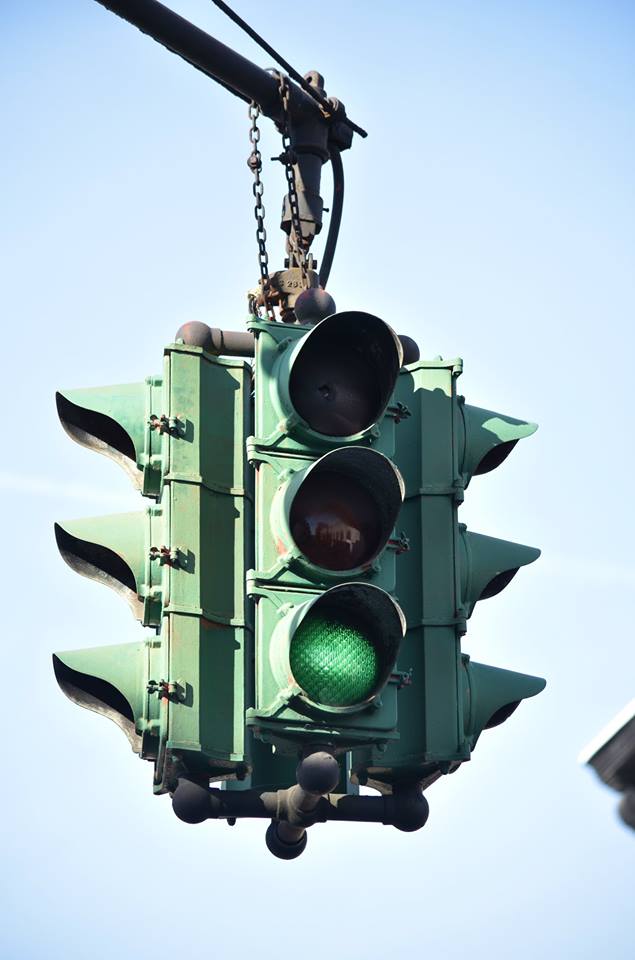

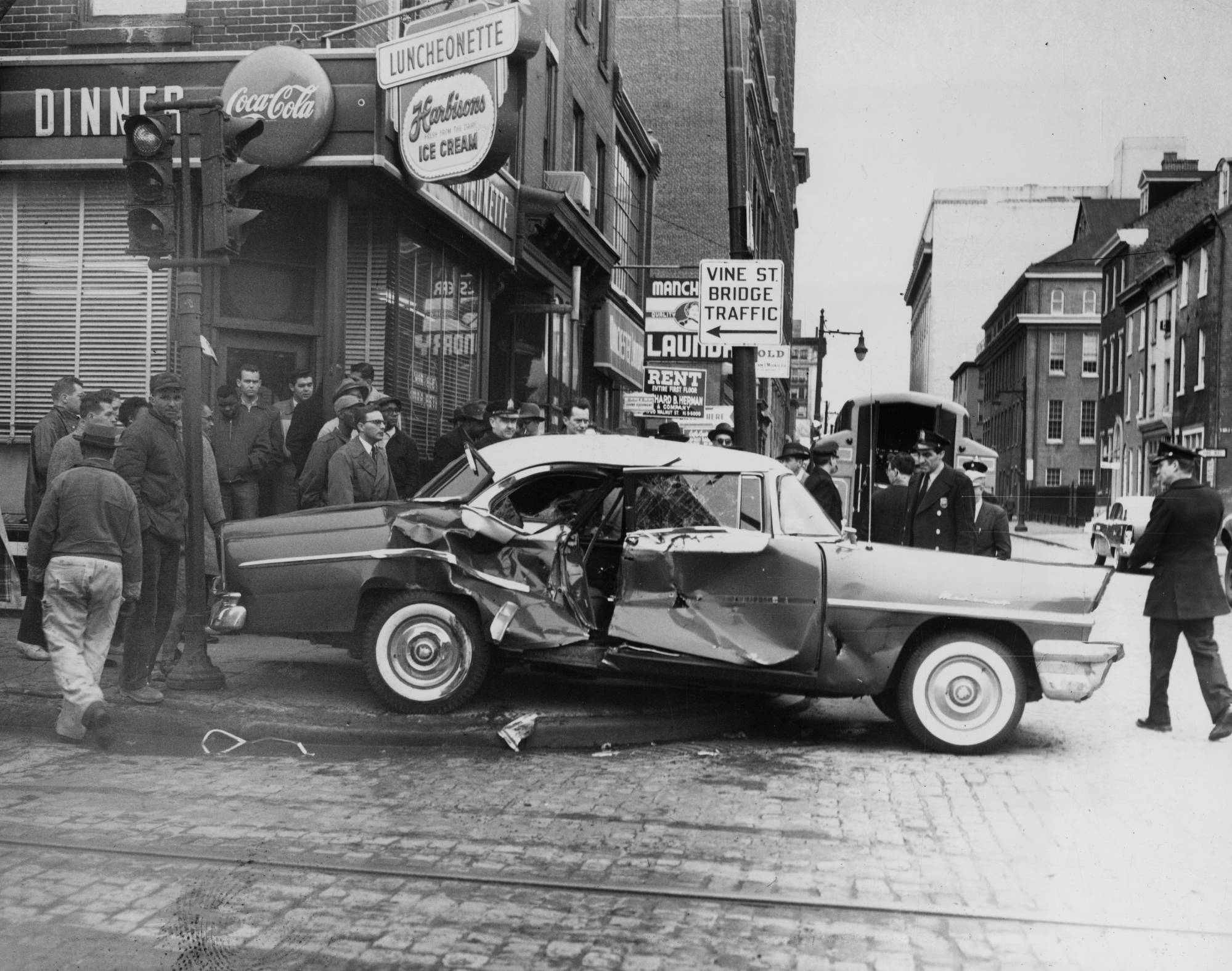

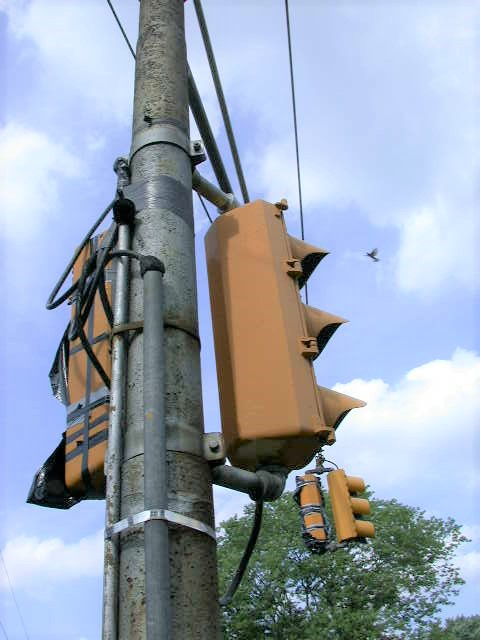
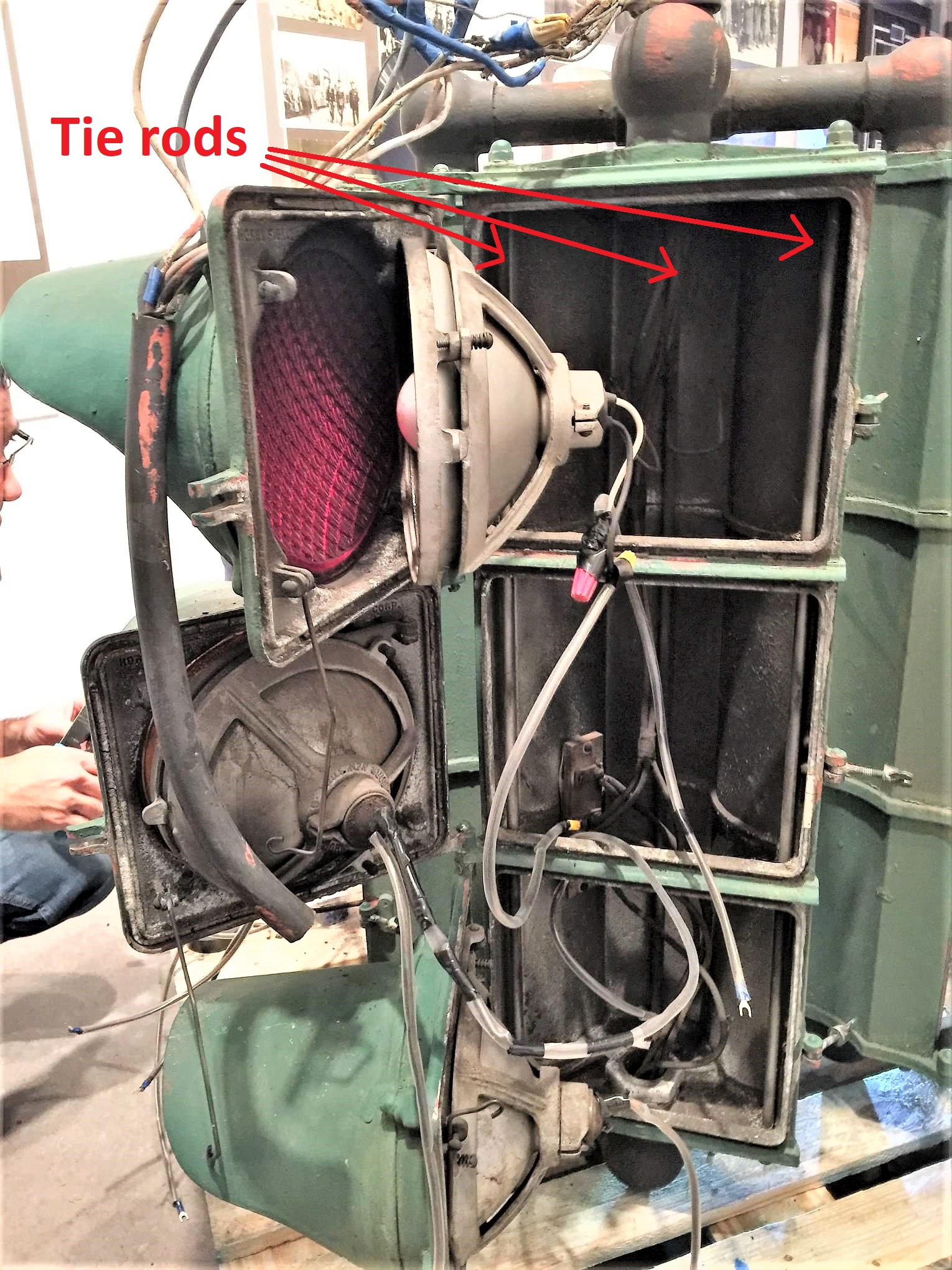
By about 1936, Horni modified their adjustable heads to a open-sectional, 3-rod design with a very handsome, scalloped cross-section. I don’t think these rodded Hornis were in production too long; perhaps no more than a couple years. The 4-way cluster shown in the color photos above is now on display in the Hoboken Historical Museum. The black and white photos were taken in Philadelphia, at 11th & Vine and 16th & Race.
1938-1947: Sectional Signals
In 1938, adopting similar features to GE’s new line of Groove-Back signals, Horni created a sectional signal design that did away with tie rods and end plates. The fixed face four-way signal design was also redone at this juncture, to a lighter design that (of course) used the same doors and same reflectors as the new sectional signal.
Exterior Features
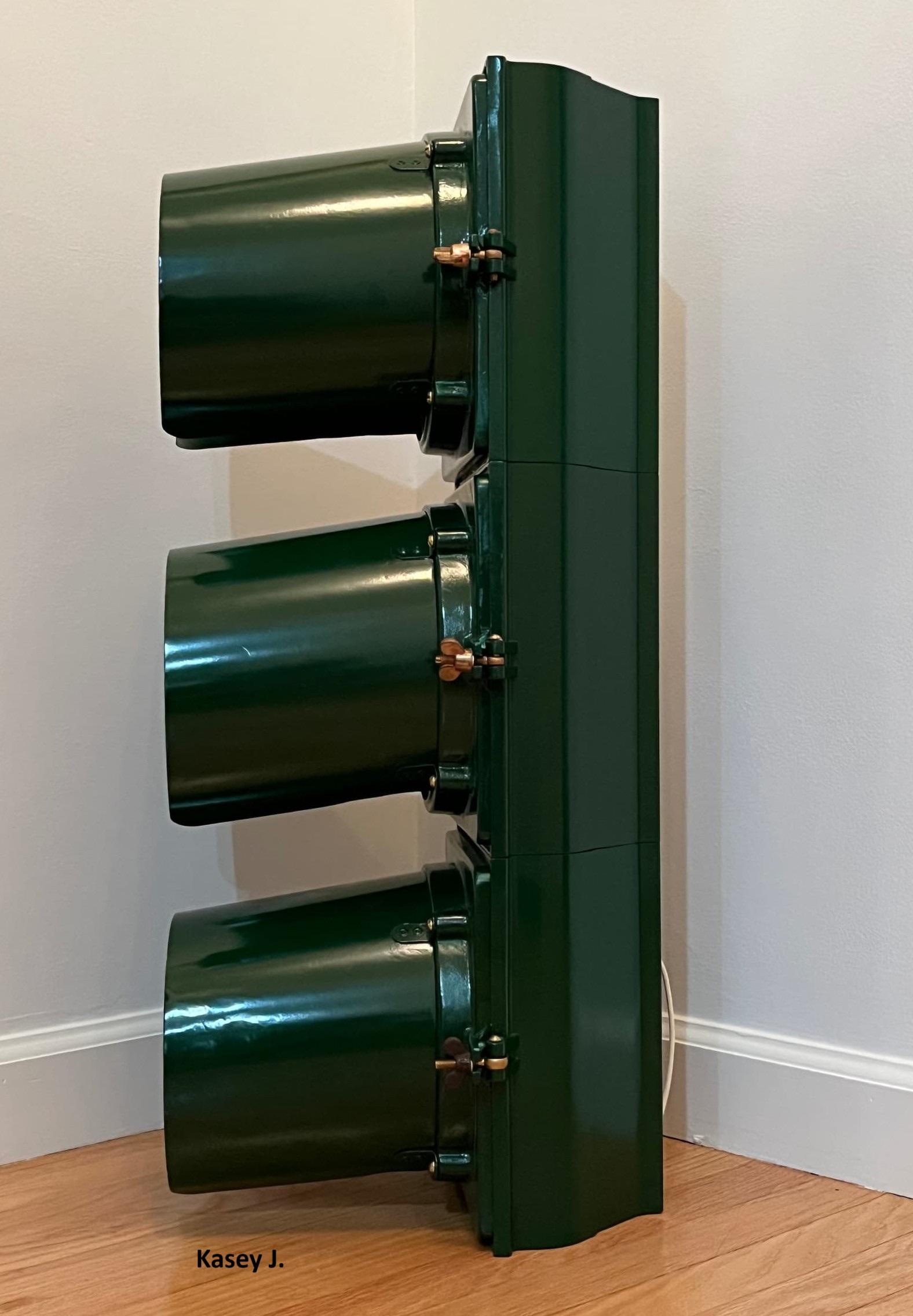
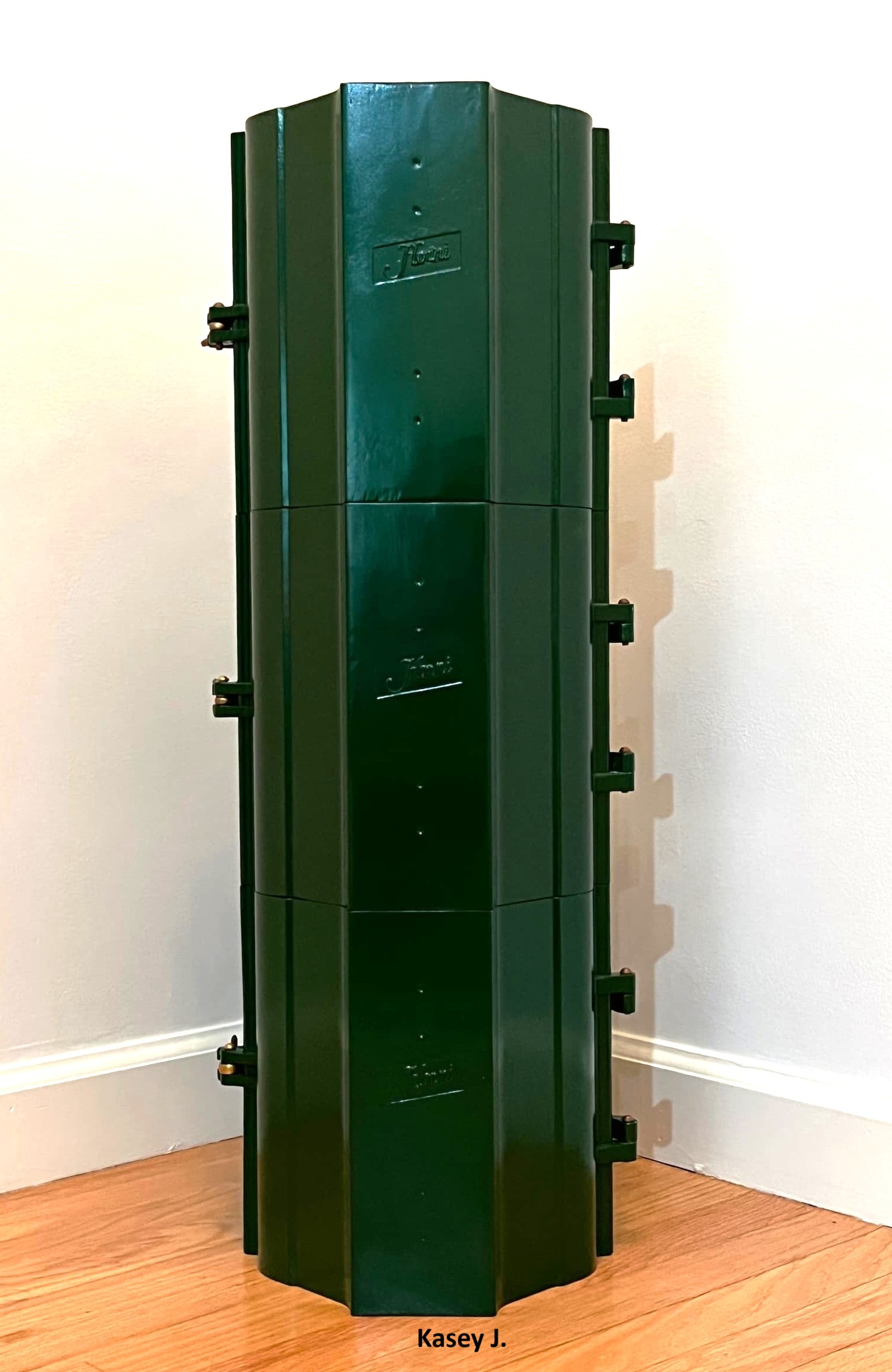
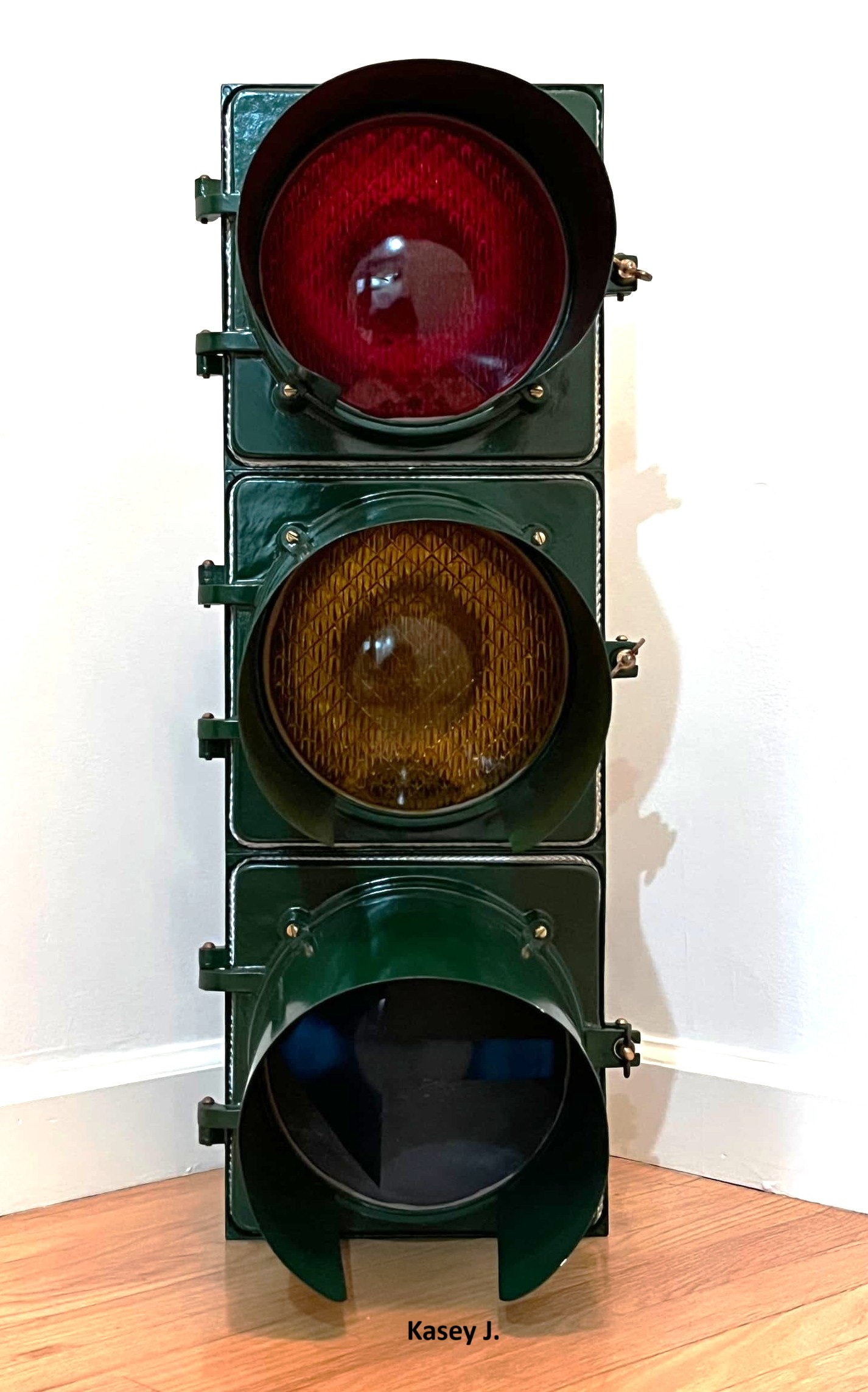

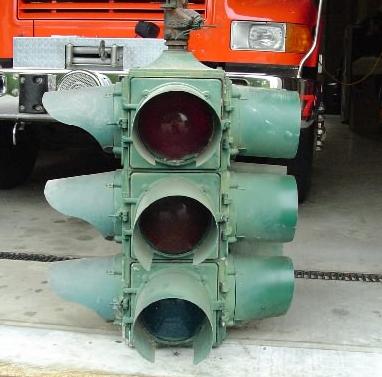
- On both the fixed-face and adjustable signals, “lipless” doors are seated into the housing. The door hinges have been moved from the corners to the side, spaced 1/3 of the door height apart.
- The adjustable housing has a gracefully tapered cross-section. It is bolted to other sections through three drill points on the top and bottom.
- The lens collars are 1″ deep.
- Visors are sheet metal, not cast. They are usually “tunnel” style, although I think a scalloped cutaway style was probably offered too. The visors project horizontally, without the downward slope that Marbelite used later. Kasey’s beautifully restored signal in the photos above was retro-fitted with Marbelite visors.
Interior Features

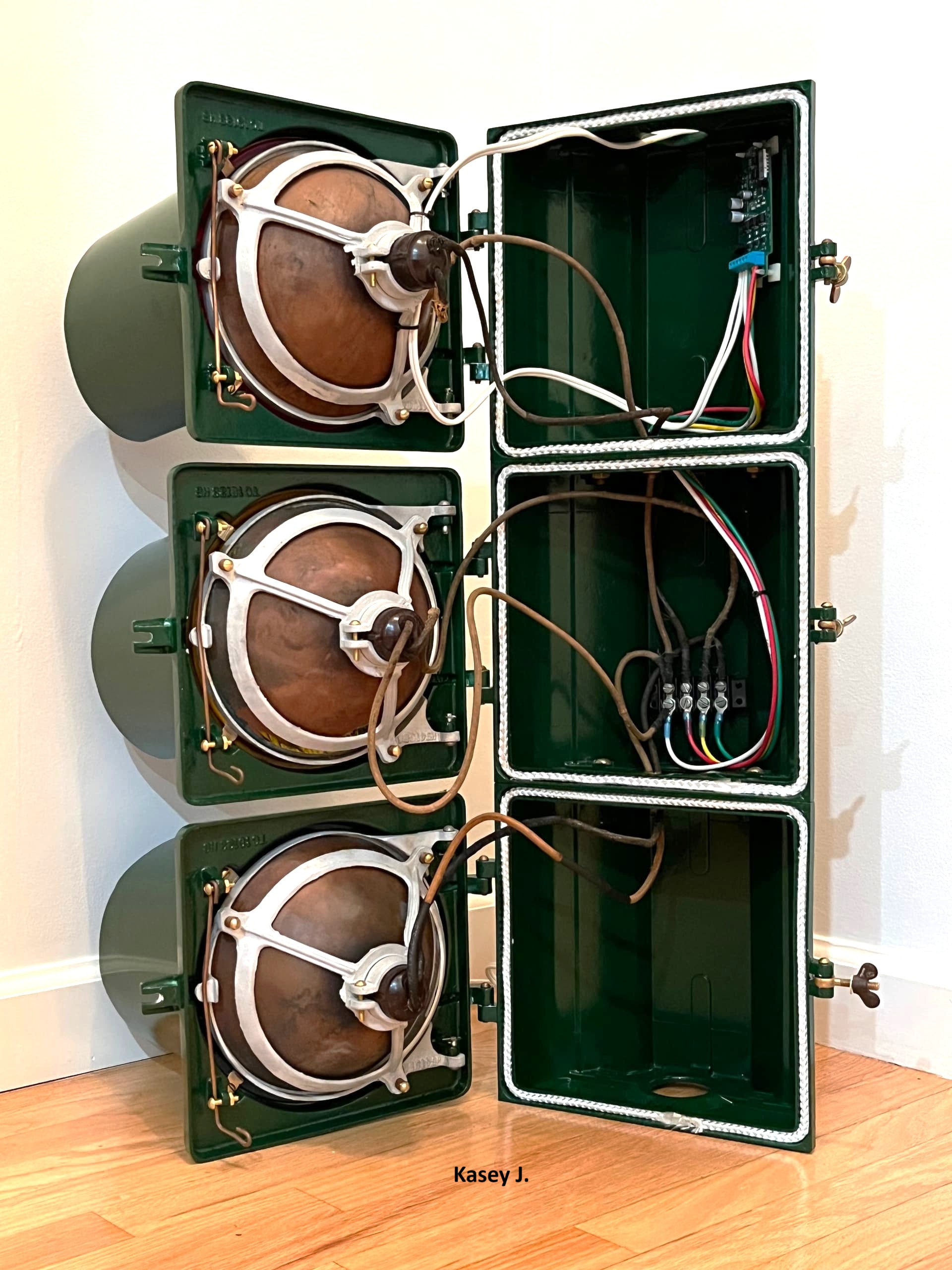
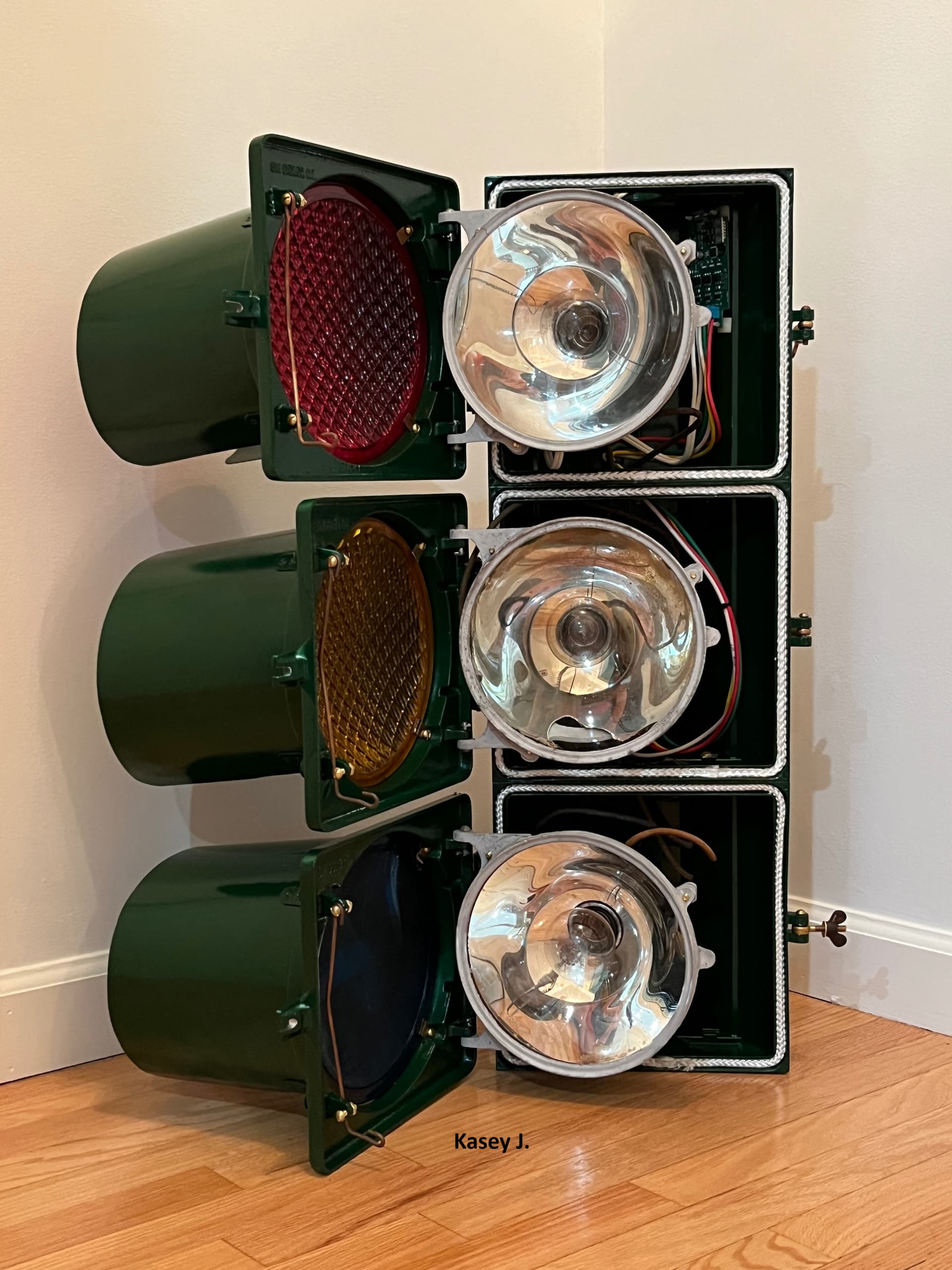
- Doors are seated in a groove around the opening with a wick gasket.
- Reflectors are medium thickness glass with a deep bowl shape.
- Reflector frames are cast tri-leg shell/ring assemblies, hinged on the back of the doors, and embossed HORNI TC-19145 by the socket sleeve. These were trimmed down at some point in time; note the (older) heavier frames in the yellow beacon compared to the (newer) lighter ones in the green adjustable signal.
- A brass retaining wire bolted to the door keeps the reflector frame secured behind the lens.
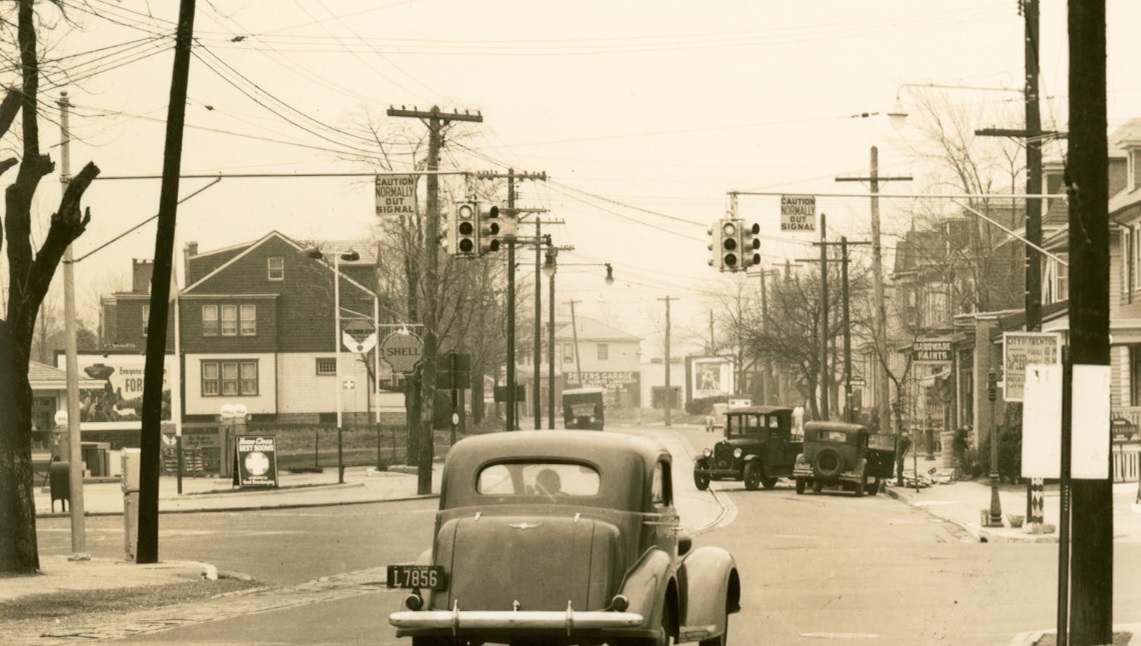
The photo on the right is a new installation of Horni signals at the corner of Pennington Ave (then NJ Route 30) and Parkway Ave on the Trenton-Ewing border in 1939. I have also found photos of another installation of modular Hornis less than a mile away on NJ Route 30 in Ewing.
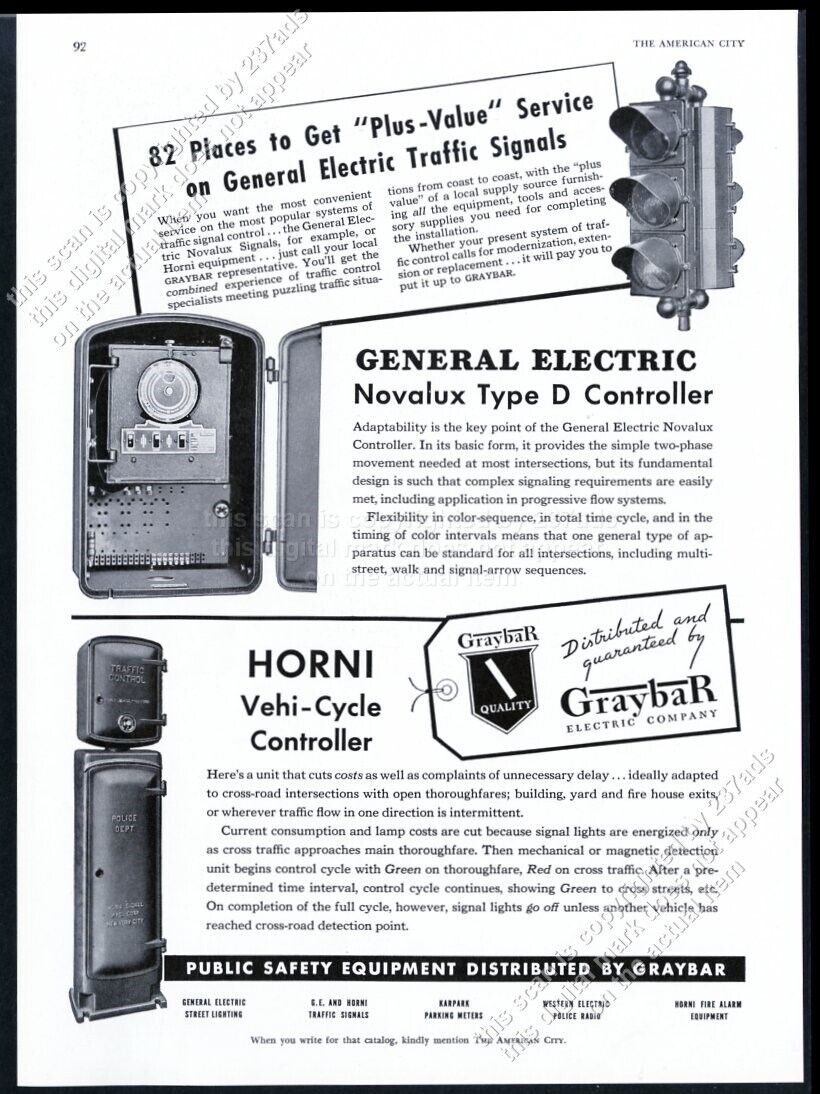
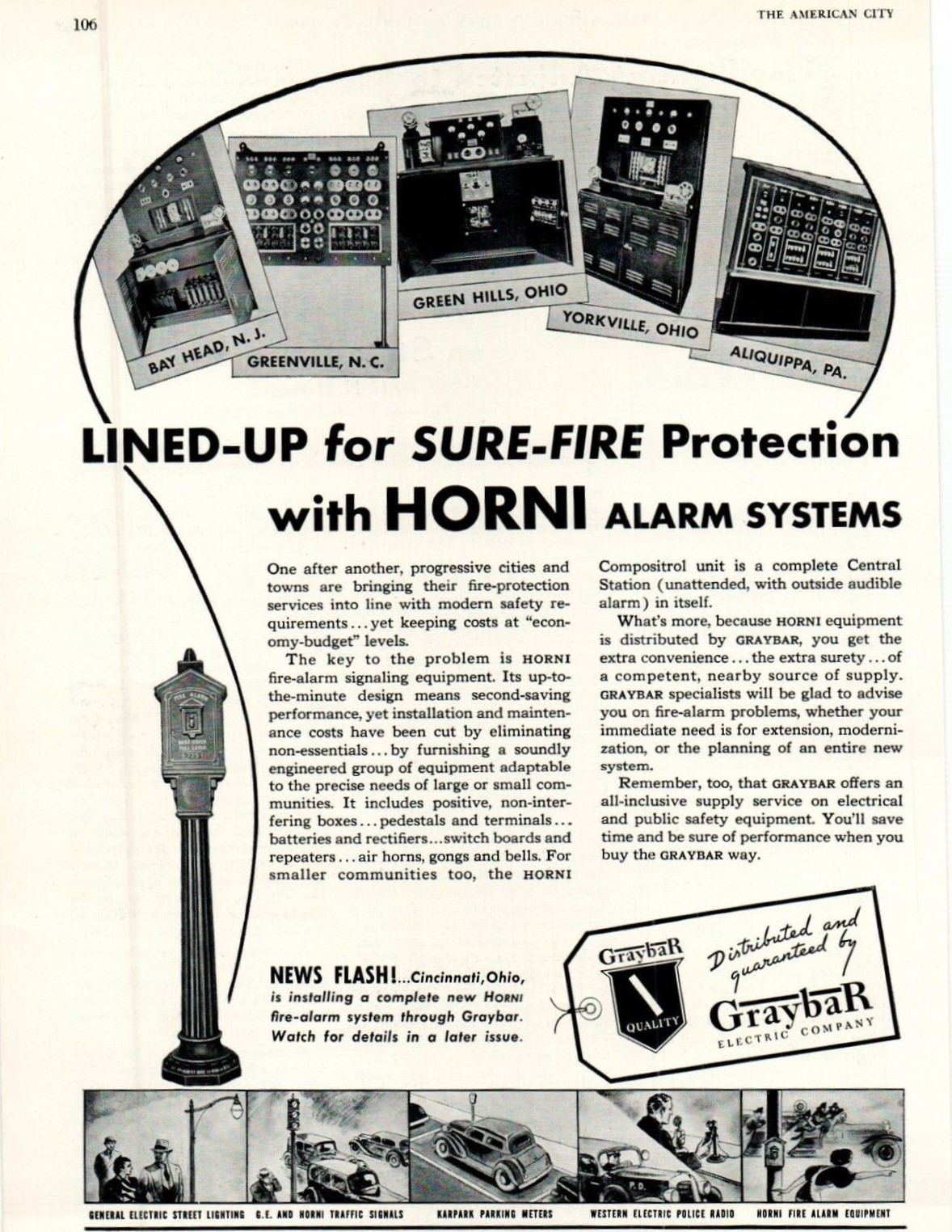
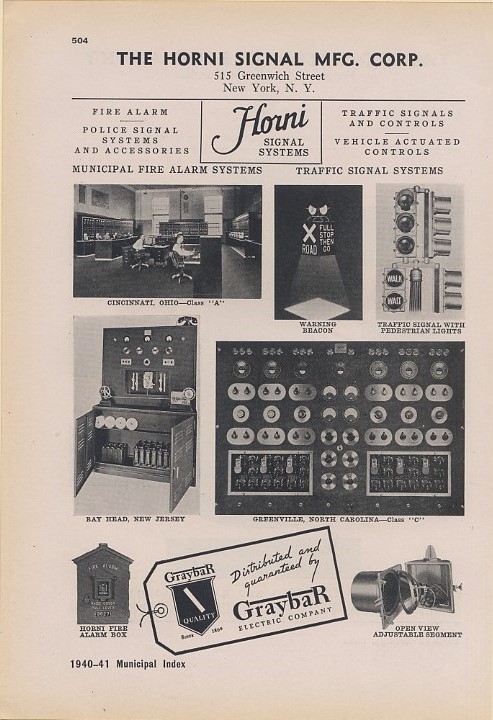
The 1940 ads above for Graybar Electric Company show various products by both Horni and GE. New York City was equipped with GE and Horni signals in it’s first decade of signalization. The GE signal depicted in the ad on the left is an example of the modular “Groove-Back” design that Horni basically copied.
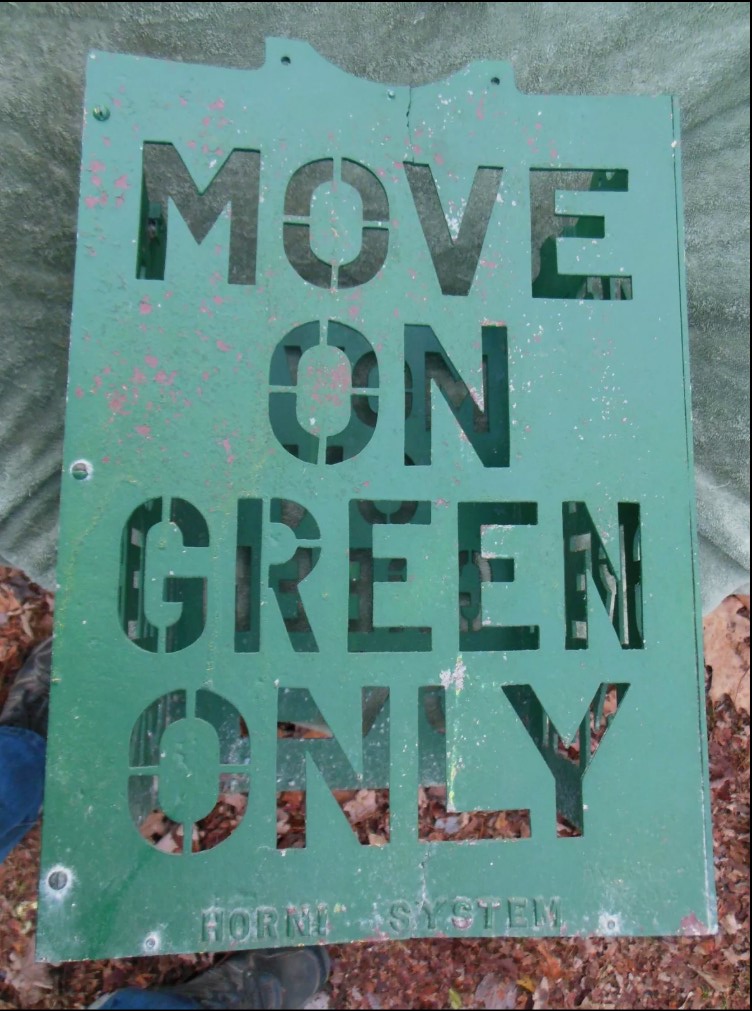
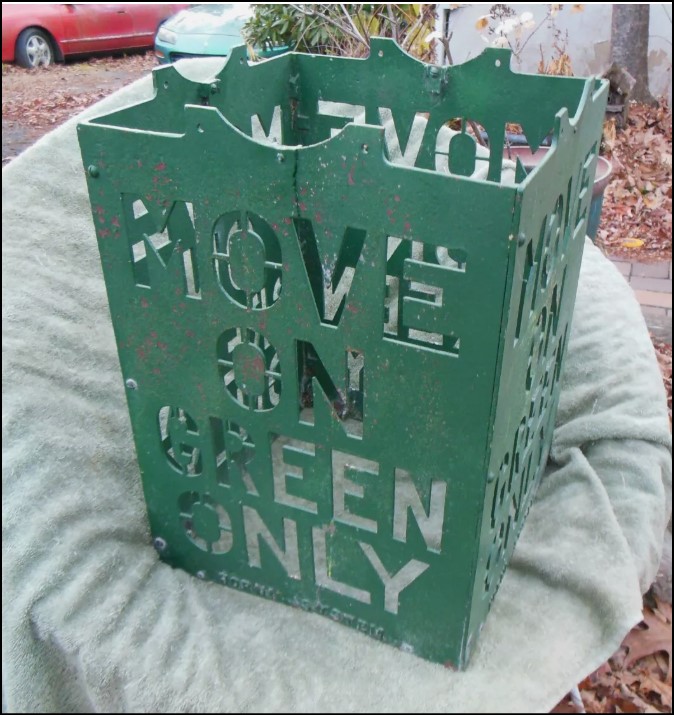
A 4-way illuminated box sign indicating MOVE ON GREEN ONLY, and embossed HORNI SYSTEM… This gem sold on eBay in December 2024.
Horni Bakelite Signals (WWII aluminum rationing)
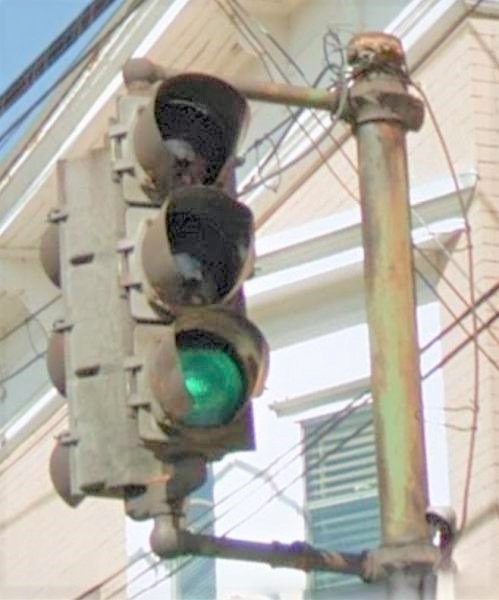
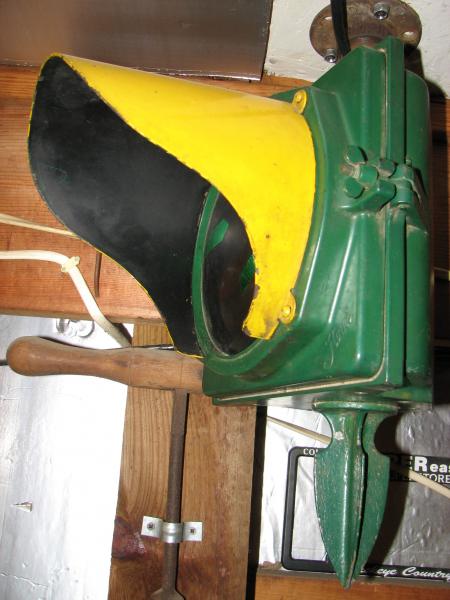
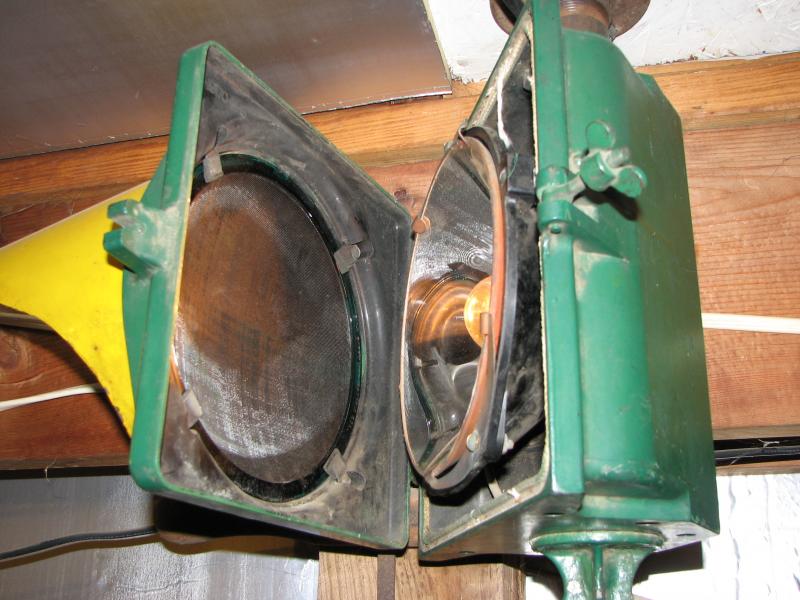
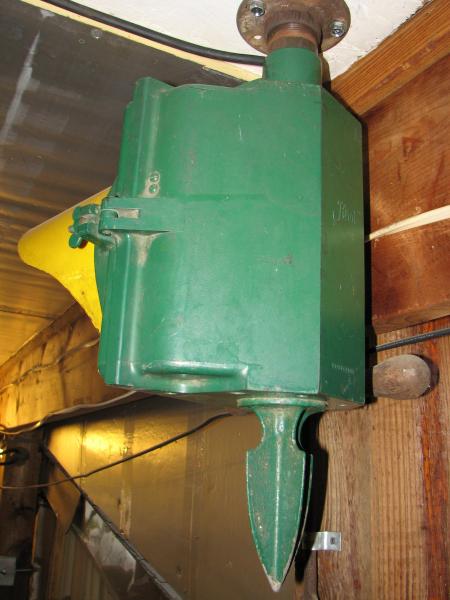
While also heavily involved in wartime procurement contracts, Horni Signal continued to produce traffic signals during World War II. While some manufacturers opted for steel in lieu of aluminum, Horni is the only brand that I know of that produced a war-time signal made of Bakelite (with steel visors). These ultra-rare Bakelite Hornis have been seen by a few contemporary collectors, including this light that still serves in East Rutherford, NJ.
Horni most likely resumed production of aluminum signals when the war ended in 1945, but they would be bought out by Marbelite by early 1947.
Epilogue
Horni Signal Mfg. Corporation was on a successful trajectory while the demand for traffic control equipment was skyrocketing after World War II. So, why did they fold and sell out in 1947 to Marbelite? It would seem that the nefarious habits of its owners contributed to the company’s demise. Credit to Randy Trezak for sending me this 1946 NY Times article about the shady Horni brothers.
After closing down Horni in 1947, I believe that one or both of the Horni brothers started Highway Signal & Sign Company in Newark as a new venture to compete with Marbelite. Although Marbelite had acquired and re-branded most of Horni’s old equipment, it wasn’t long before some very “Horni-looking” equipment was being manufactured by Highway Signal & Sign.
A Missing Link
In 2023 in Asbury Park, I took the photo below of a cabinet whose door had the Horni script logo above the text for Highway Signal & Sign Co. My theory is that the Horni brothers did indeed own HSS, and they left the Horni logo on this cabinet intentionally, perhaps as a matter of family pride.

 Garden State Signals