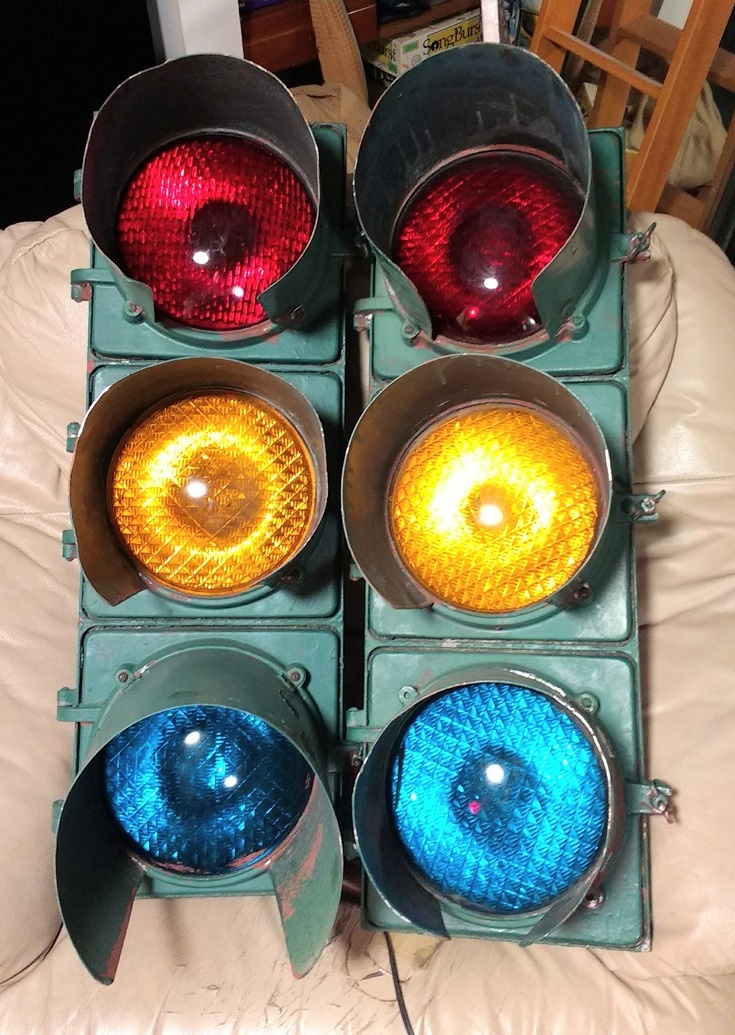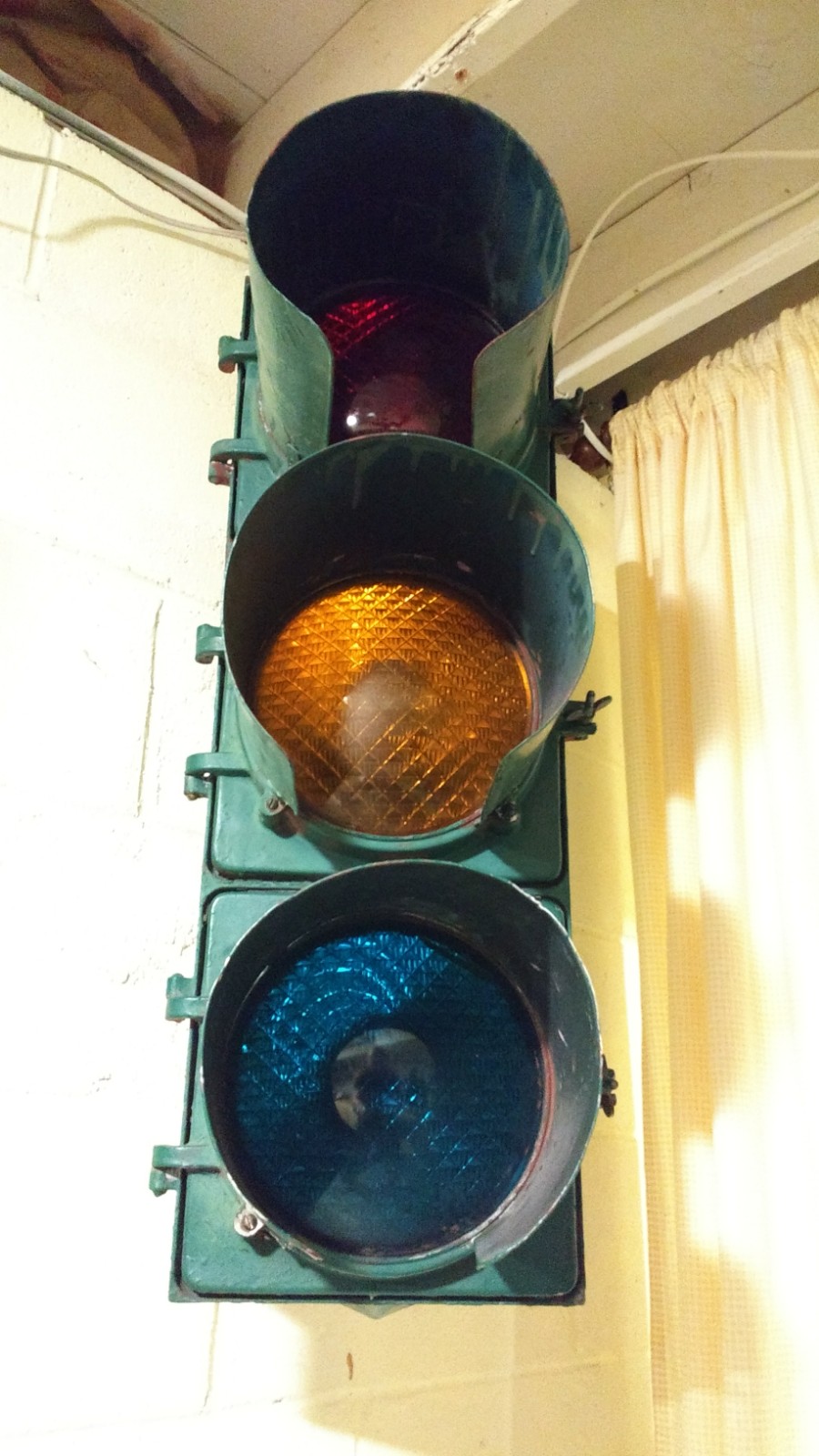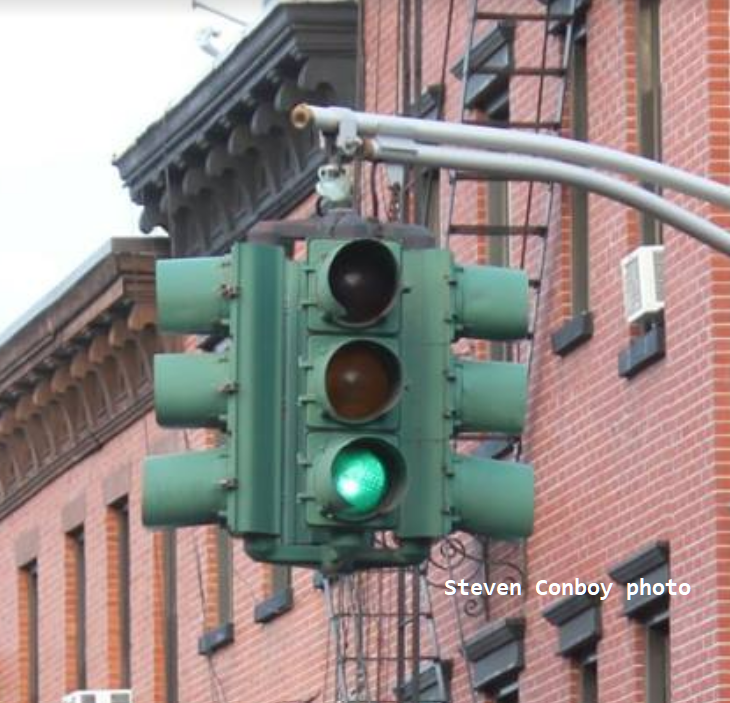
The 4-way adjustable traffic signal you see above was photographed at the corner of Washington and 5th Streets in Hoboken. The signal was made by Marbelite, and dates back to approximately 1947. The truss rod mast suspending the light is much newer. Presumably, the original guy-wired mast must have been damaged and replaced at some point.
When the City of Hoboken upgraded the signals along Washington Street in 2018, two of the oldest signals still operating in New Jersey were finally retired. The older of the two lights, a 1930s Horni Signal from 1st Street, was installed in the Hoboken Historical Museum by Chris McNally, Randy Trezak, Mike Natale and myself in October of that year. The museum staff were delighted to have the city’s oldest surviving signal added to their museum’s display, so they graciously gave us this, the city’s second oldest surviving signal. I have one of the four heads from this classic light in my collection (and for a little while, I had two of them). It’s one of those lights I could tell was really old, so I was very happy to have the chance to inspect it, and happier still to own it.
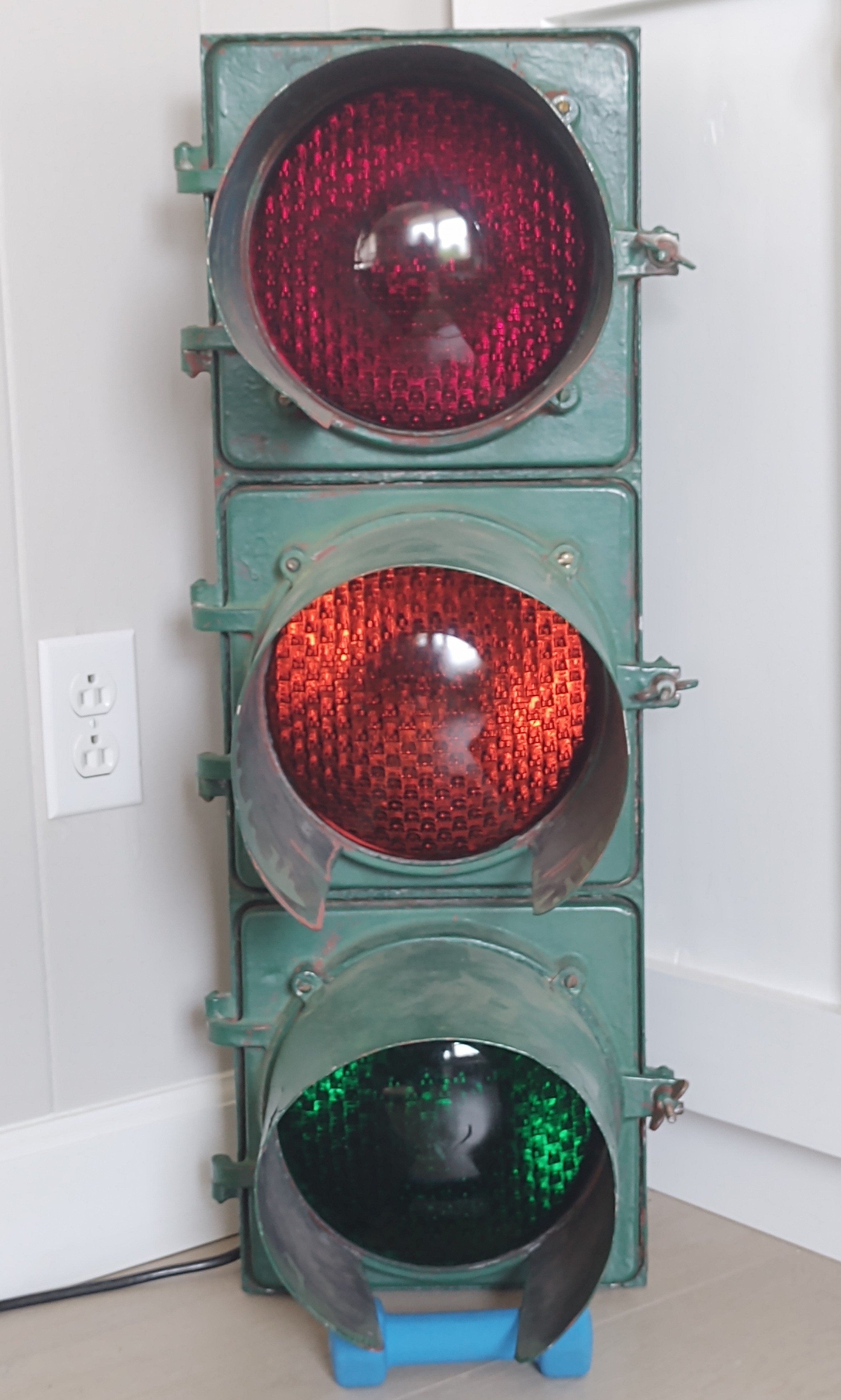
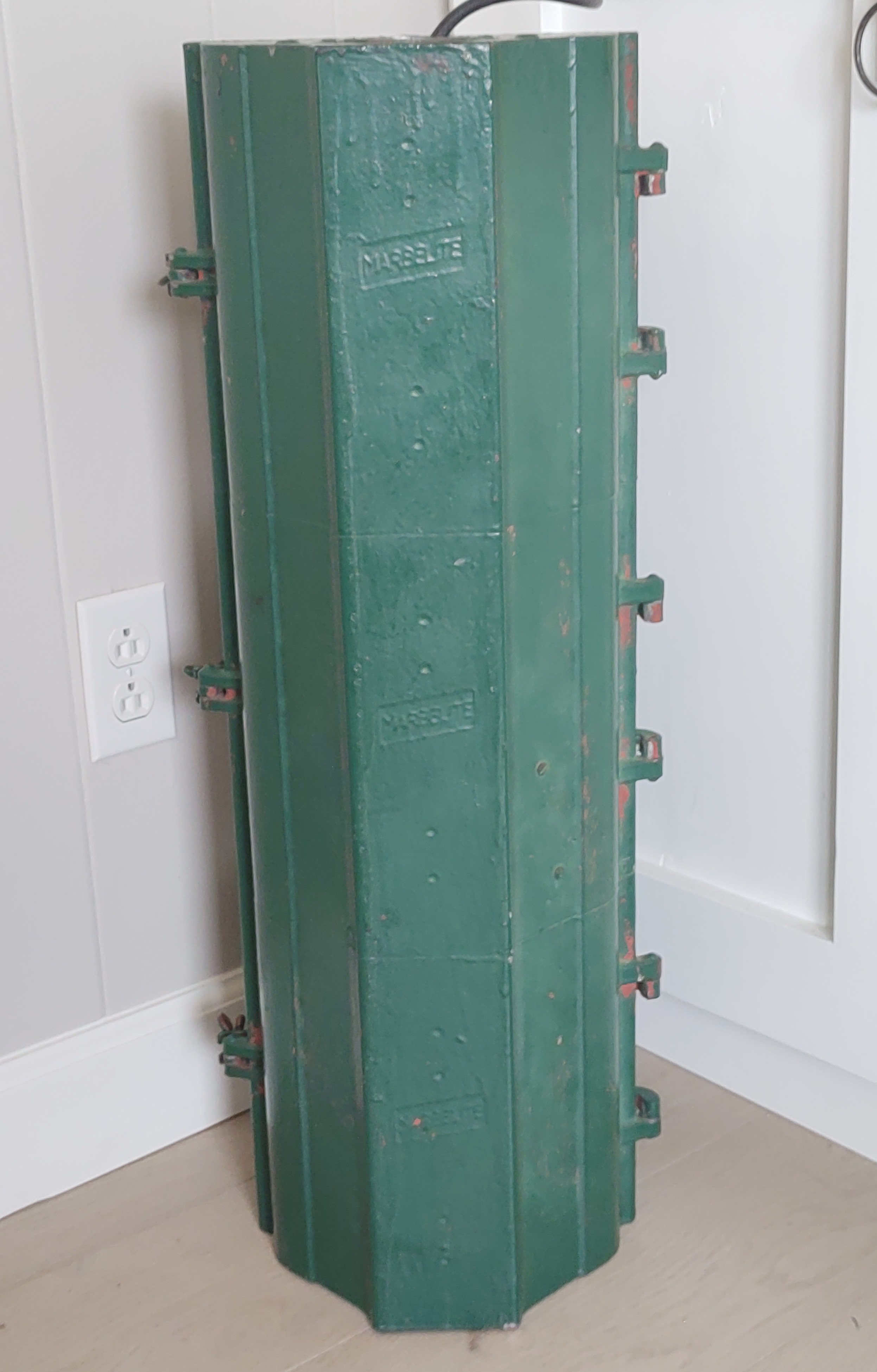
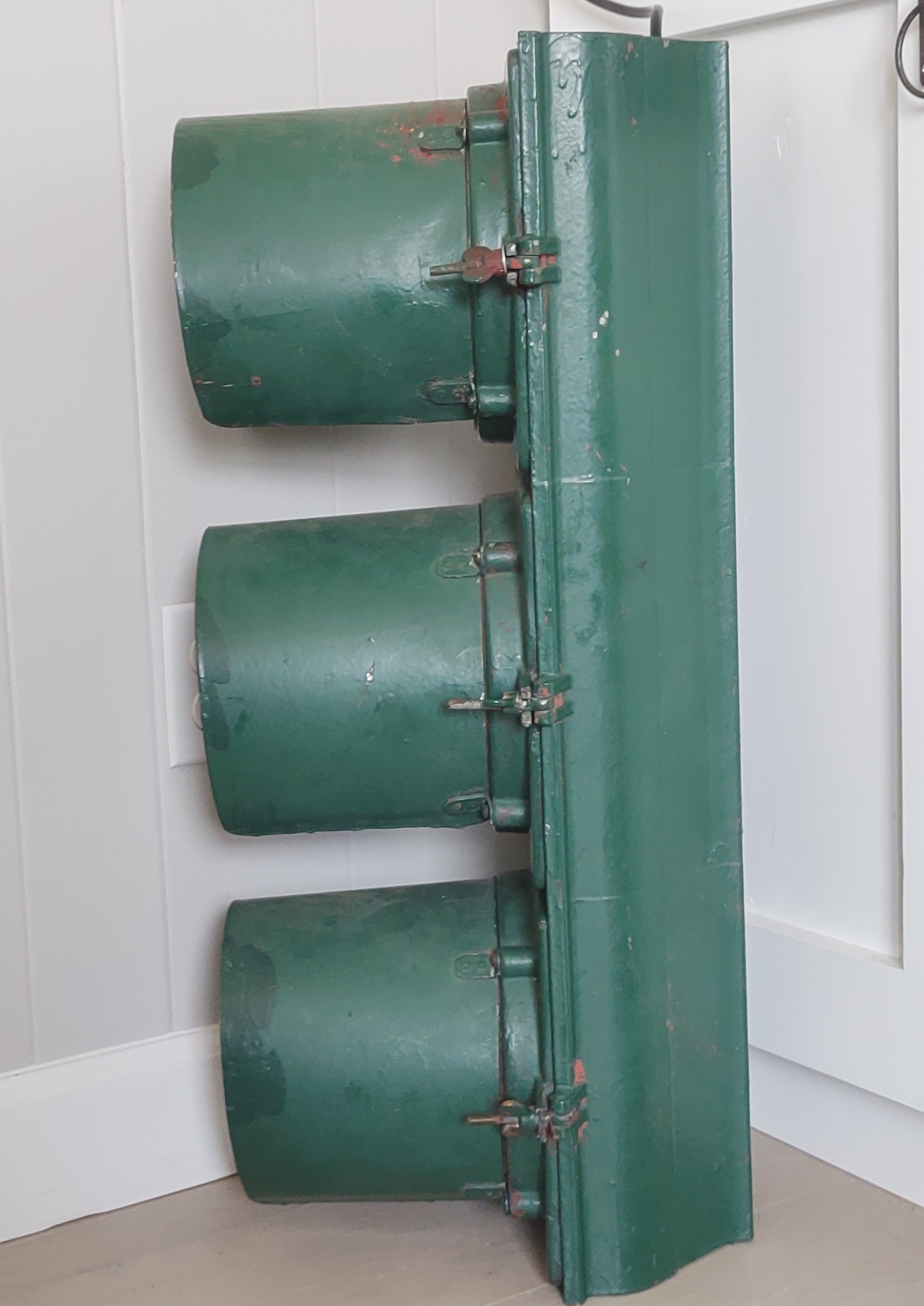
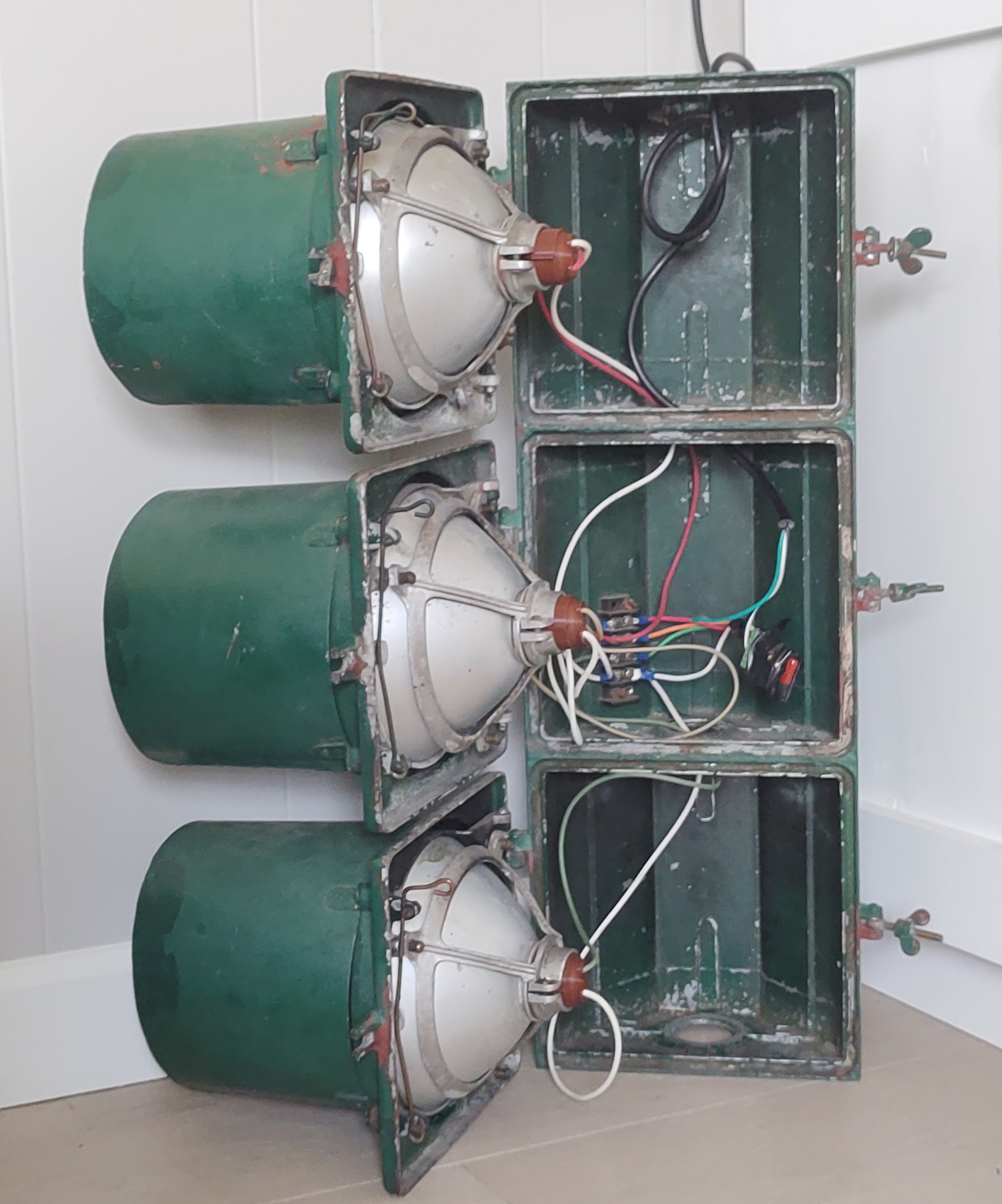
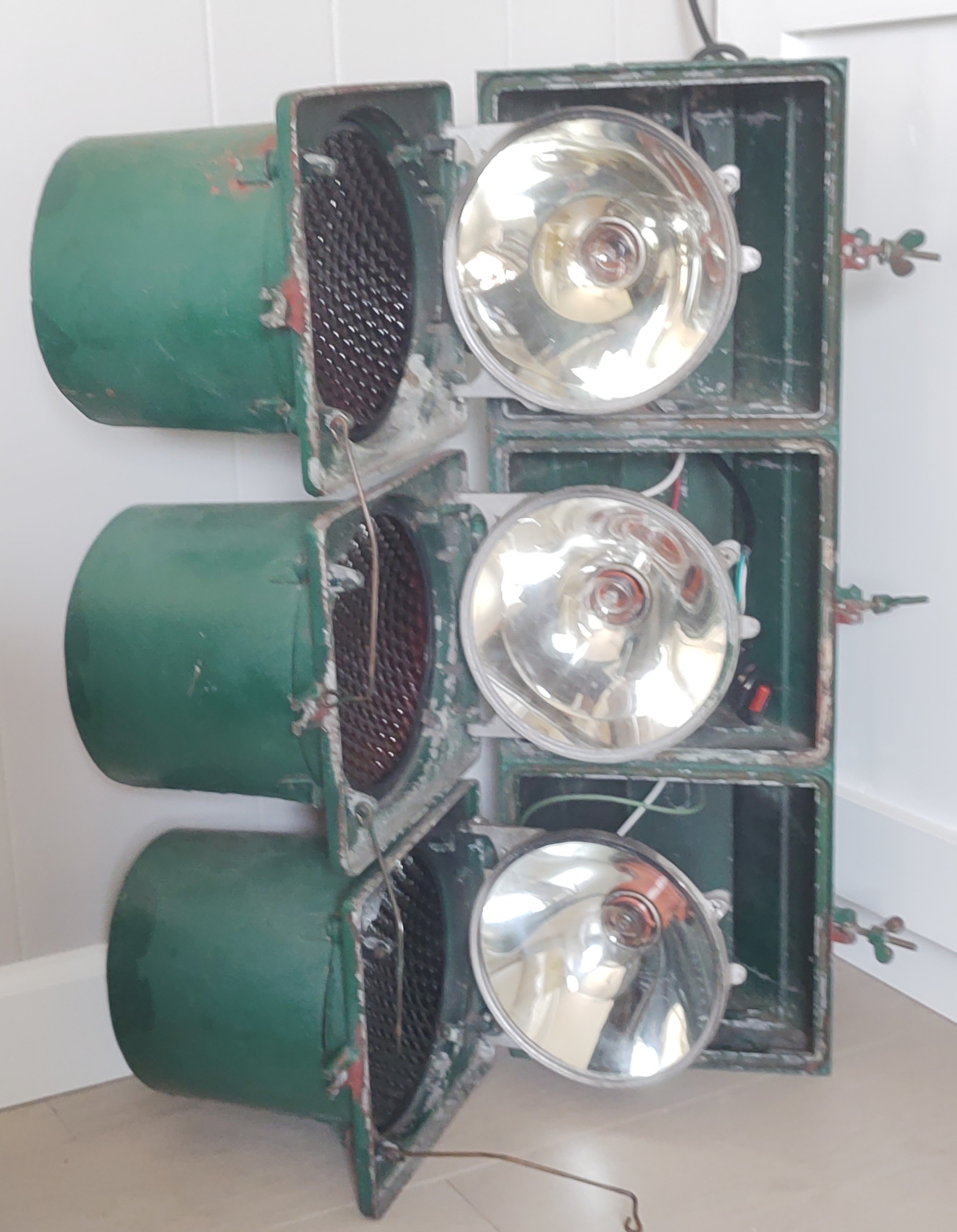
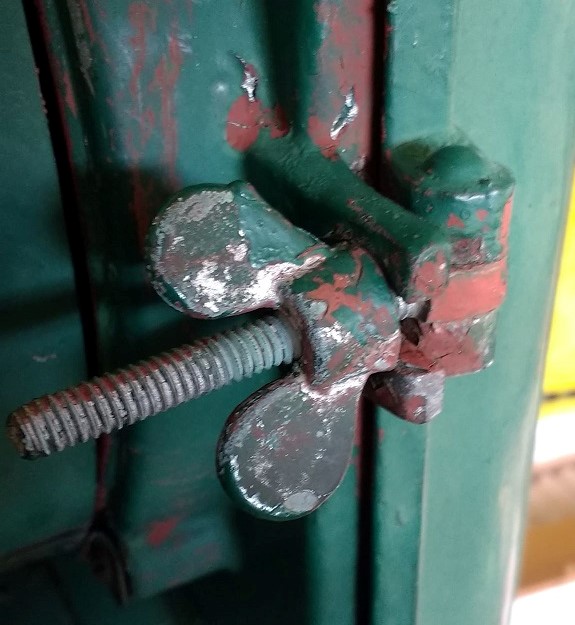
After more than 70 years of outdoor service, this signal still had all of its original parts, except for the sockets: The Kopp #66 lenses, the door-mounted glass reflectors, the 7″ tunnel visors, and the big brass wing nuts were all in good shape. The replacement sockets that I found inside worked OK, but did not fit well, so I replaced them with 3D-printed reproduction sockets made by members of the Highway Divides forum. Ed Tapanes extracted one broken visor screw and re-tapped the hole – Thanks for the hands-on tutorial, Ed!
Lens Swap
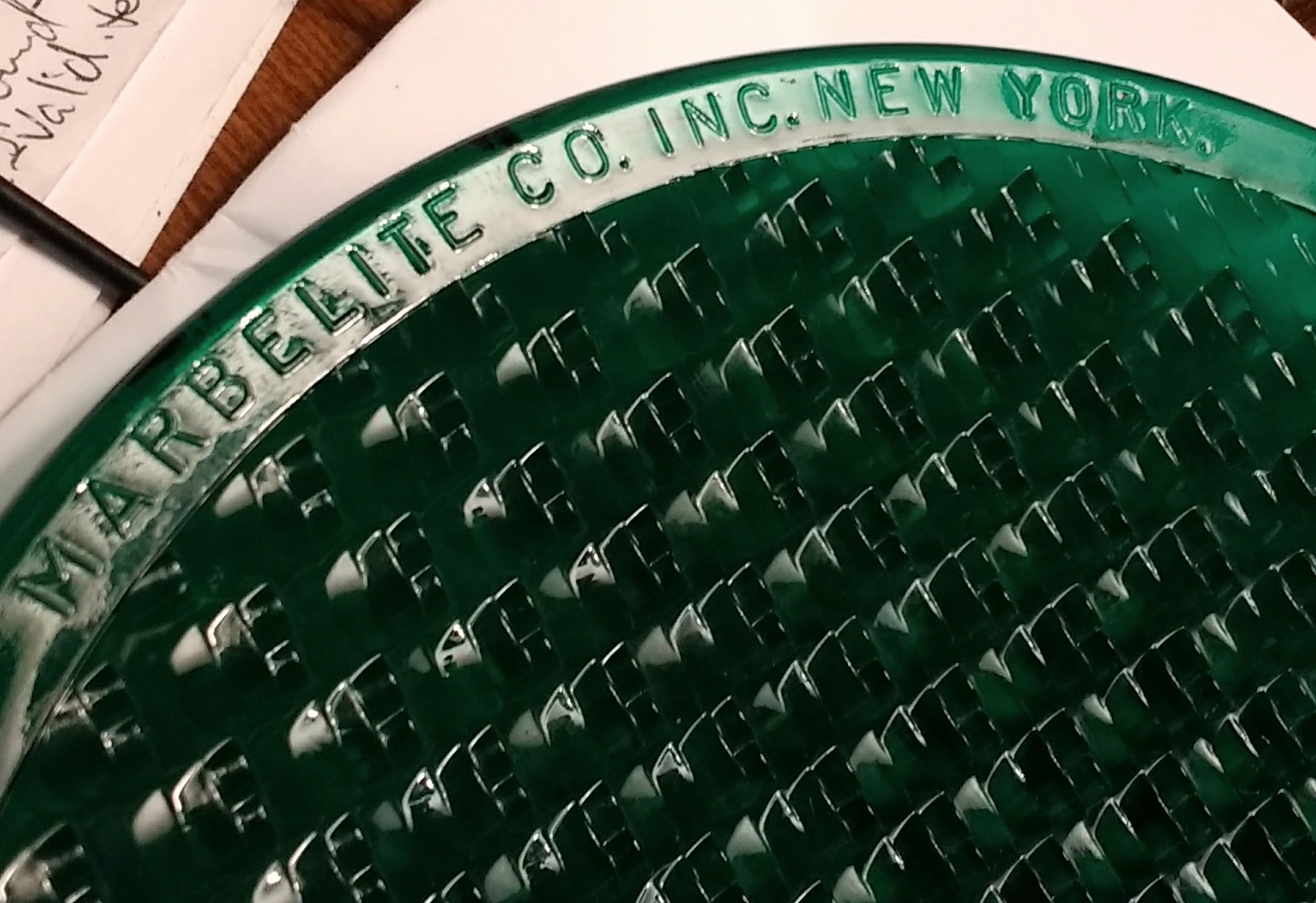
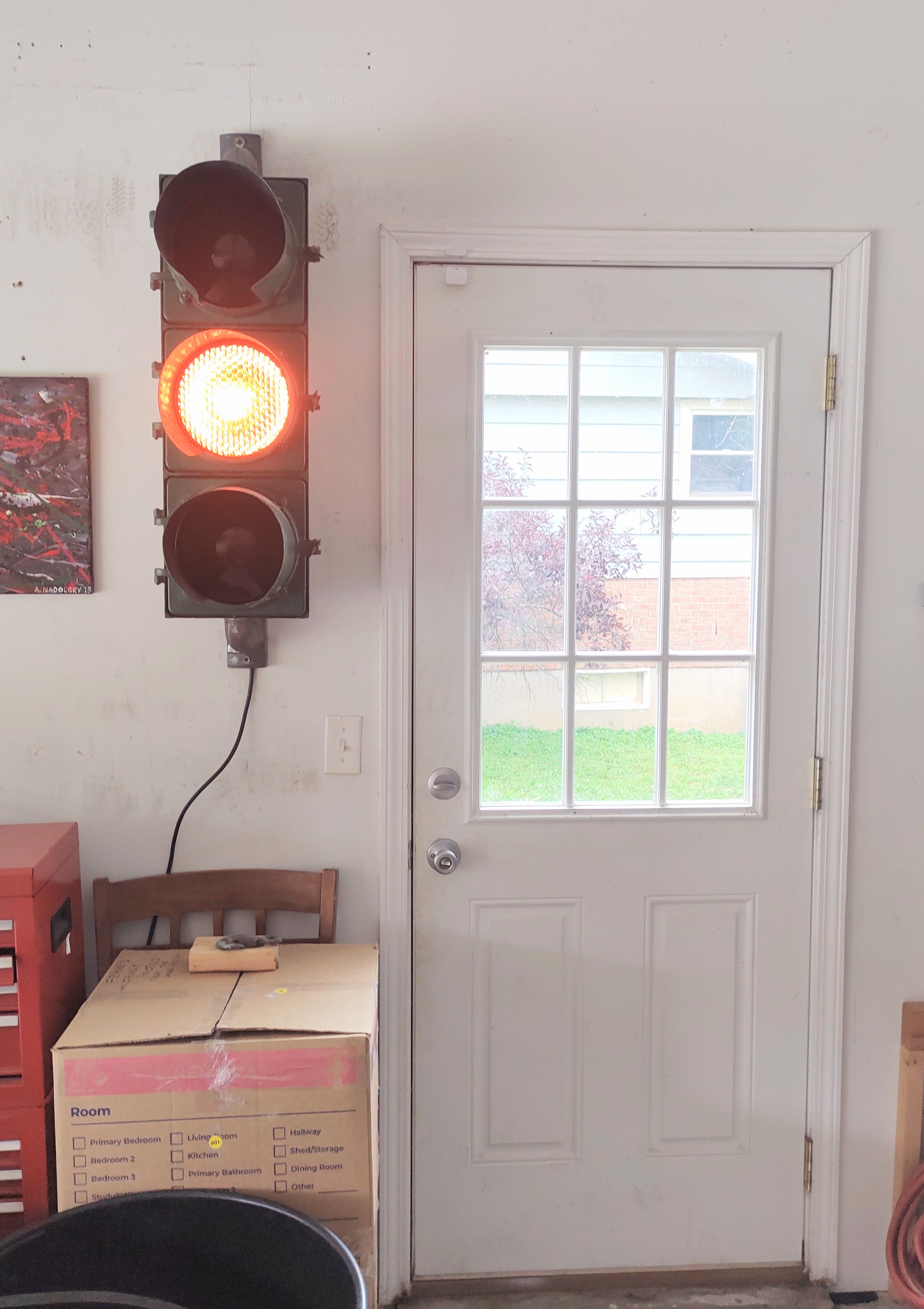
The purist in me always thinks twice about swapping out the original parts from an old signal, but when I found a scarce set of Marbelite No. 6540 lenses made by Houzex (Houze-Convex) Glass, it was a no-brainer to display them in this signal. They have a neat “Space Invaders” bead pattern, and very rich color. The green lens is “true green”, not the typical cyan of most green signal lenses. The amber lenses were made to at least two different color specs. I used a darker amber for this signal.


 Garden State Signals