An Icon of 20th Century NYC

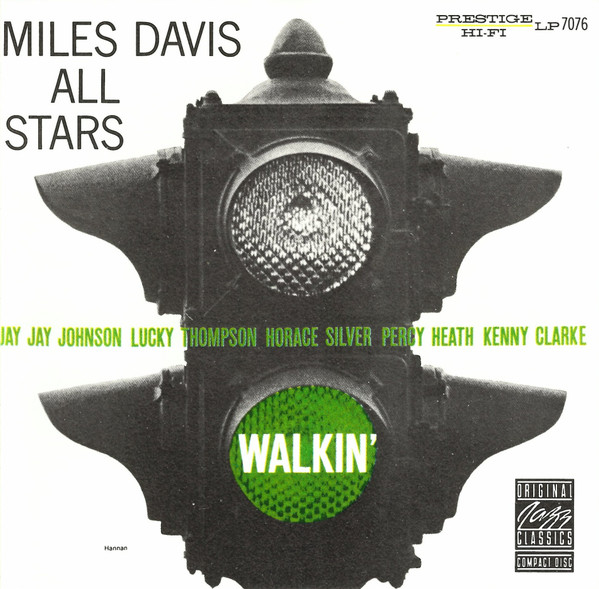
Do you remember the old-fashioned two-color (red and green only) traffic lights of New York City? Whenever I visited New York in the 1970s, I was fascinated by the old 4-way signals with only red and green lights that were scattered around the city. These quaint fixtures I saw were the vanishing remnants of the original GE and Horni/Ruleta signals that were installed from the 1920s through the 1940s. They were an iconic artifact of the streets of New York through much of the 20th Century.
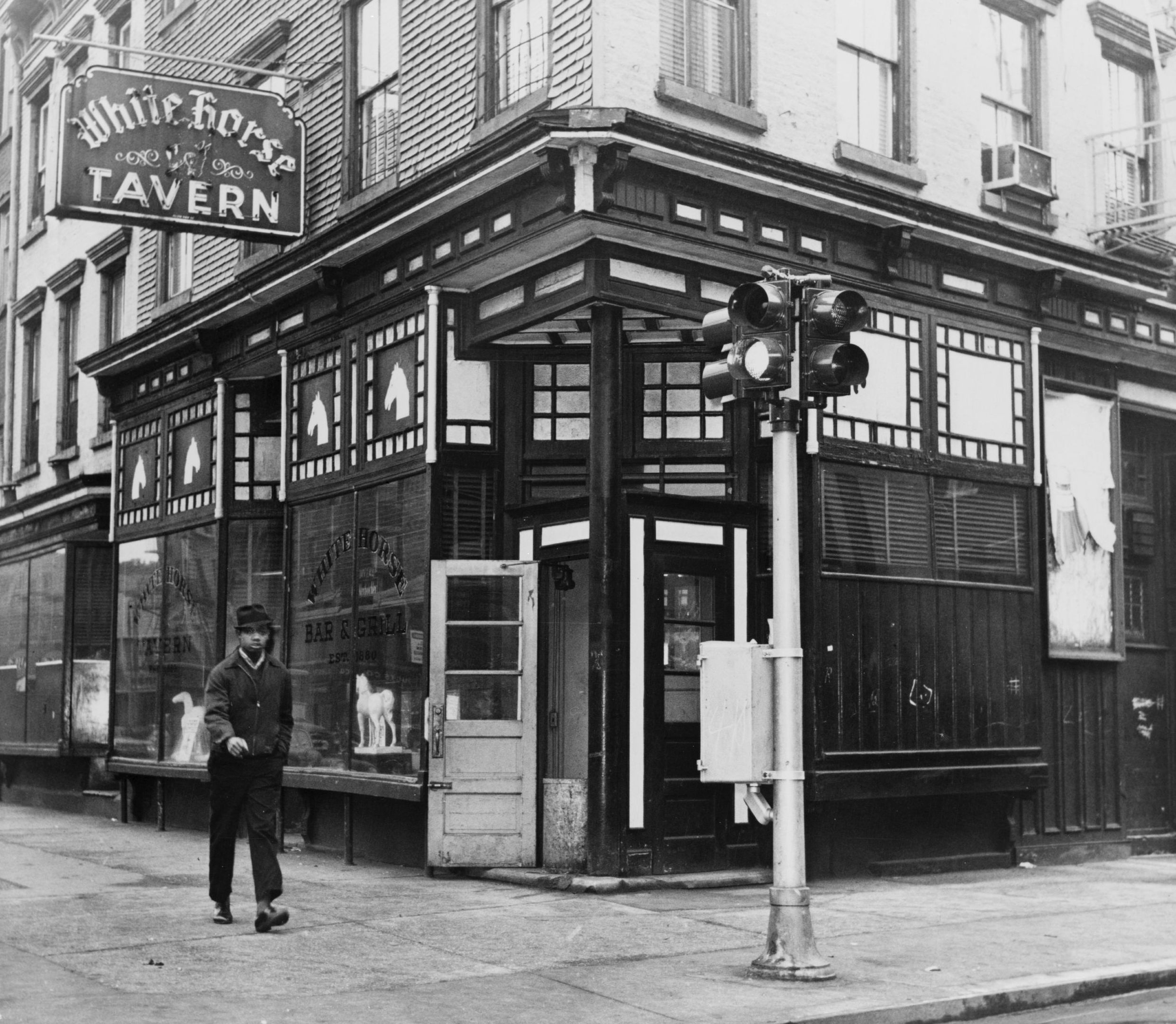
In the early 1950s, New York City began to make sweeping upgrades to its traffic control equipment, gradually replacing the old, fixed-face GE and Horni/Ruleta units with modern, adjustable Marbelite signals. At the same time, the city began standardizing on three colors, adding the amber indication to red and green. Many corners were replaced with the new signal heads first, years before they got the upgrade to three colors (as seen in the White Horse Tavern photo). In all, it took over 40 years for the last of the original Horni/Ruleta signals to be replaced, and probably an additional 20 years for all 2-color Marbelite signals to finally be converted to three colors.
My Ruleta(s)
2004 – An Unexpected Gift
Patrick Gorman, a fellow signal aficionado who knew me through my old NJ Signals website, gave me a 4-way Ruleta signal sometime in or around 2004. Patrick, originally from New Jersey, worked for the government on a remote tropical island. Unable to practically collect signals for himself, he won an eBay auction for the Ruleta and graciously had it shipped to me as an unexpected gift! One of my bigger regrets in the hobby was to try to restore that light myself, ultimately despairing of the project and selling it as a pile of parts (with a lot of broken bolts…before I learned to use heat) to another collector who restored it beautifully. All photos I had of this light were lost with a failed hard drive before the days of cloud storage
For years afterwards, I knew I’d eventually replace it with another NYC Ruleta-style light. It took me until 2012, when…
2012 – An Impromptu Road Trip to New Hampshire
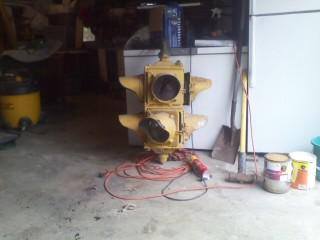
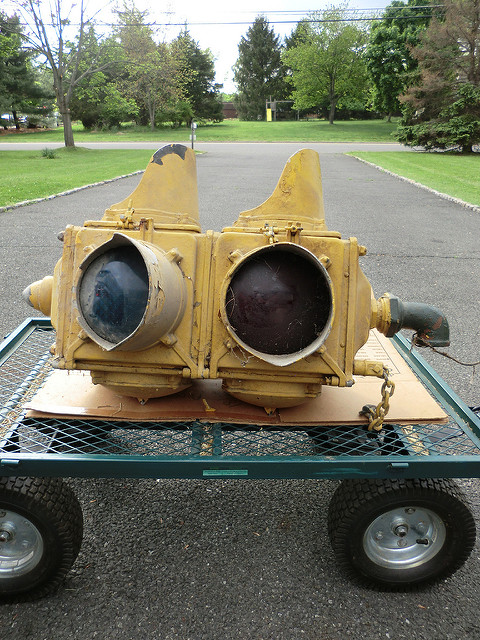


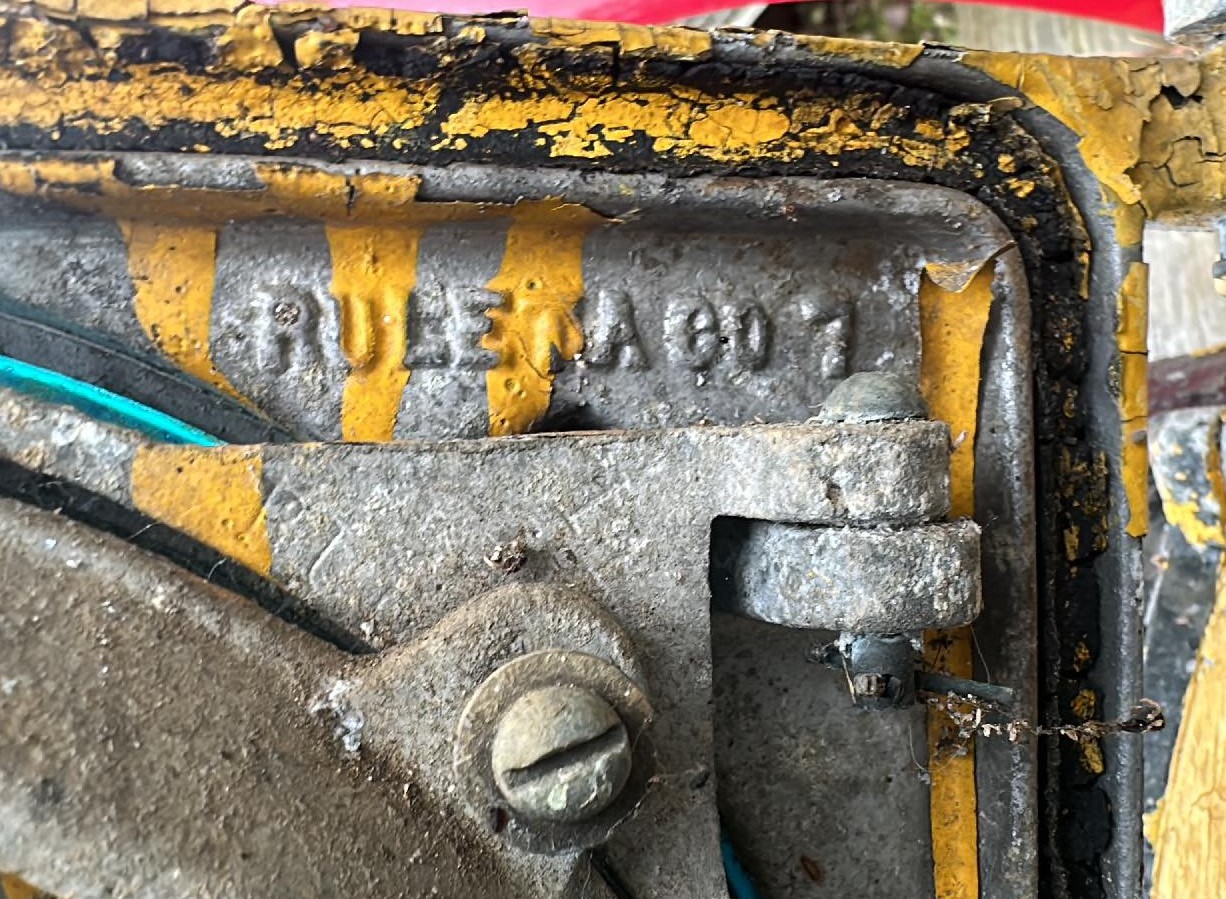
In May 2012, I spotted a cryptic, text-only Craigslist ad for a traffic light. I had a hunch that it might be a desirable light, so I wrote to the seller, and received one small image (above, left) that confirmed my hunch. At that time, Ruletas were not showing up very often, and the prices had gotten quite high. The seller was asking a fair price price for this one, so I immediately drove up to New Hampshire to make the purchase. The seller, a New York retiree, told me that the light was given to him on the spot by the contractor who was removing it from service on Merrick Boulevard in Laurelton in the mid ’70s. Looking through old photos, I am not certain that Merrick Boulevard had any overhead 2-color lights, so I wonder if his memory may be wrong about the precise location.
This is a later variation of this type of signal, probably made after World War II. The original wiring was plastic-coated, but the feed wires into the light were cloth insulated. There is a 2″ steel elbow at the top for mount on an overhead mast. It is configured as a 3-way signal, with one of the four sides covered by cast aluminum “blanks”. To my initial surprise, there were lenses, reflectors, and light bulbs under the blanks. All lenses are Kopp No. 27.
My signal (and a few others I have seen) has no manufacturer name stamped or embossed anywhere. The casting for this signal was originally designed and manufactured by Horni, then passed on to Ruleta. Signals of this ilk have also been found with the name Jonson and the name Interflash. In all cases, the manufacturer name was either stamped or embossed on the doors and other parts. I have decided to call my signal a “Ruleta” because that is the name most often associated with these signals.
2014 – Back in Black
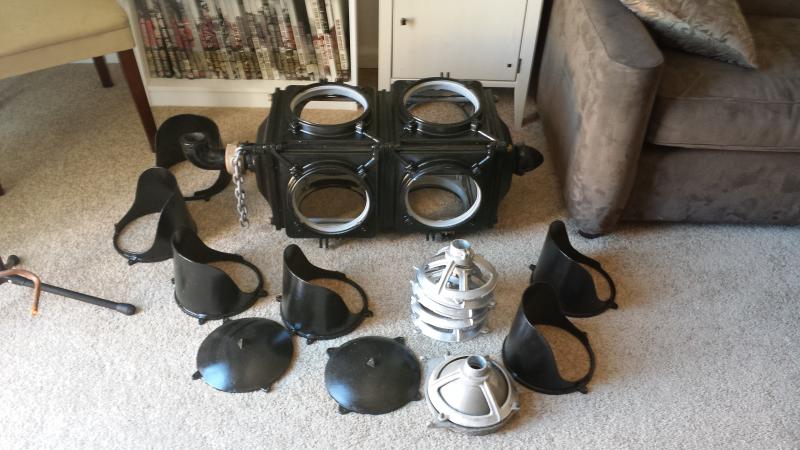
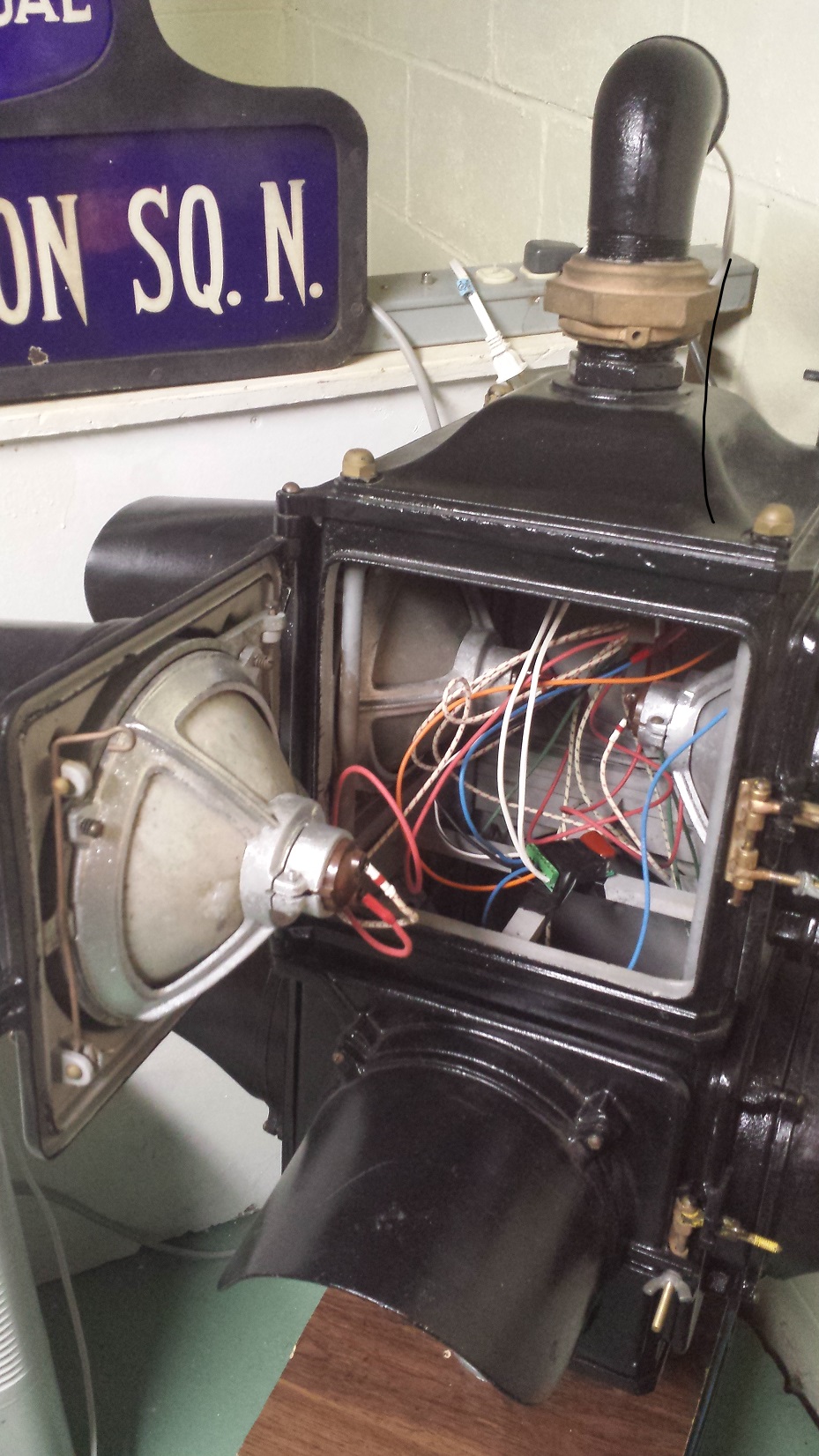
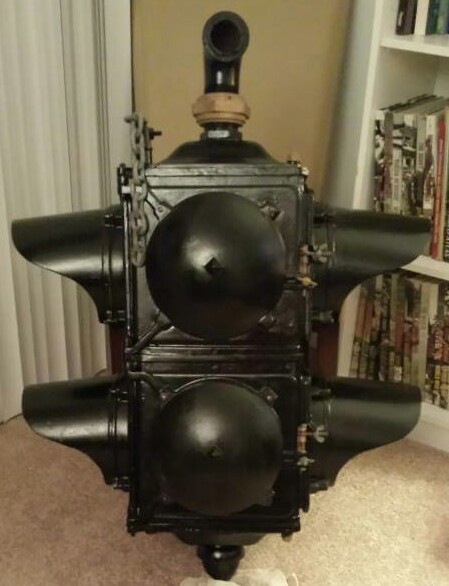
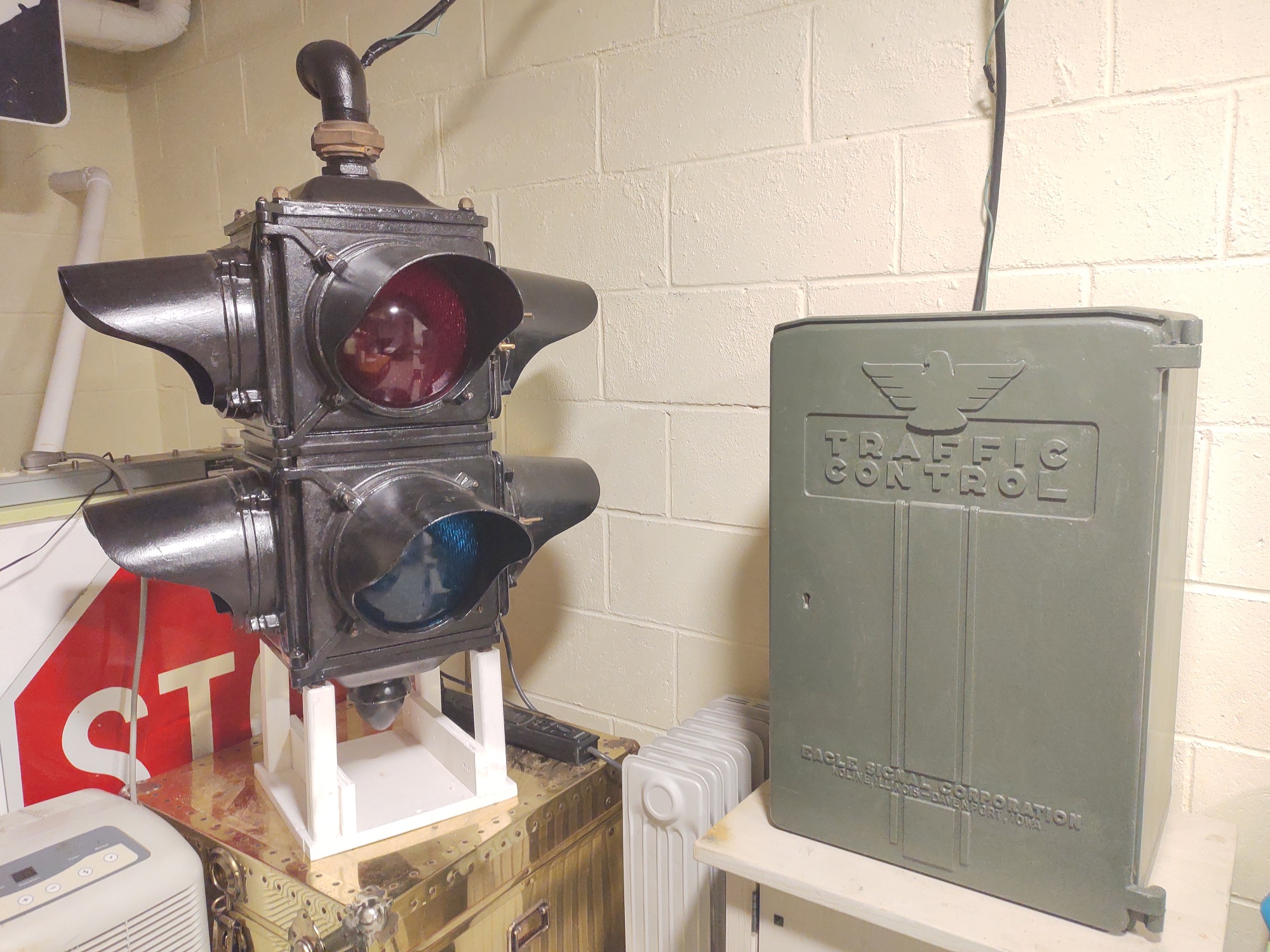
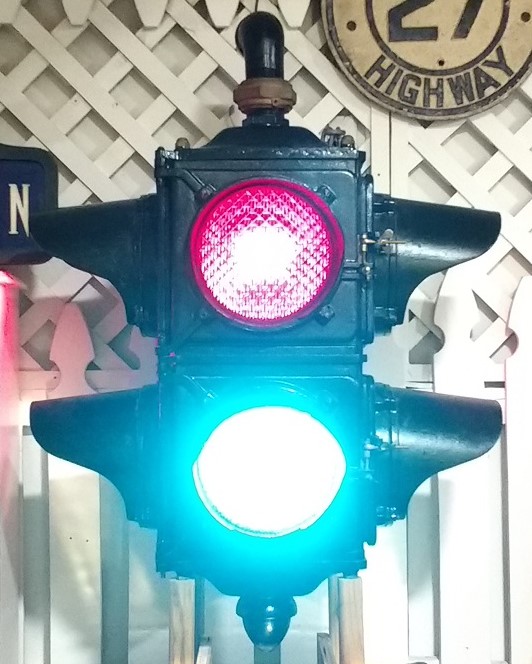
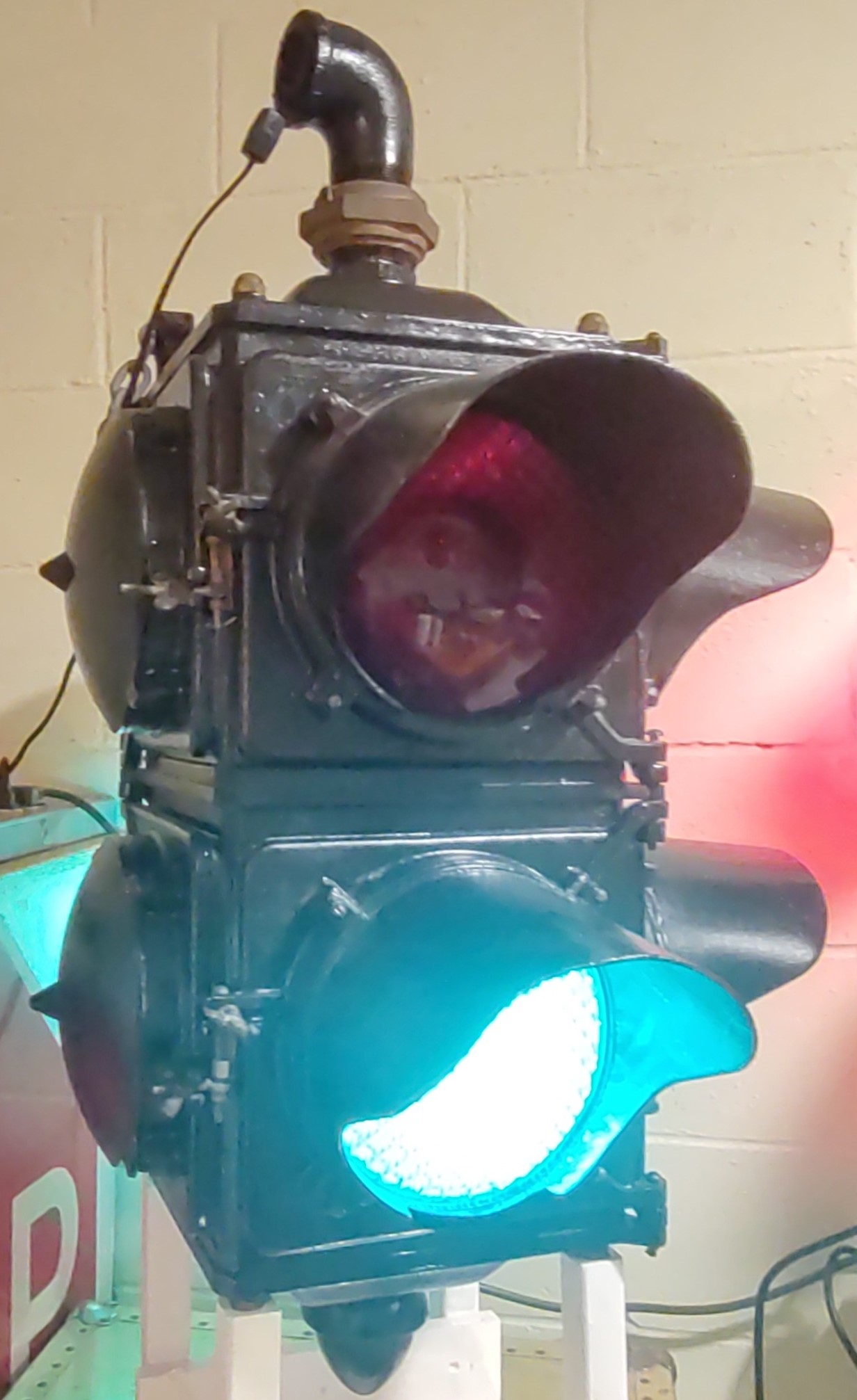
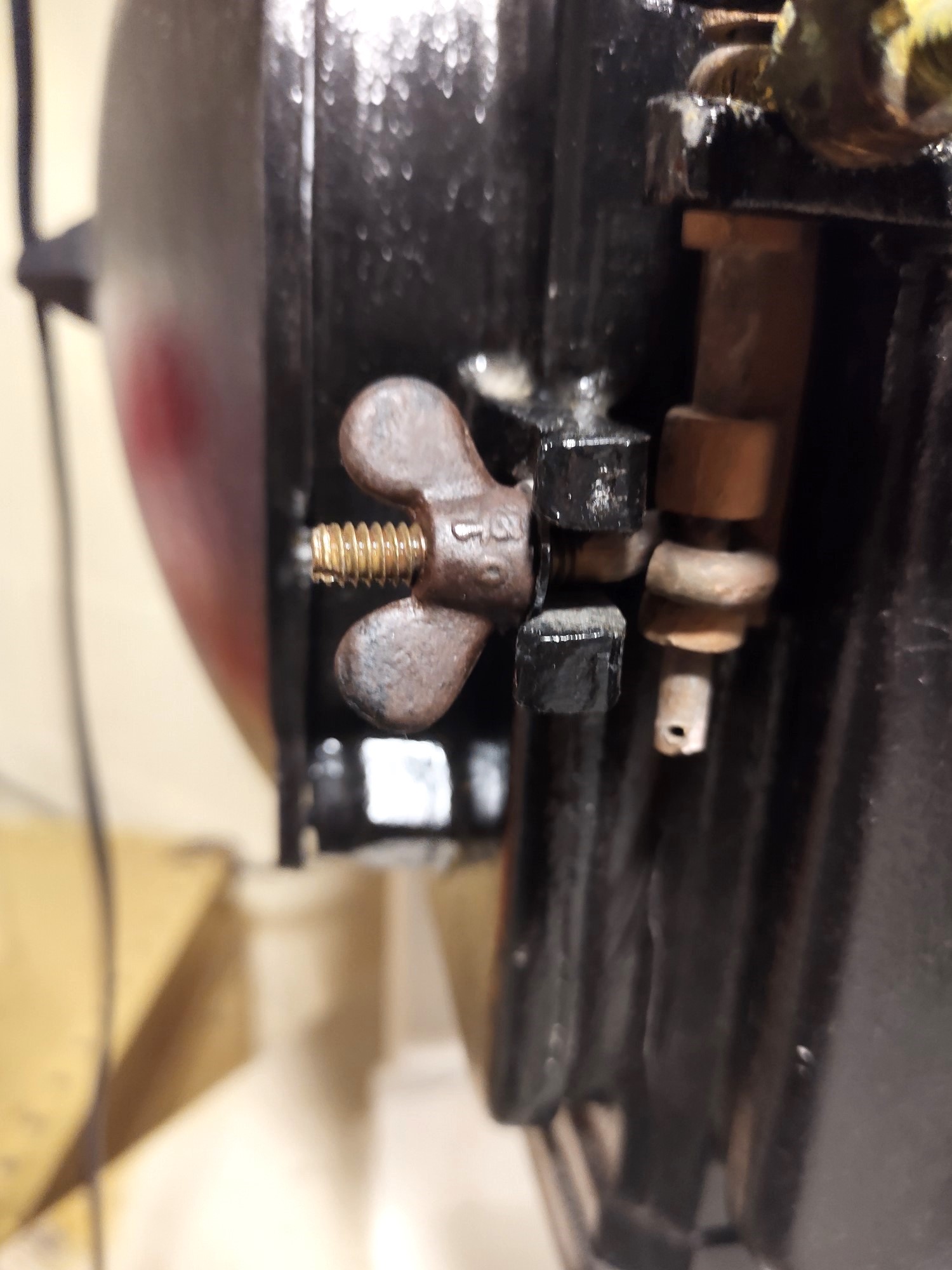
In early 2014, I had the light professionally stripped before I brushed-painted it glossy black. New York City originally painted their signals either black or olive green. All of them were re-painted yellow in the 1960s during the reign of Traffic Commissioner Henry Barnes. I was able to extract a couple snapped bolts, but several remain. The light was was missing one of the brass pin mounts and six out of the eight “Mickey Mouse ears” wing nuts. I was able to find all of those parts through other collectors, and it took me until 2024 to replace the last wing nut, which I found on an old loom we threw away from the attic.
To display the signal, I built a small wooden tabletop mount with clearance underneath for the final.
Special thanks with this restoration goes out to several people, including:
- the late Gordon Loeffler, for rewiring the sockets
- Sean Breen, for making the customized controller
- Dave McPhail, for several rare-as-hen’s-teeth brass wing nuts to replace the missing ones
- Lary Brown, for custom-making brass eye bolts to fit the old wing nuts
- Ed Tapanes, for his assistance with getting this light dismantled, and for keeping his tongue off it, at least when I wasn’t looking
- and, of course, Patrick Gorman, who generously got me into the “Ruleta club” twenty plus years ago…
 Garden State Signals