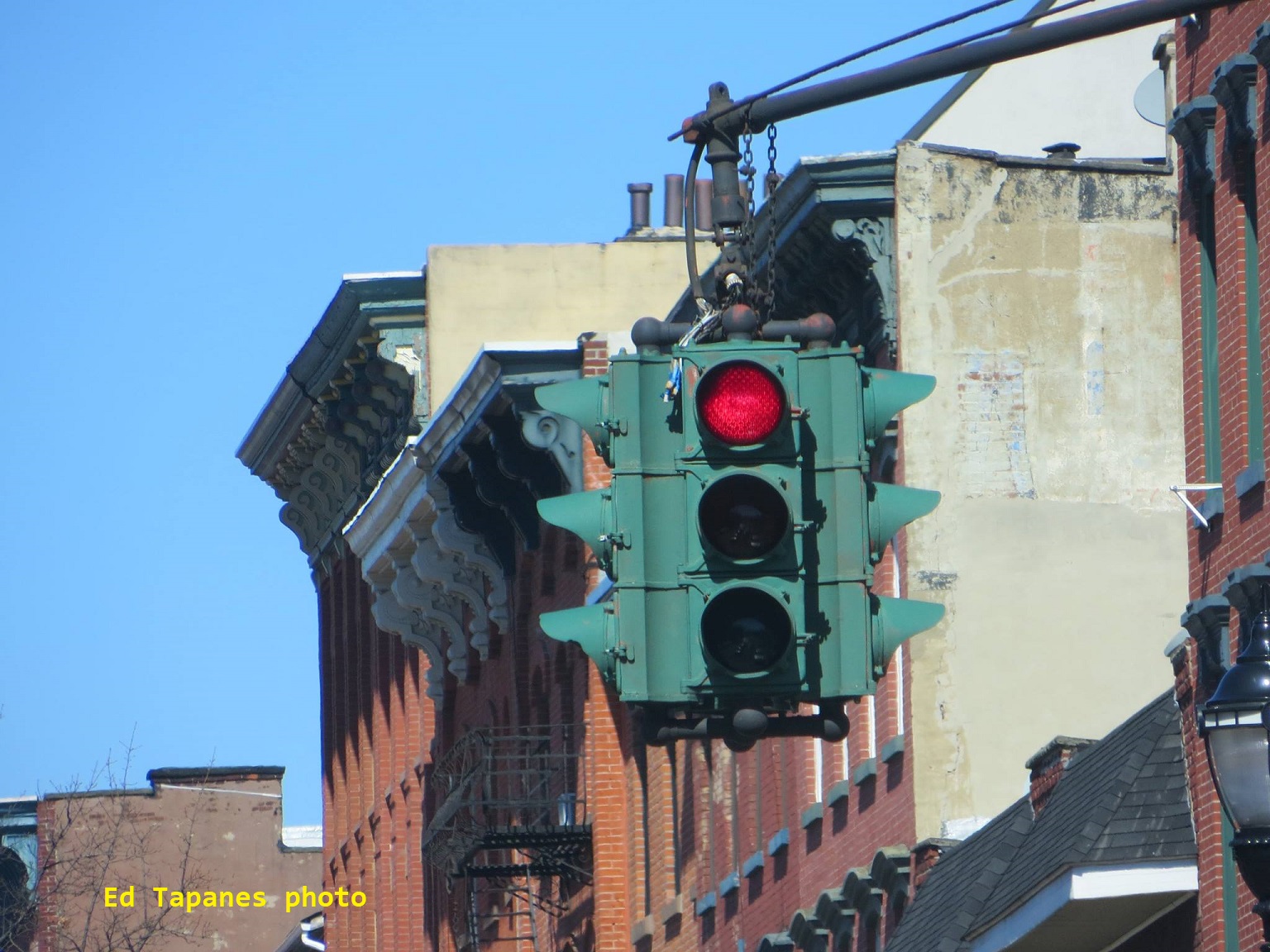
As traffic volume, road width, and average vehicle speed increased, it became increasingly common to suspend traffic signals above the road for better visibility. Steel mast arms stabilized by guy wires were installed at intersections all over New Jersey from the 1920s through World War II, after which, aluminum masts became the standard. Signal heads could be suspended on the mast either vertically or horizontally, with the red light on the left in the latter case. A small number of steel guy wire masts are still scattered around the state today, and almost none of them still have the original signals attached to them.
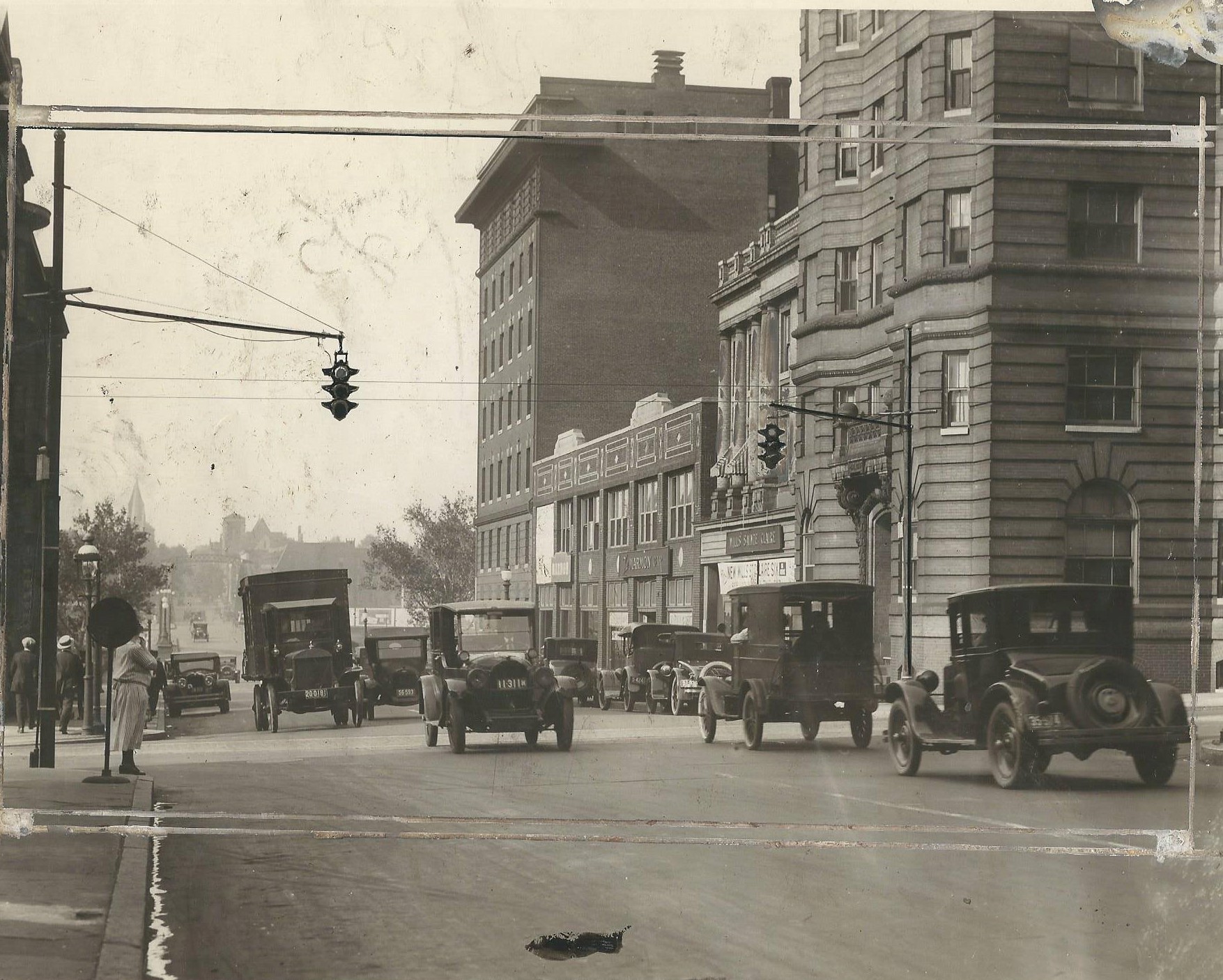
Horni Type 250 signals with 6″ lenses are suspended by steel guy-wired masts at an unknown location in the 1920s. Notice the signals heads are touched up. The signage on the buildings are for Marmon Cars and Mills Sainte Claire, small auto manufacturers from Indianapolis and Marysville, MI, respectively.
Photo provided by Mike Natale.
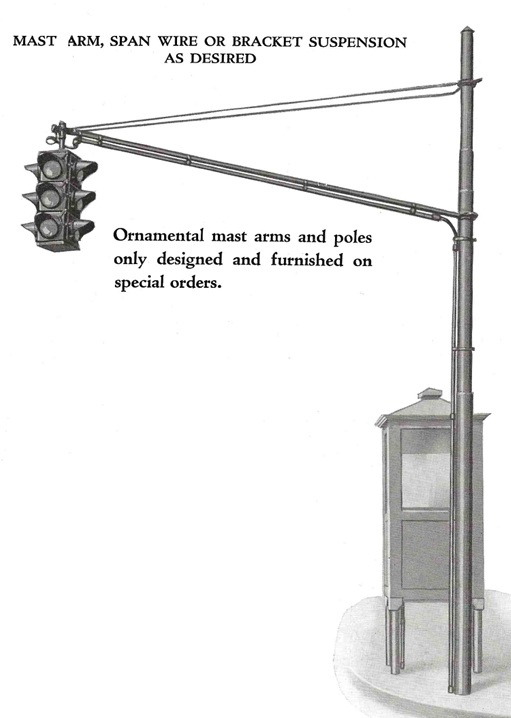
From the 1930 Horni System Bulletin #9: One could purchase the poles and masts from Horni along with signals and controllers. I am not aware of any other ads for poles and masts by a signal manufacturer.
One of the big suppliers of aluminum poles and masts after WWII was Pfaff and Kendall. I had a very nice multi page P&K print ad, but sadly lost it in a flooded basement before I ever scanned it.
Hudson County
This wonderful, ca. 1940 photo of Weehawken and the nearby Manhattan skyline is interesting in many ways, not the least of which are the traffic lights. A Horni Type 491 island signal from the mid 1920s is still in the middle of the street, and by this time has been joined by a steel mast arm with a 4-way cluster of Horni modular signals.


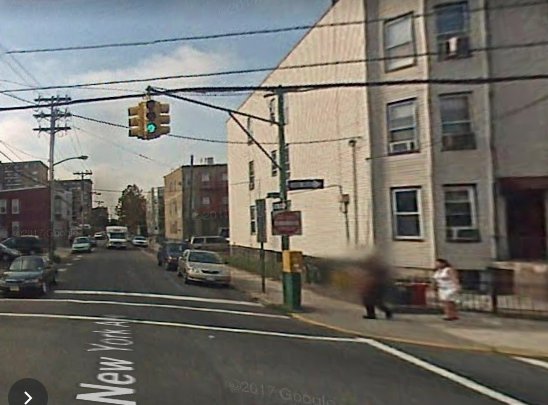
Union City and other neighboring towns in Hudson County are like a place that signal time forgot. Unfortunately, time eventually caught up with this lone Horni/Marbelite cluster from the 1930s or 40s. But it stood valiantly at the corner of 47th and New York Ave until sometime soon after the 2007 Google image above on the right. The image on the left was probably taken around 1960 from a slightly more distant vantage point.
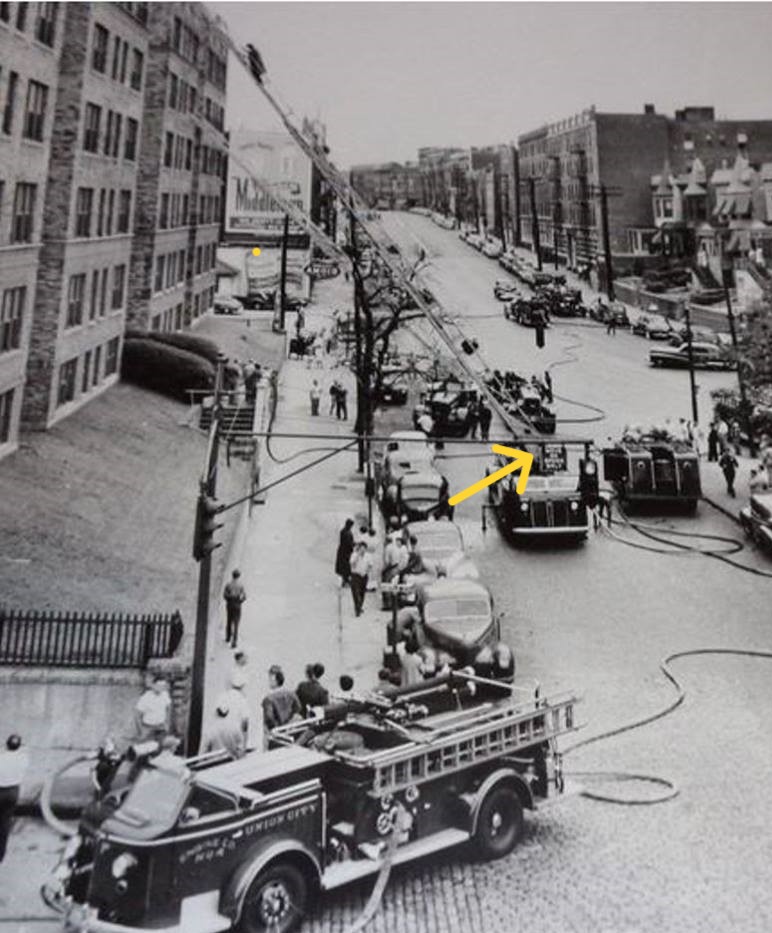
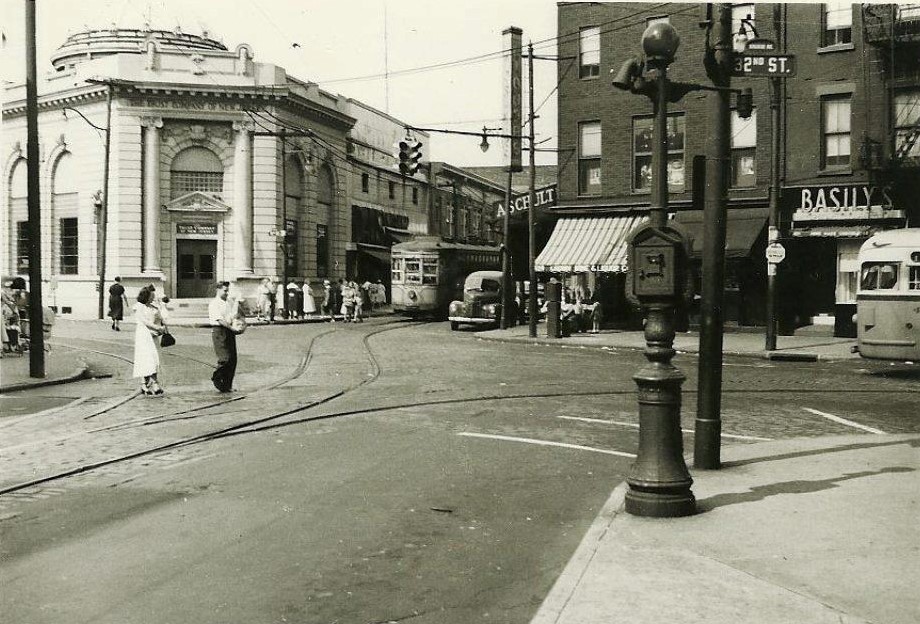

More steel masts from Union City… The sign highlighted by the yellow arrow in the photo on left reads: MOVE ON GREEN ONLY. This is also seen beneath the Edgewater signal on the Pedestals page. Gino’s was my favorite fast food joint growing up in NJ.


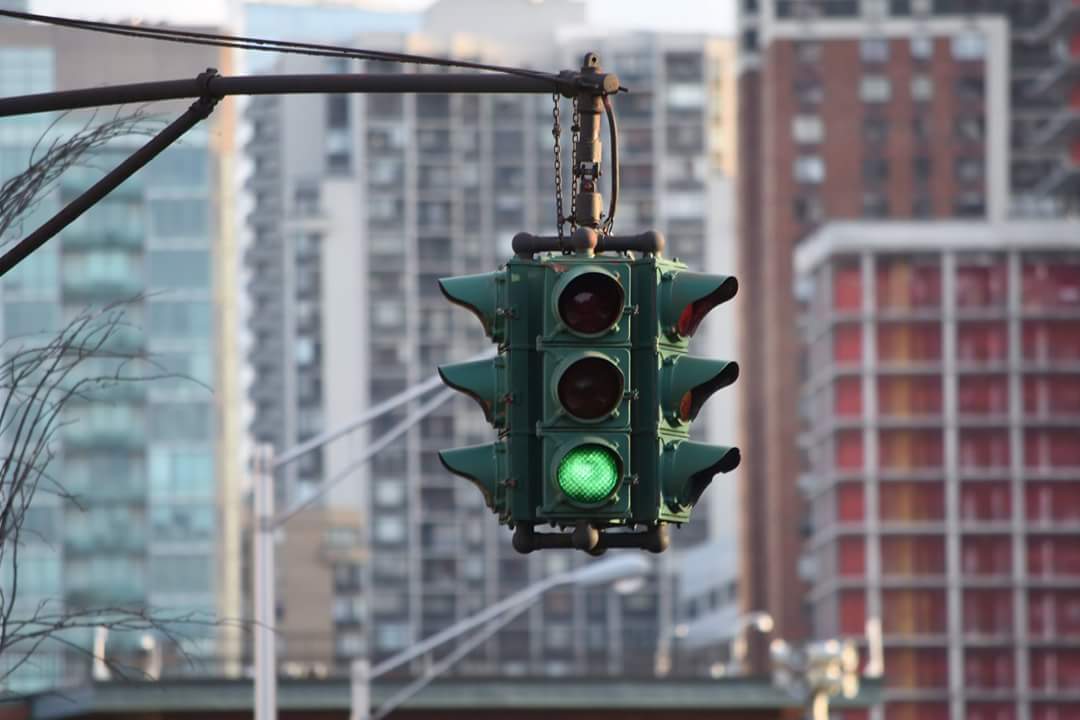
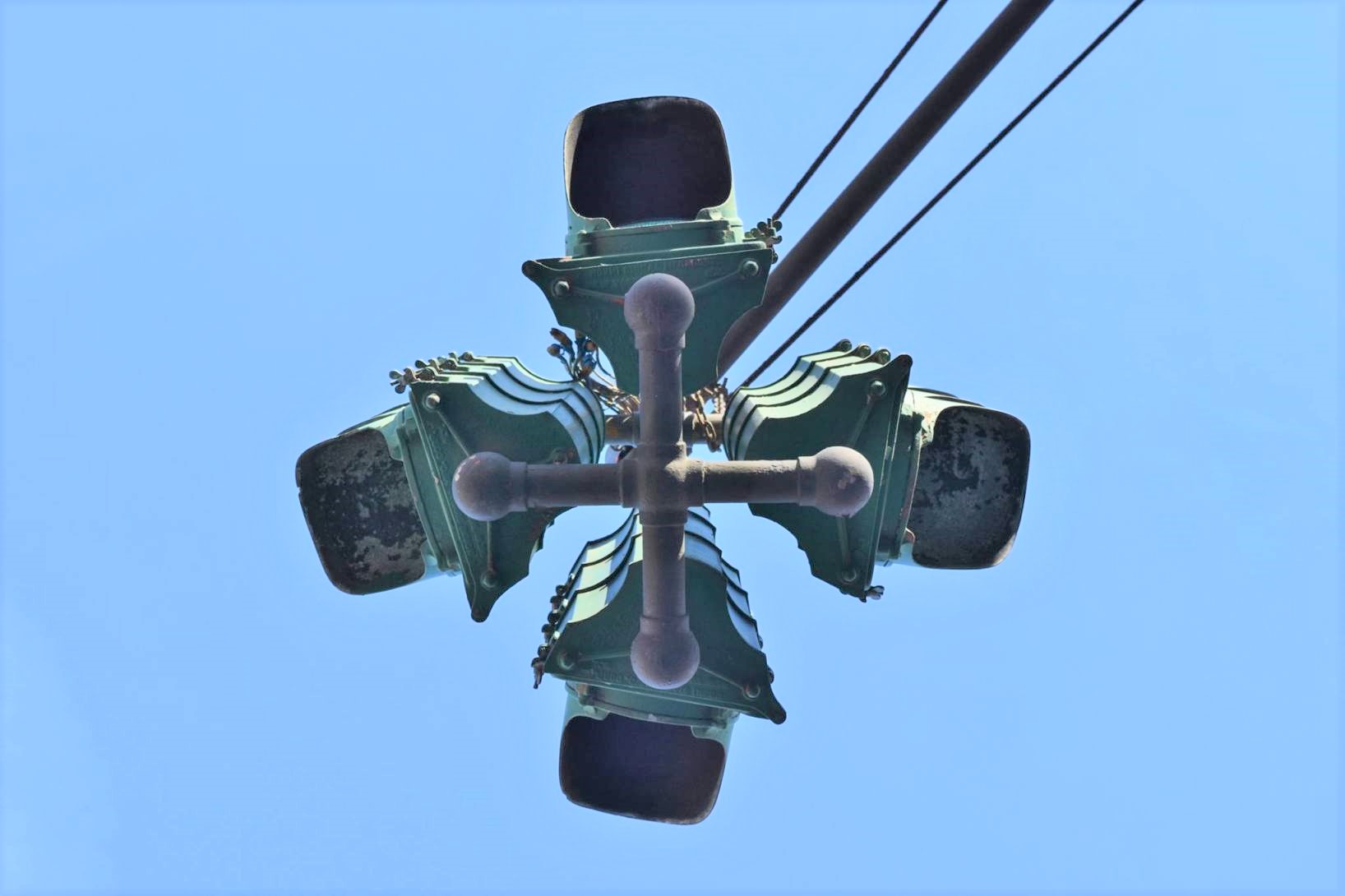
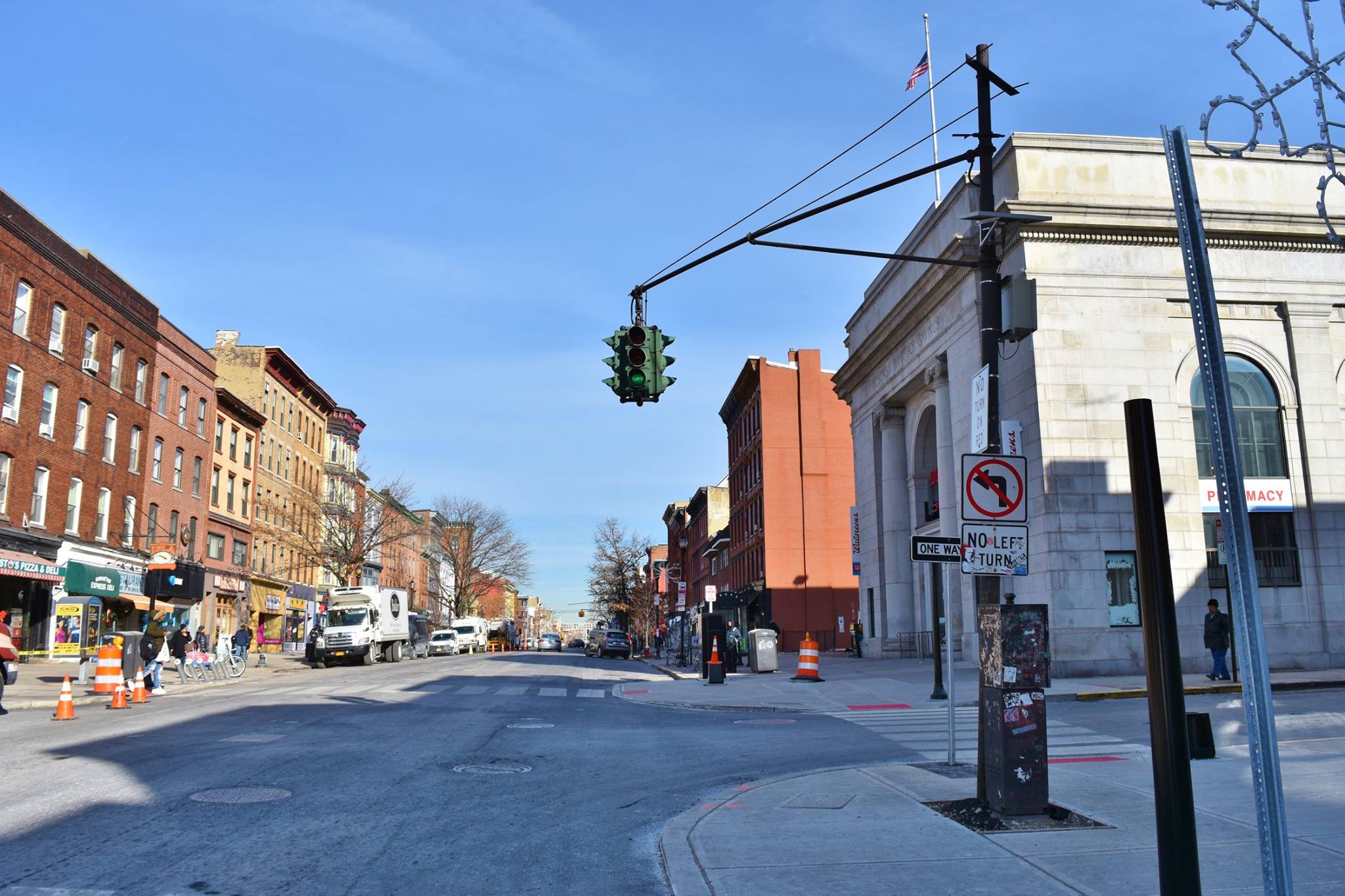
unmarked photos by Kevin Mueller
And moving a bit further south, we arrive in Hoboken, where we find a traffic light that is almost legendary among vintage signal fans – this 1930s vintage 4-way cluster signal in Hoboken, made by Horni Signal Mfg. Corp.
This lone cluster controlled the corner of Washington & 1st Streets without any alteration for over eighty years. It was finally replaced by new signals in April 2018. A few months later, three fellow collectors and I had the privilege of installing it in the Hoboken Historical Museum!

A back-to-back cluster of Eaglelux signals from the 1930s or ’40s hangs from a steel guy-wired mast in Hoboken in 1973. A block away hangs two Marbelite clusters from the ’50s or ’60s with 8″ green arrows. Way in the background are some horizontal signals. This photo represents pretty well the odd mixes of signals from different eras that could be found all over Jersey back then. It’s that sort of variety that I really wanted to capture on this website.
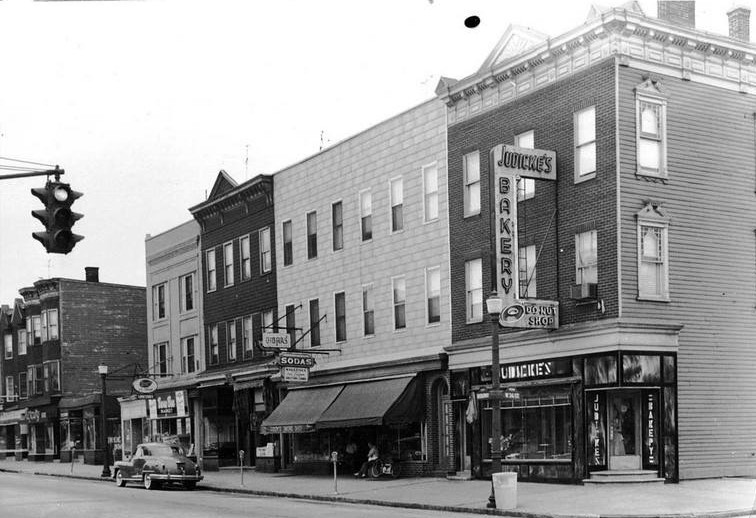
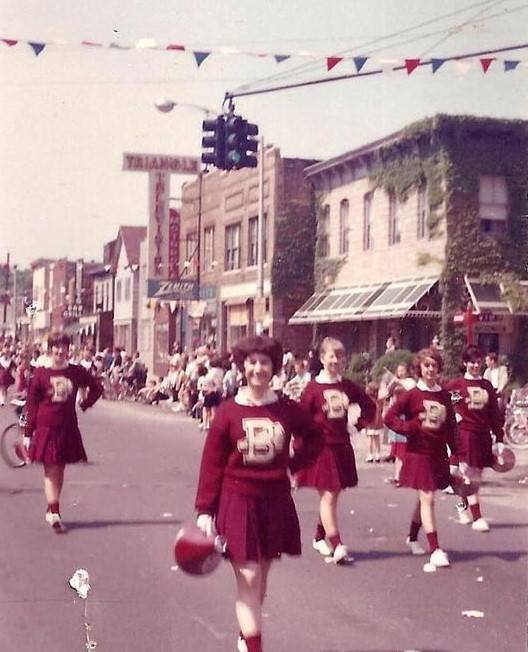
Bayonne – On the left, a corner-hinge 4-way Horni signal directs traffic by Judicke’s Bakery and Donut Shop. On the right, BHS cheerleaders parade underneath a sectional 4-way Horni/Marbelite in 1961.
Atlantic City – Pleasantville
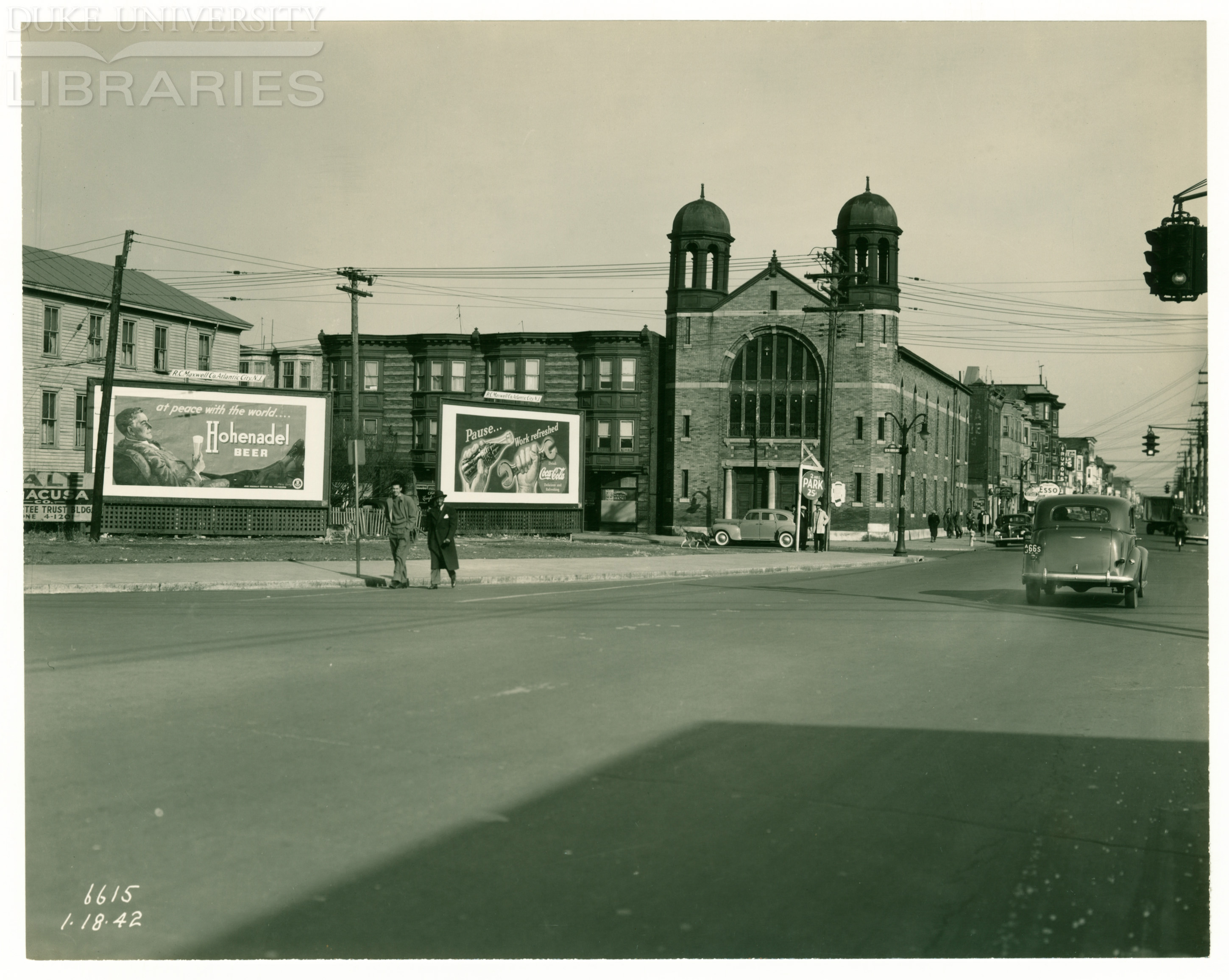
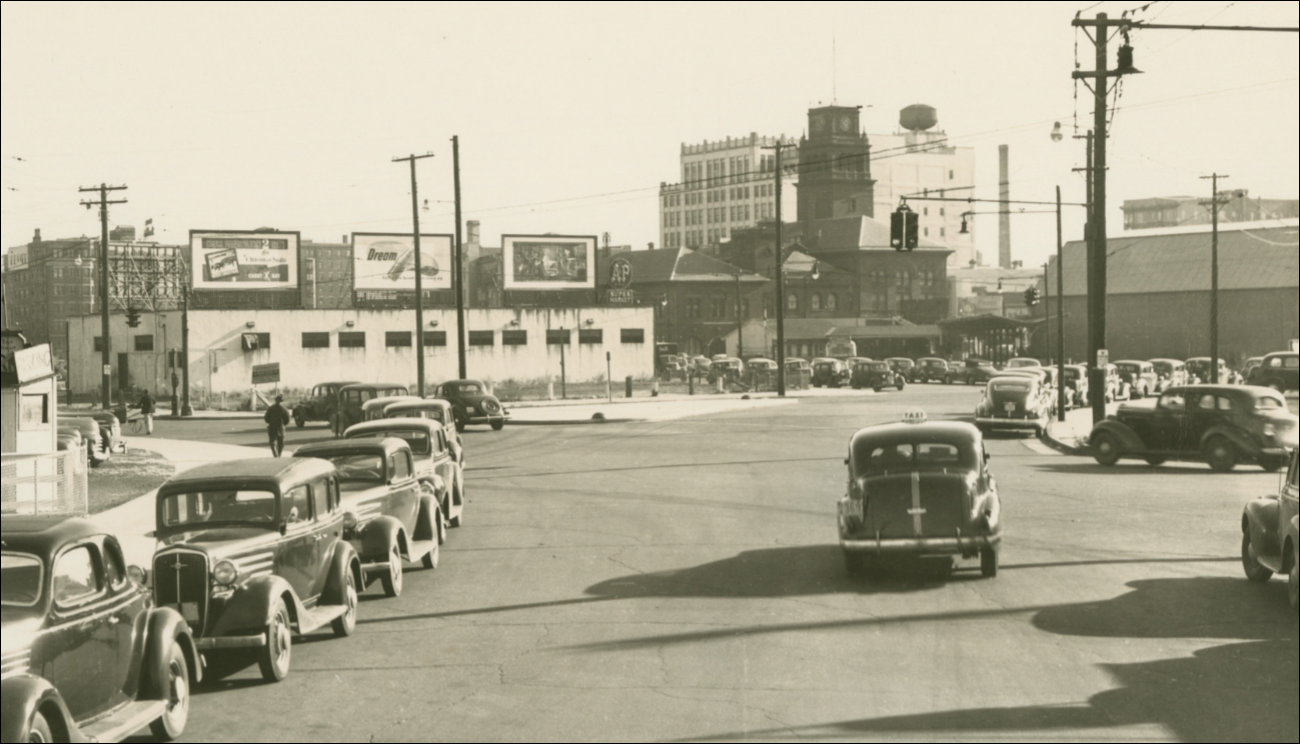
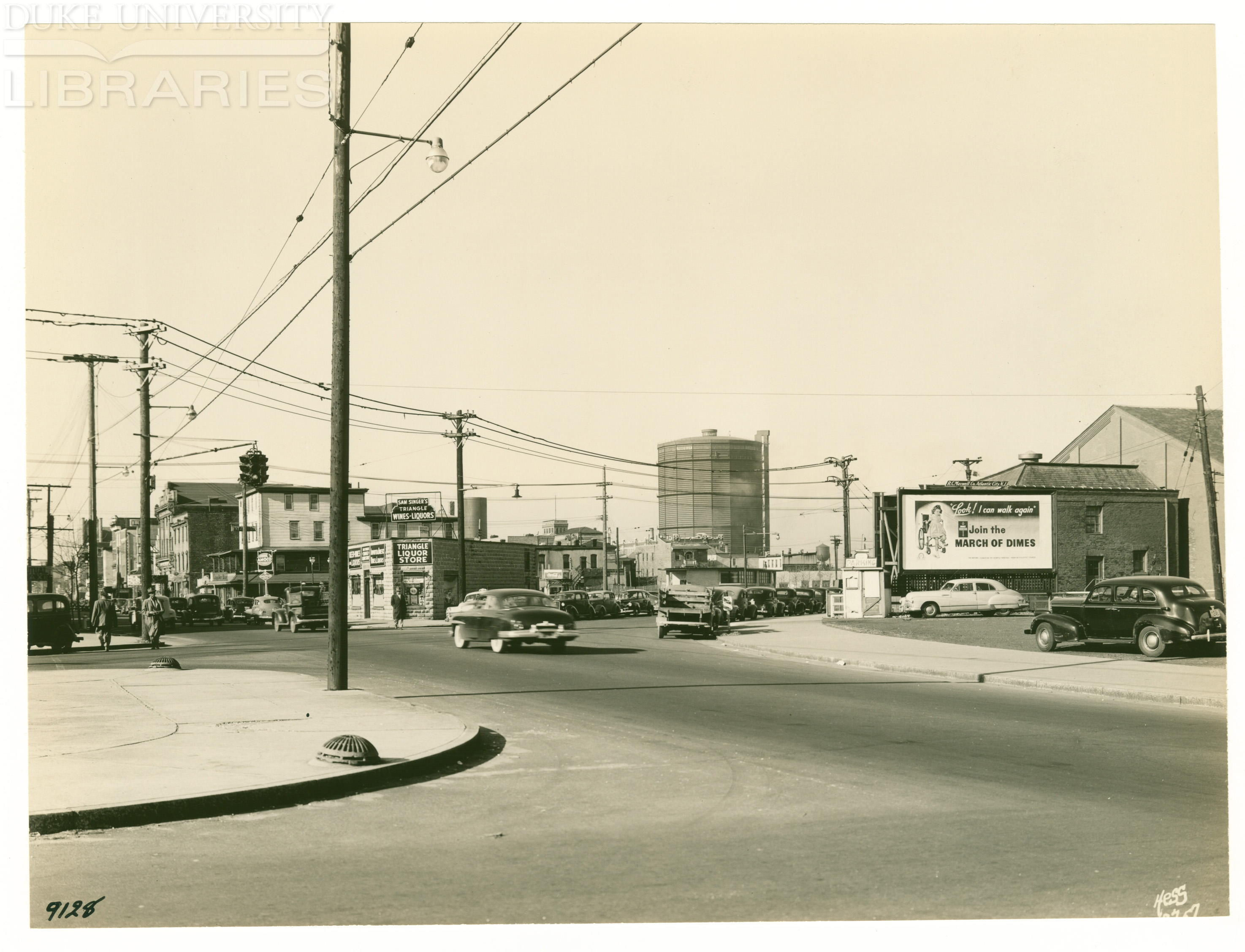
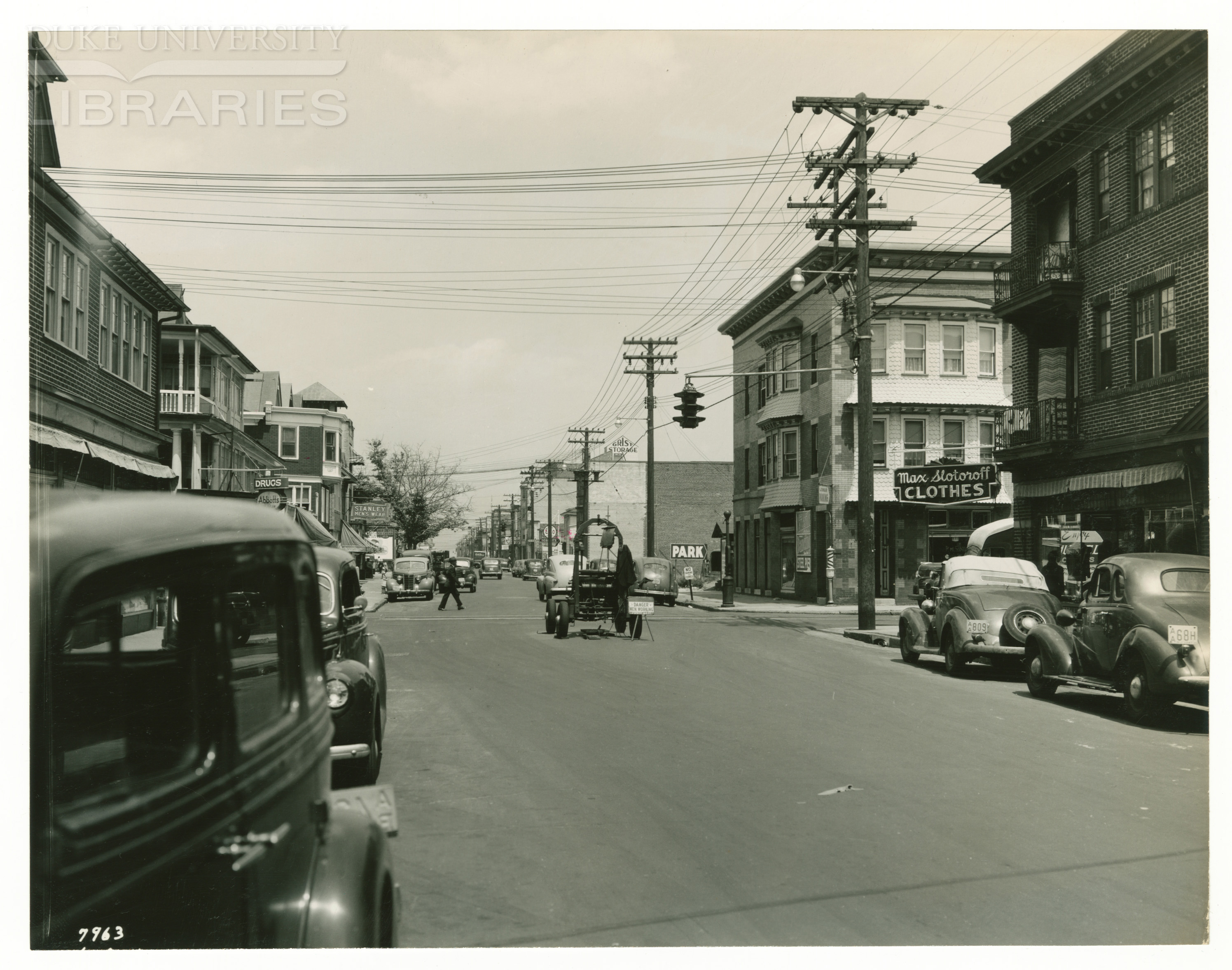
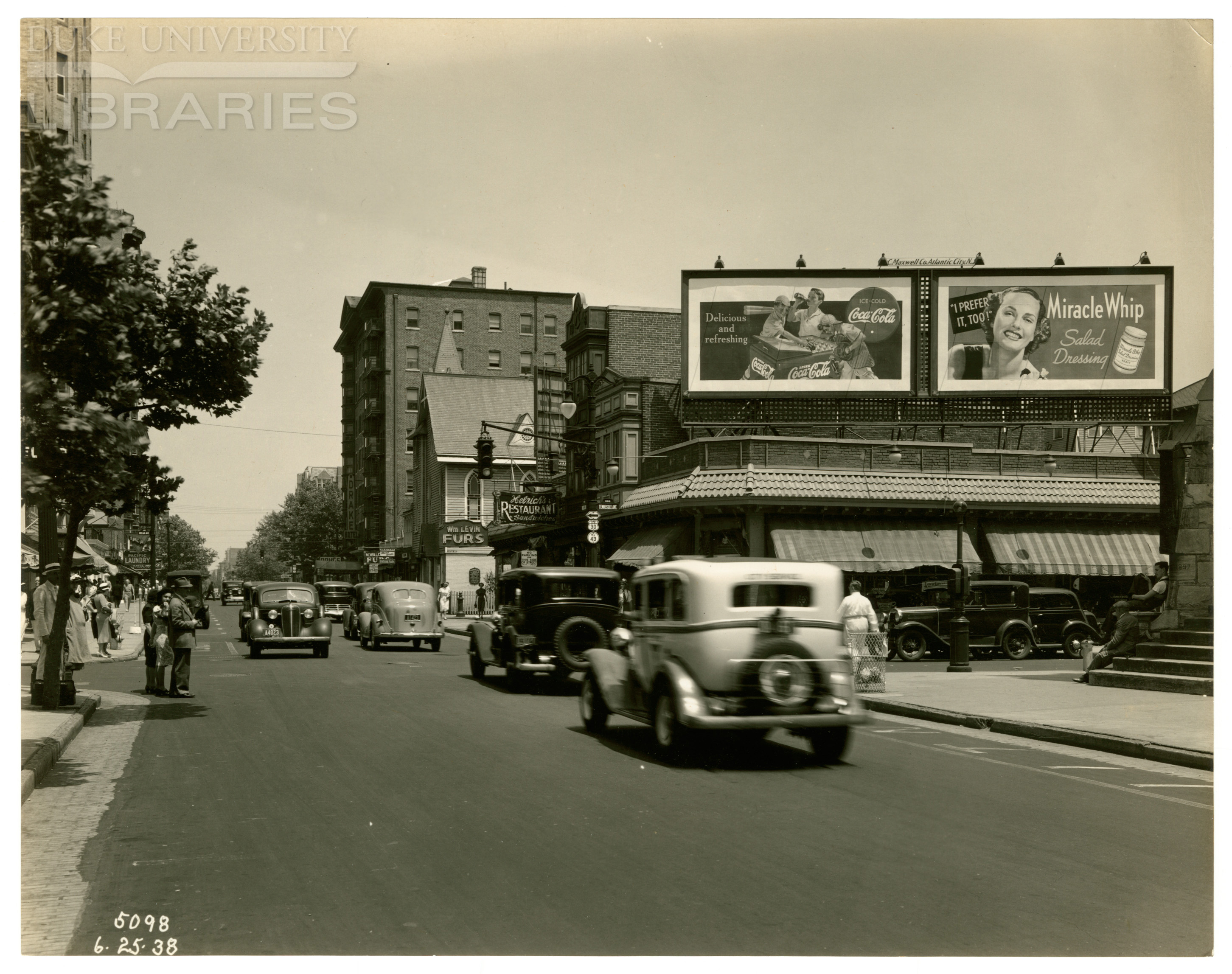
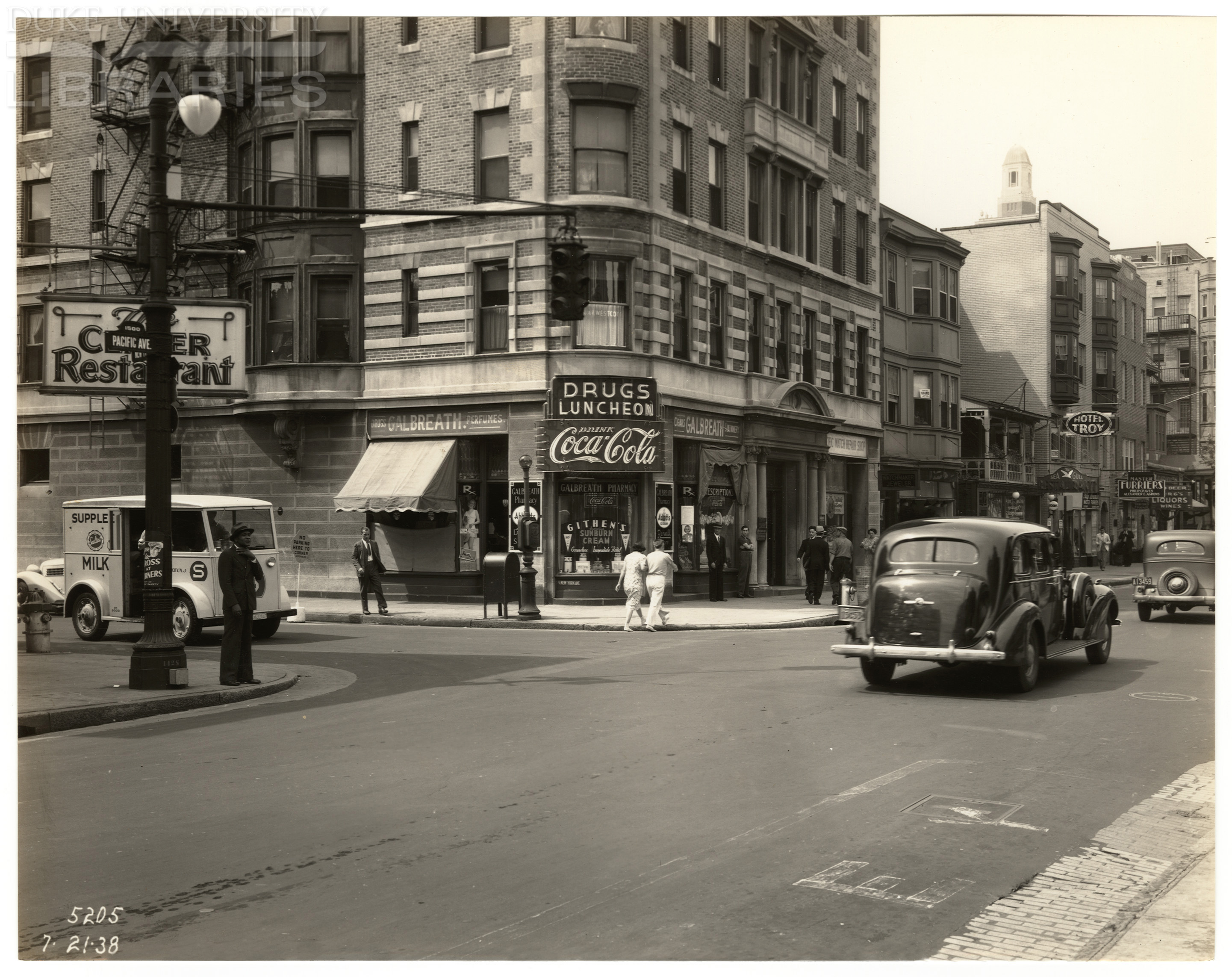
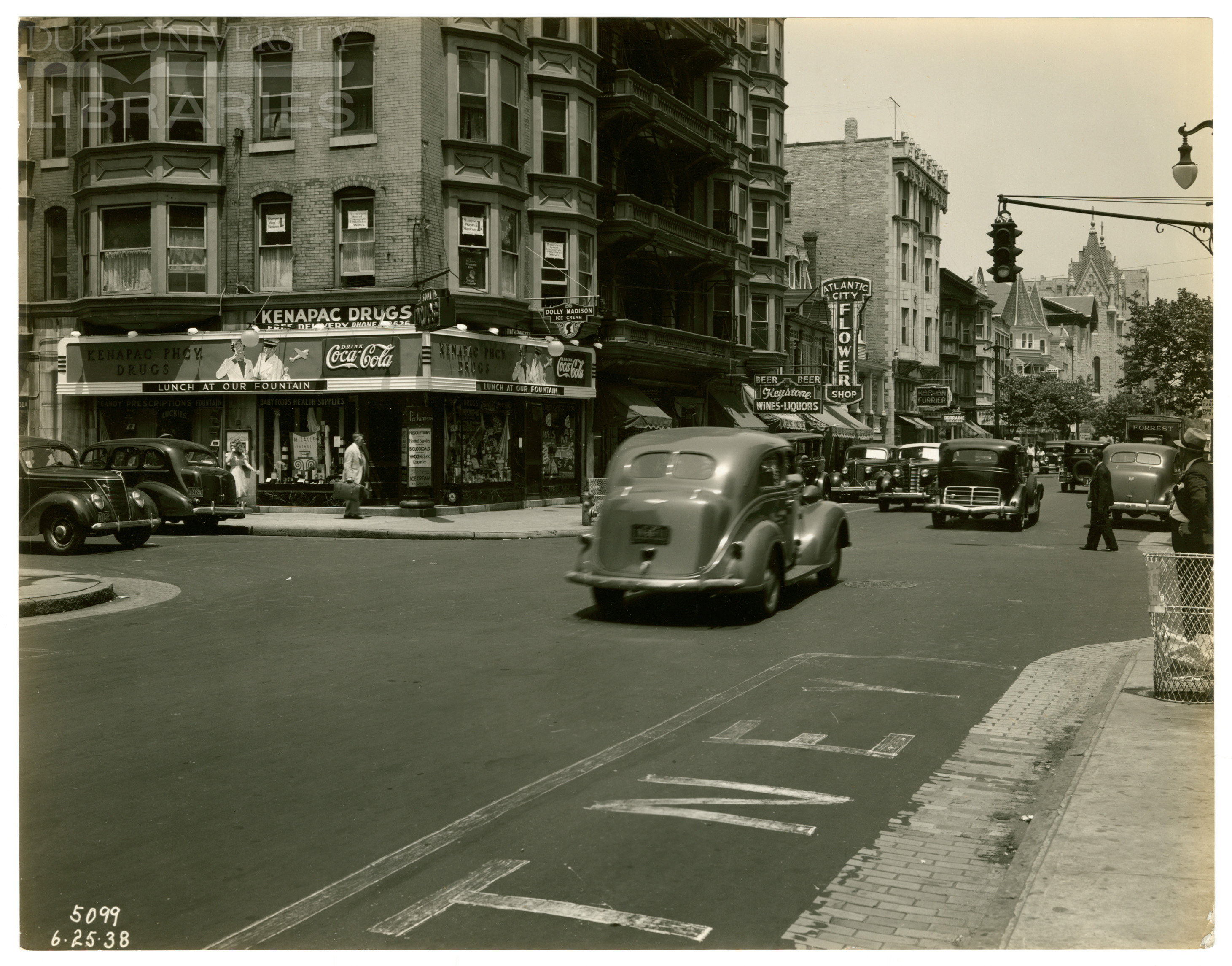
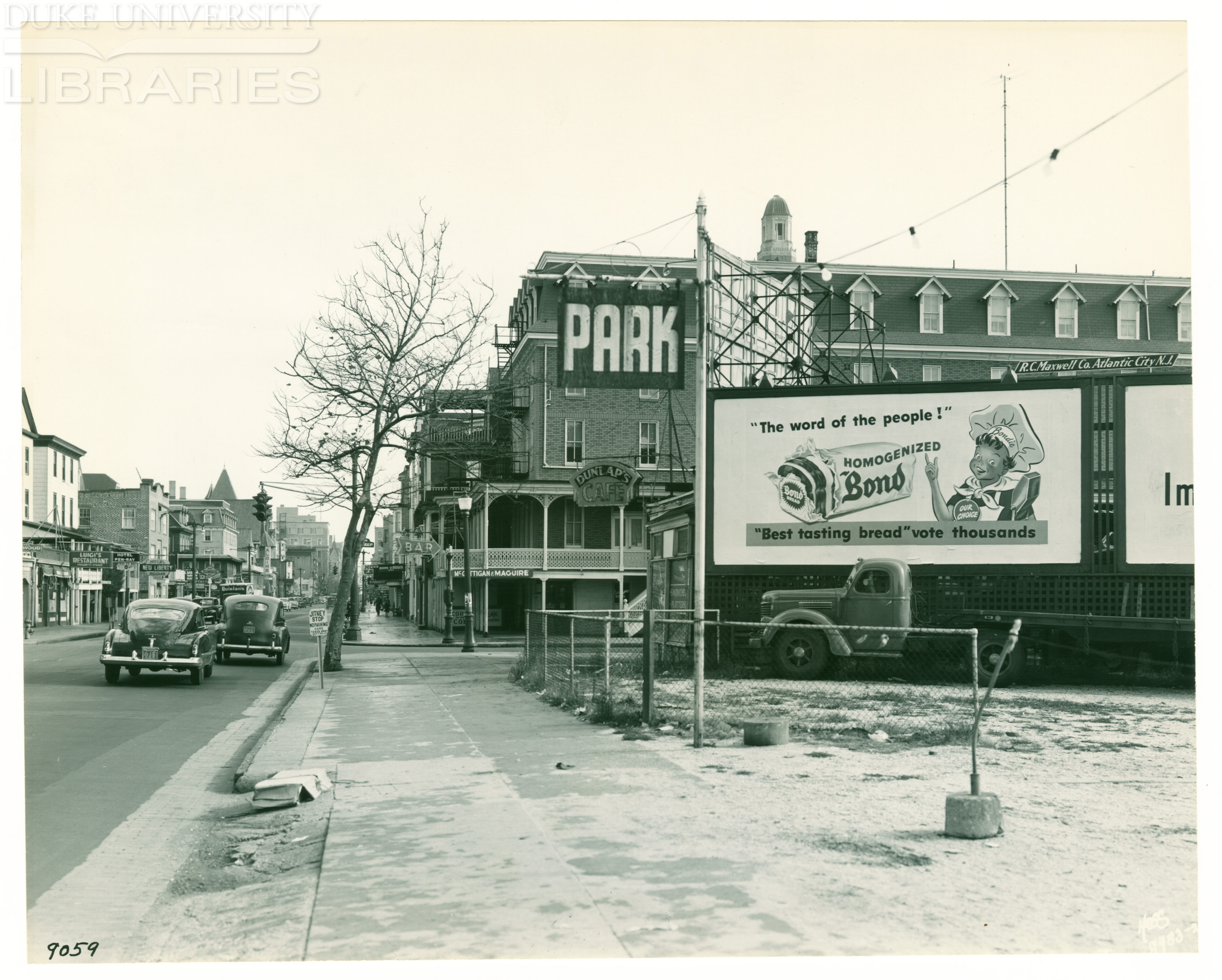
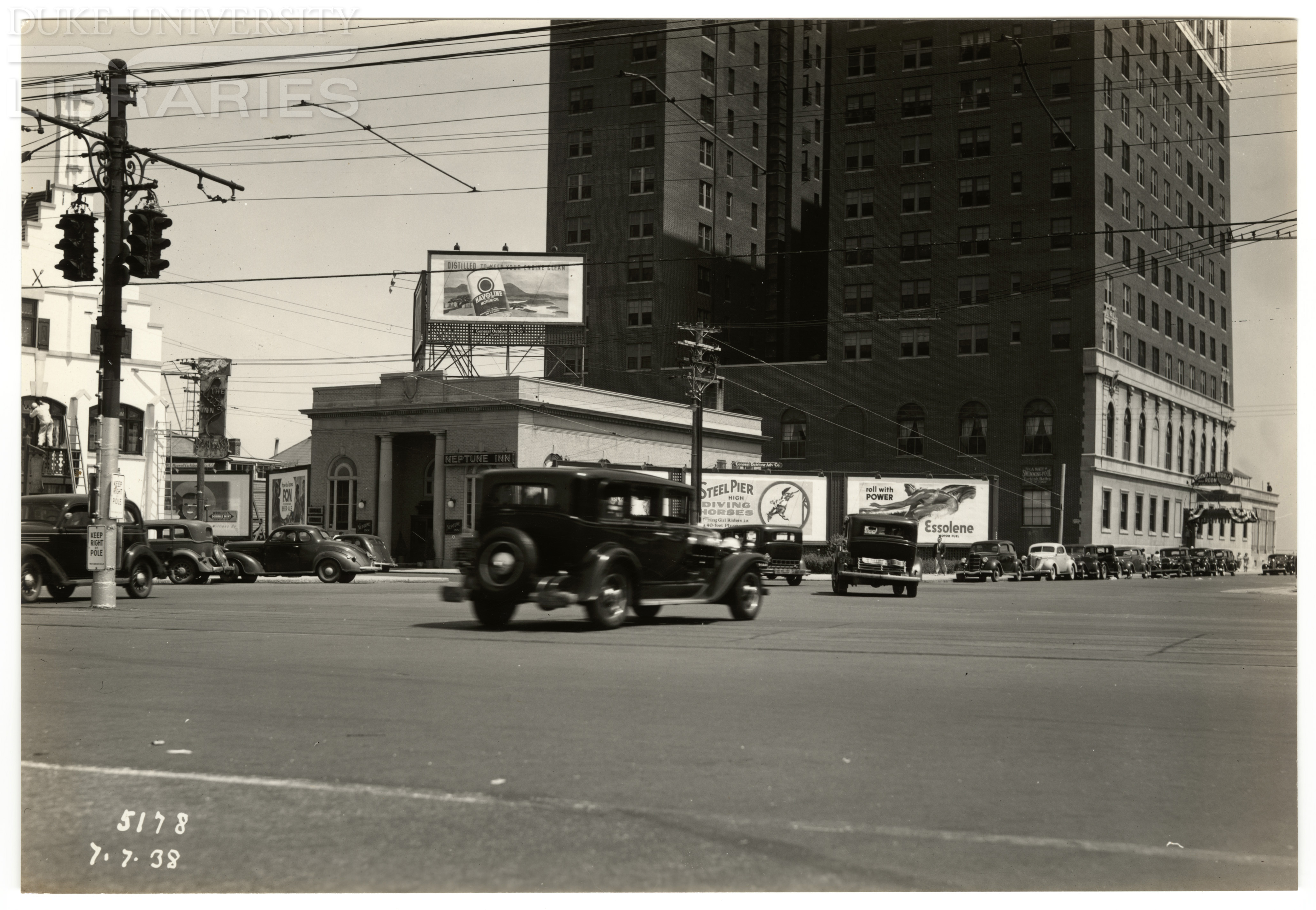
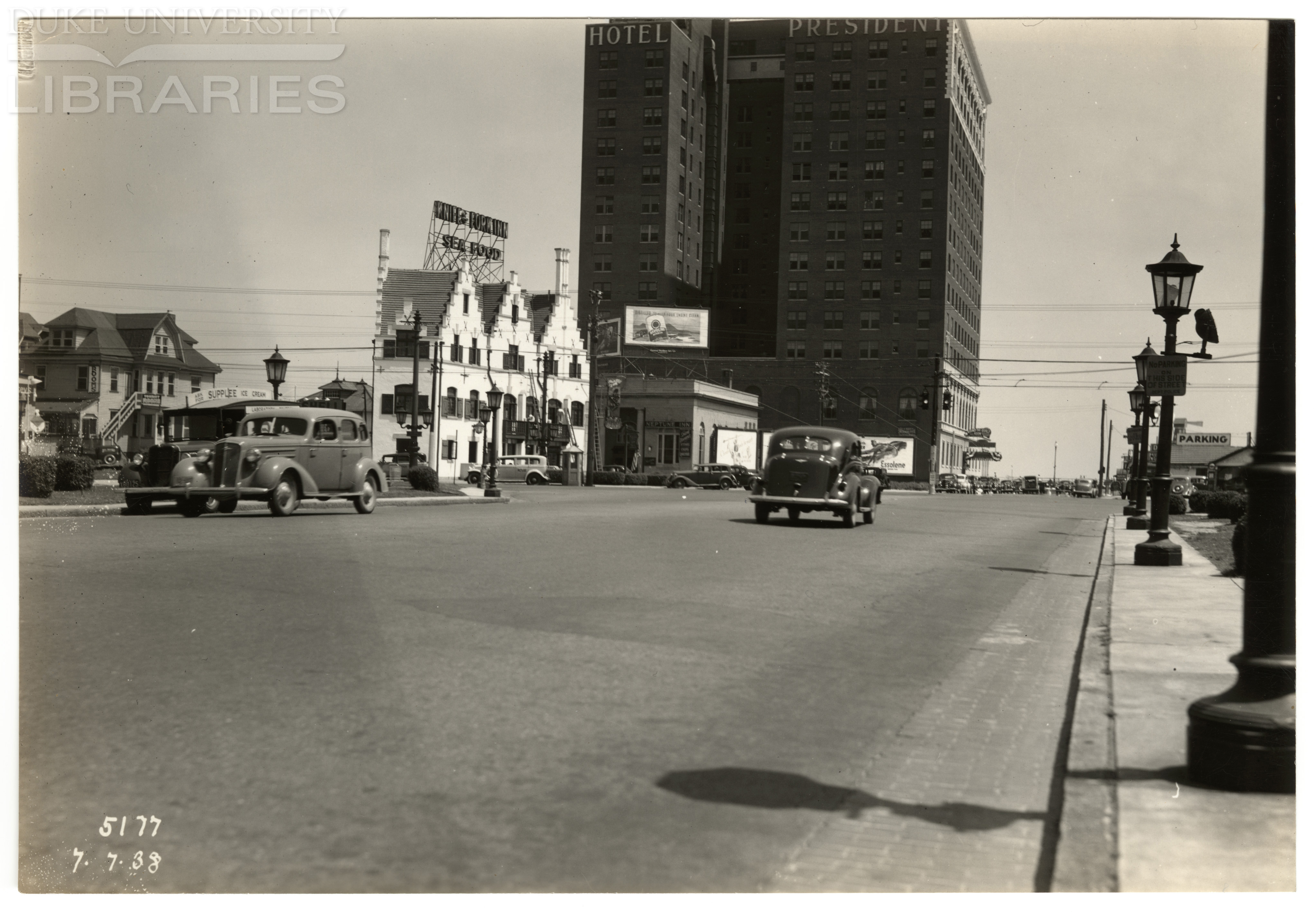
Atlantic City – three different perspectives of a 4-way cluster signal made by AGA. These photos were taken to document the billboards, not the traffic signals. These photos are from the archives at the RC Maxwell Digital Collection from Duke University. This archive was a main source of inspiration to me to create this site.
Take a close look at the middle photo, and you’ll notice the bottom indication is lit in all directions. I wrote more about that on the Weird NJ Signals page.

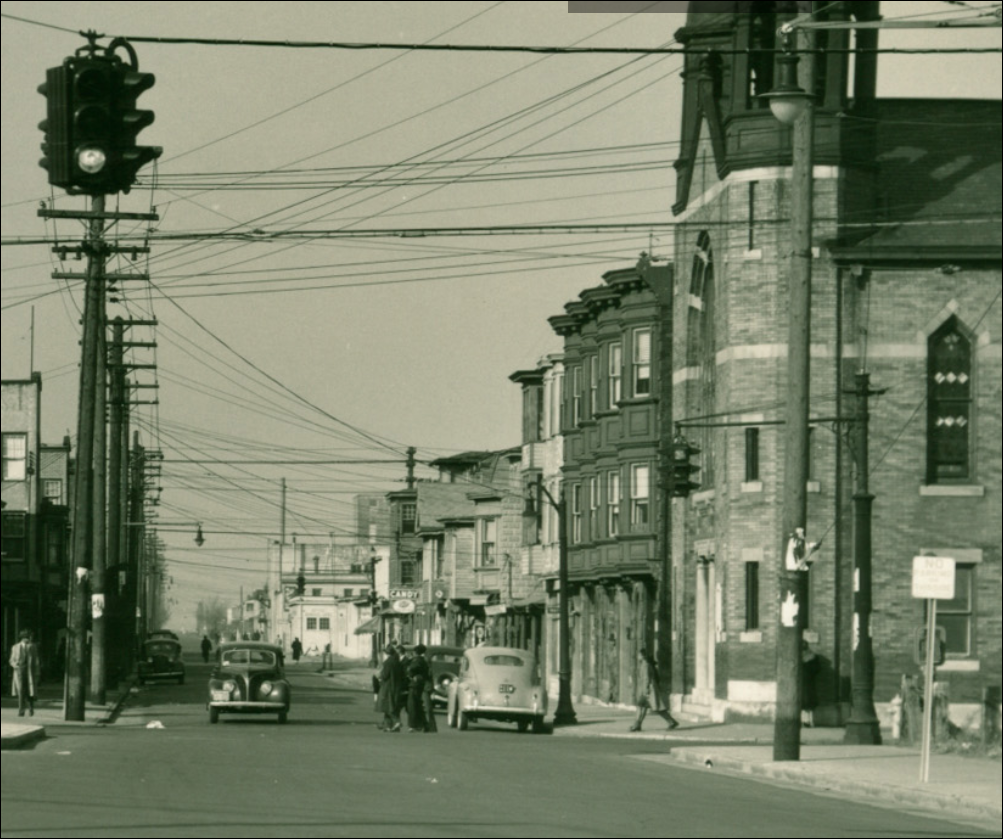
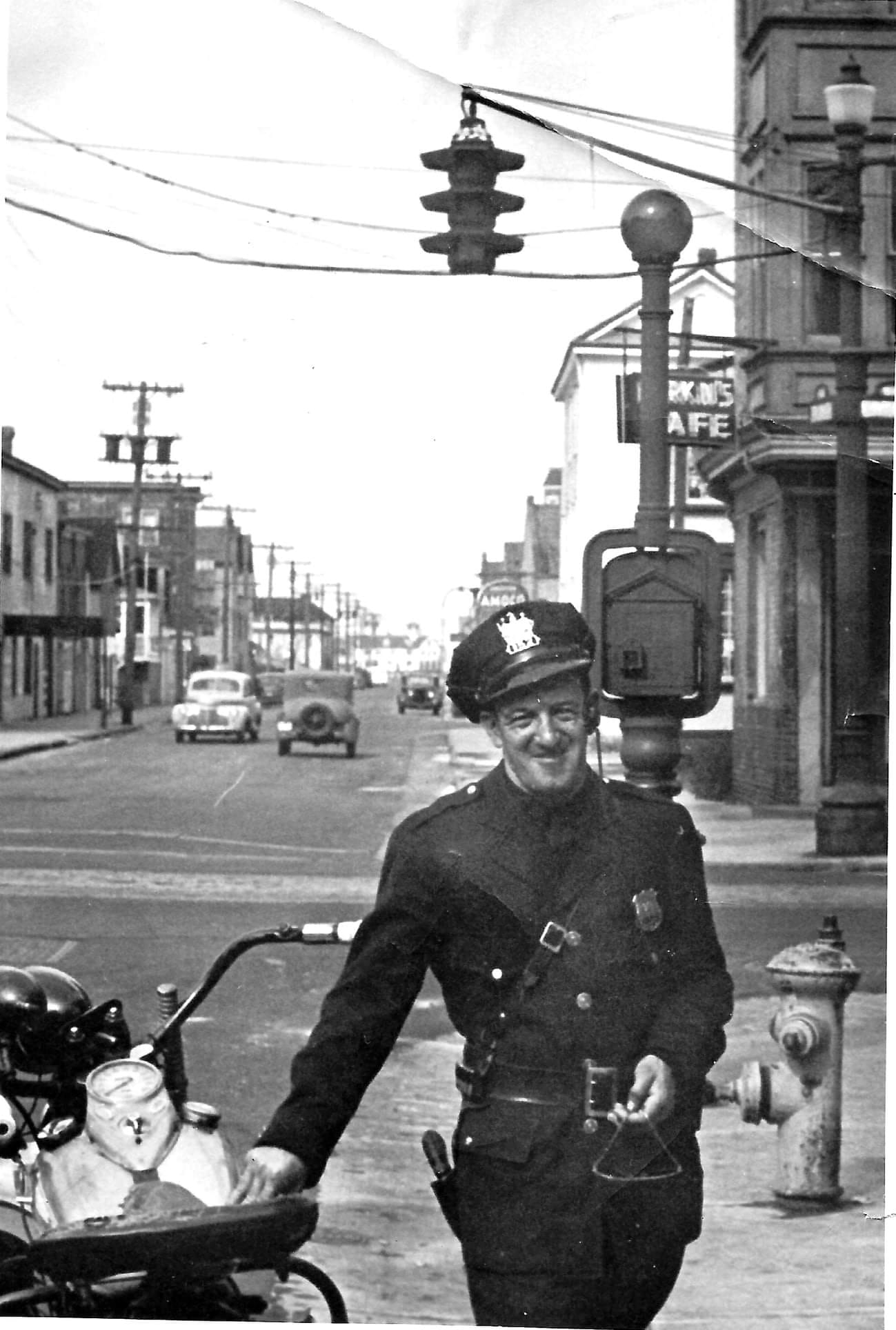
Atlantic City’s truly rare, square-lens GE signals: These were 3-bulb heads, with “upside down” colors for side street versus main street. I would love to find out that at least one of these was saved from the scrap pile.

Crouse-Hinds 4-ways… The first four photos show 3-bulb heads, similar to the square GEs in the previous photo set, and the last photo shows a slightly newer 12-bulb Type D head.
Lastly, paired 3-way signals on very short masts…which appear to be Crouse-Hinds 3-bulbers.
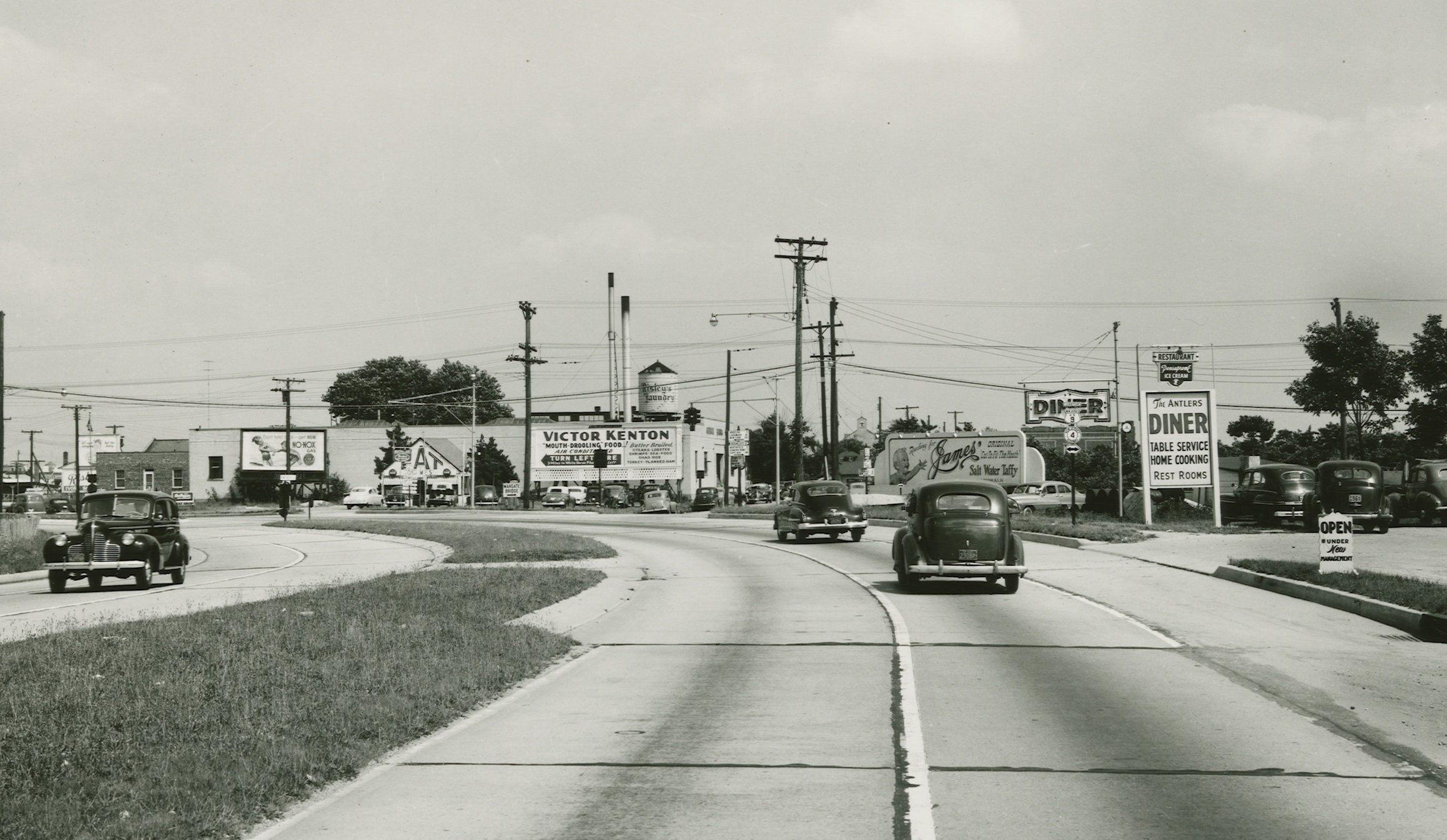
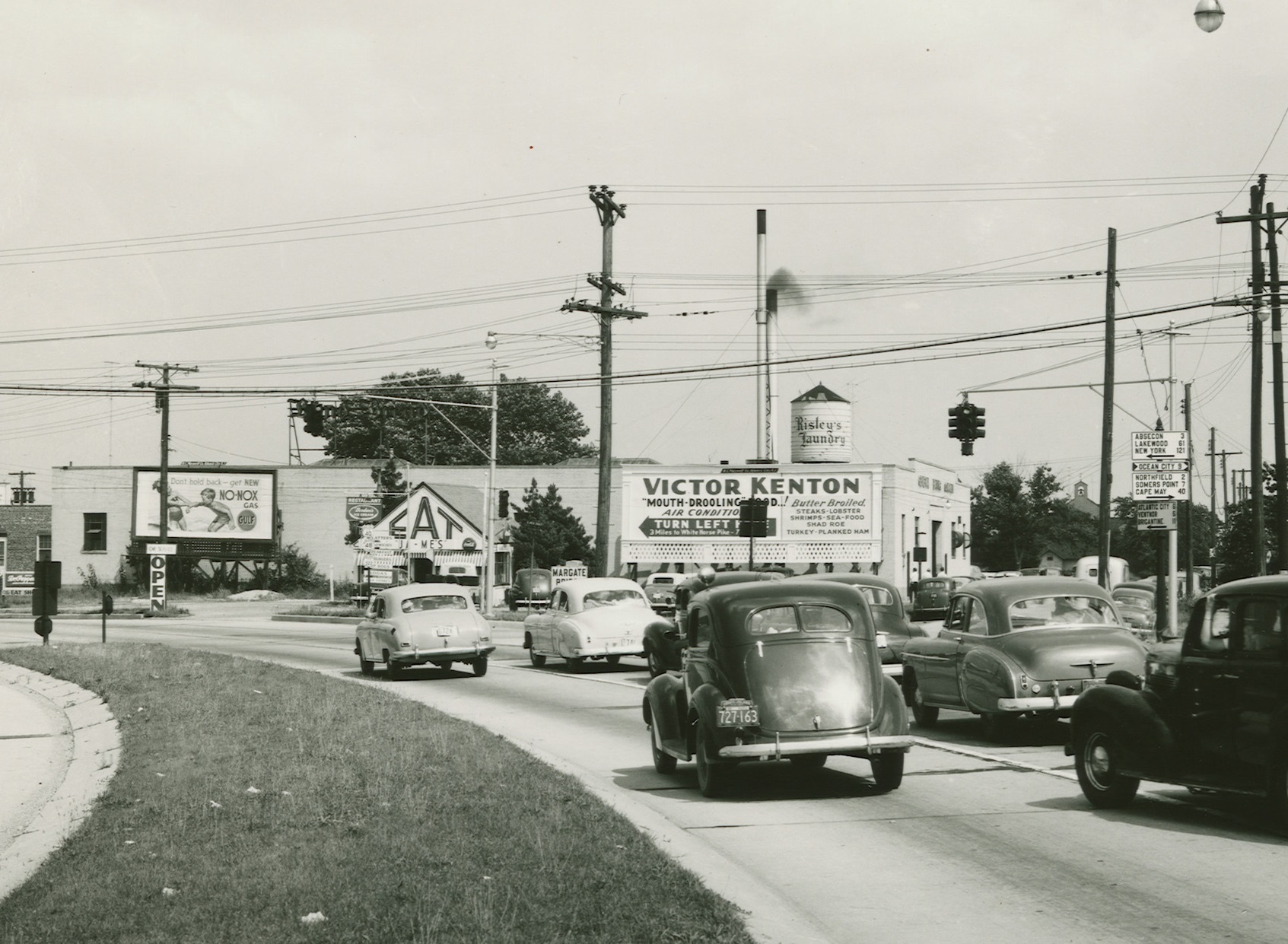
Just across the marsh from Atlantic City is the city of Pleasantville, certainly one of the first places to experience the headache of Jersey Shore traffic on summer weekends. These images show sectional Horni signals in 1950, along with some lovely cast aluminum highway shields and cast iron guidepost signs. The pendant section hanging from the 4-way cluster on the right appears to be an older, rodded Horni section.
Union County
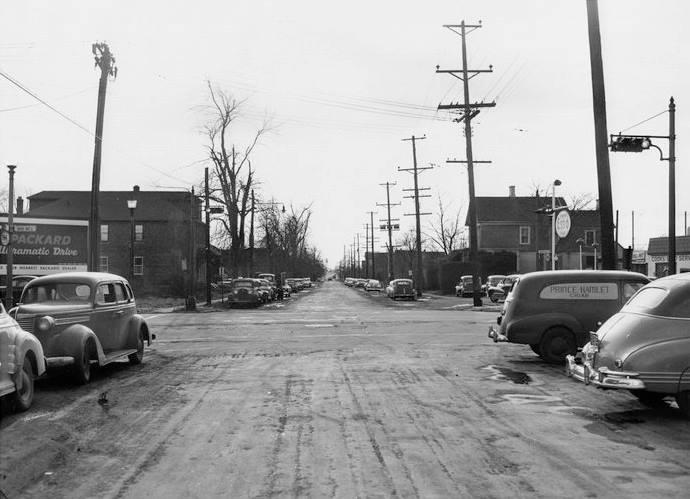
Short-arm horizontal mast signals in Linden. The indications are lit in different positions on the two lights. I’m not sure if this was some kind of error or not.
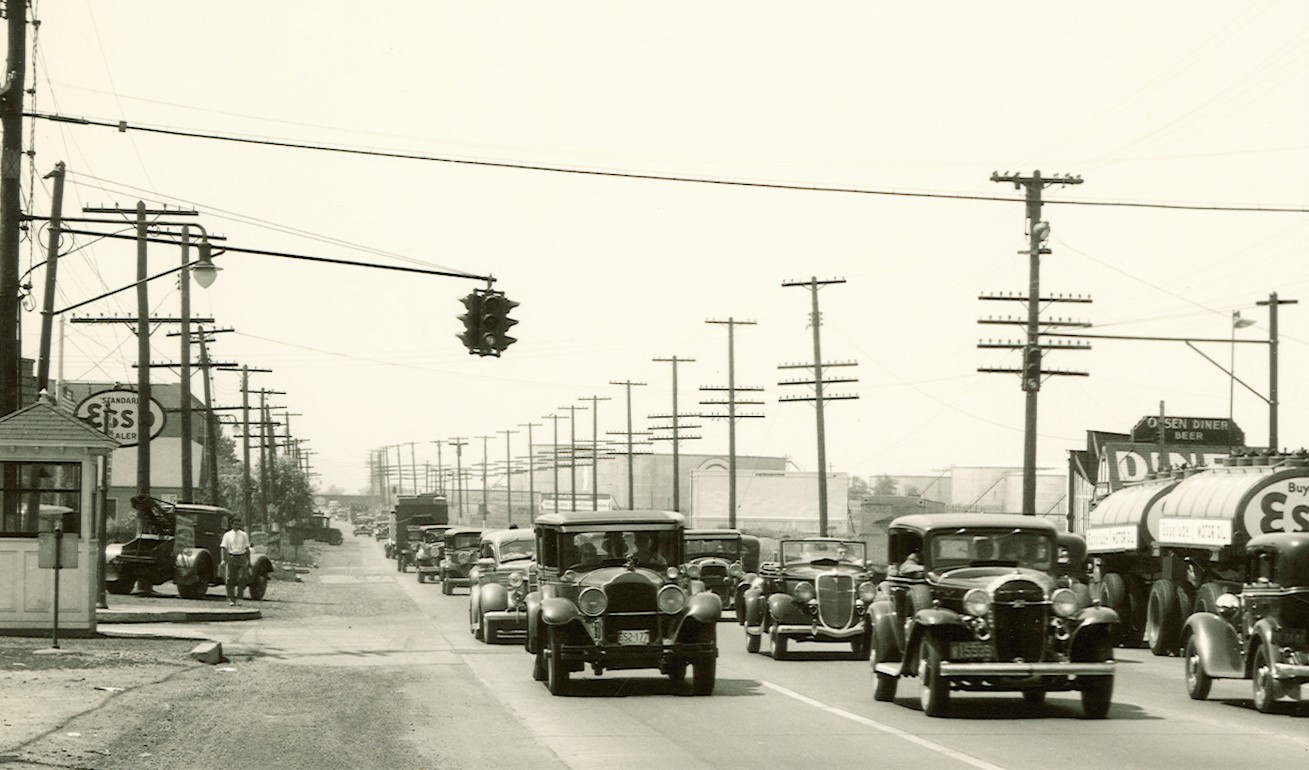
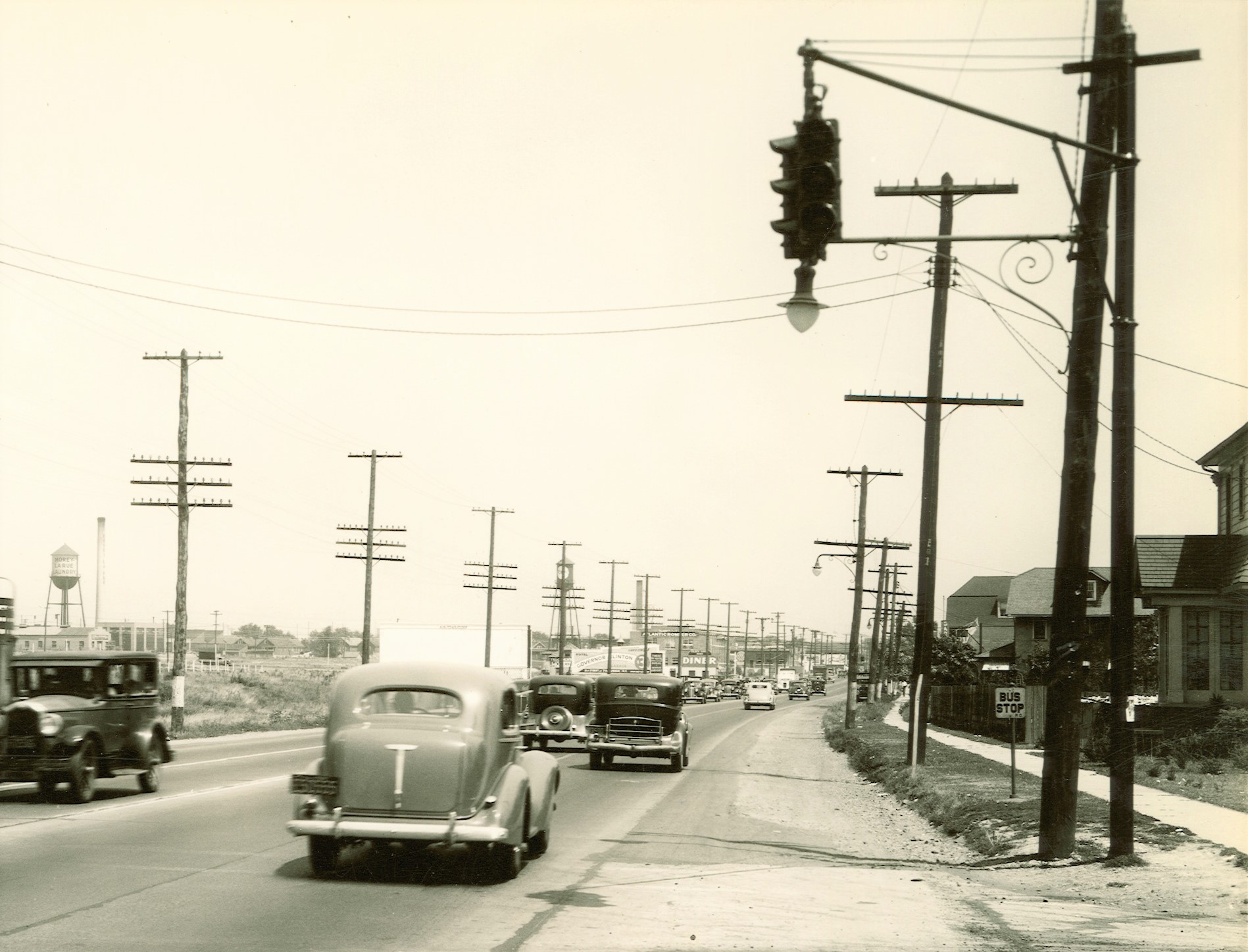
Traffic was already congested in the 1930s along US Routes 1 & 9. The two photos above, taken in Linden in 1936, show late ’20’s/early ’30s vintage solid-body Horni signals hung along the route.
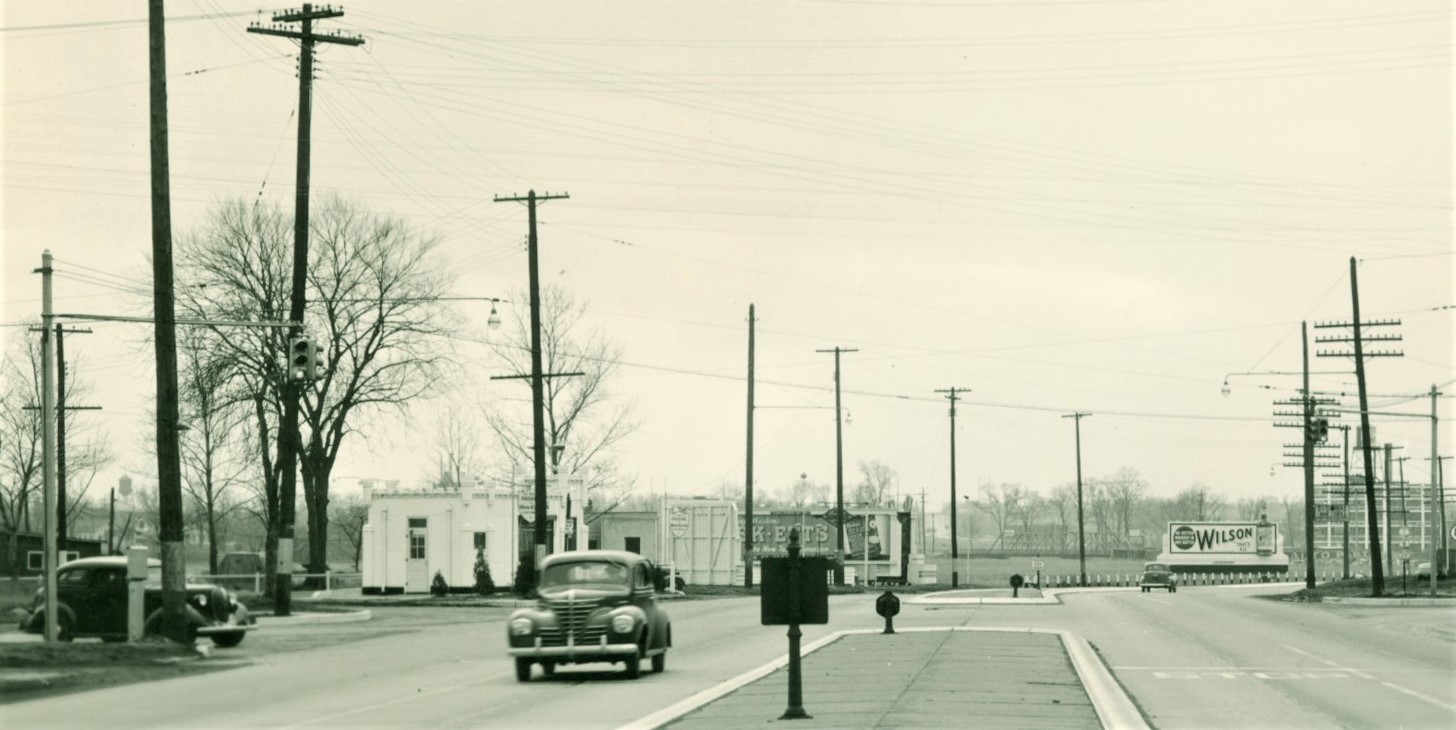
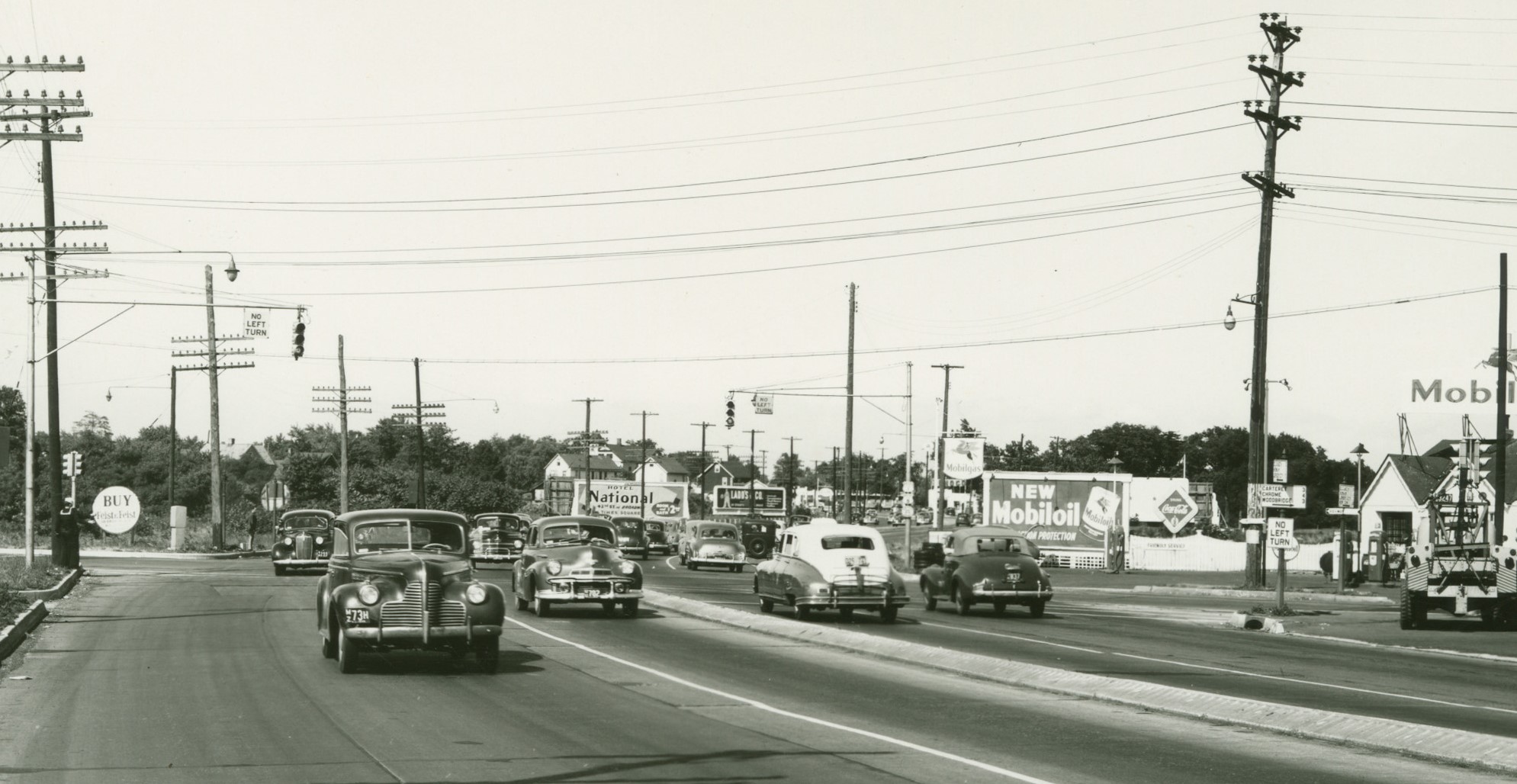
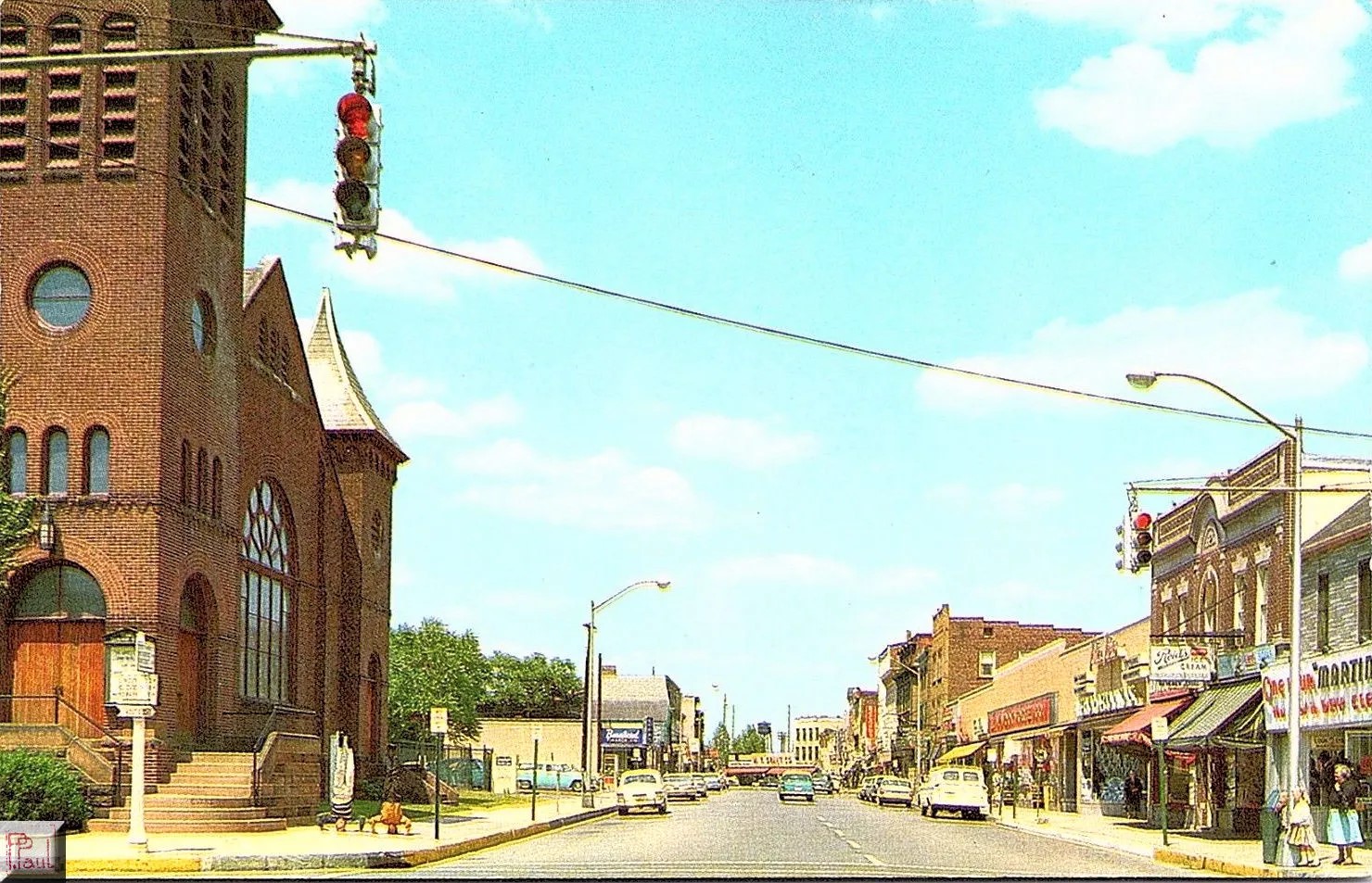
From Rahway, on the left, a pair of 3-way clusters of solid-body Hornis controls an intersection in the early 1940s. In the middle, Navy sailors hitchhike at a corner that has a mixture of sectional Horni and AGA/SSC signals in 1949. Notice that the cross street has pedestal-mounted signals, while the highway gets the masts. All signals on the left side of the highway are Hornis with tunnel visors, while all signals on the right are AGA/SSC signals with cutaway visors. On the right, two guys do a headstand to distract us from the silver sectional Horni signals and the unique guidepost sign downtown.
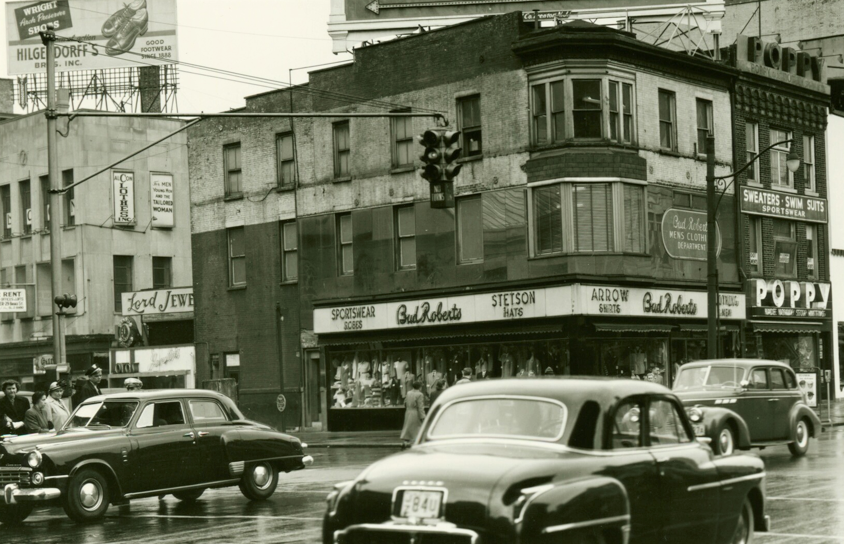
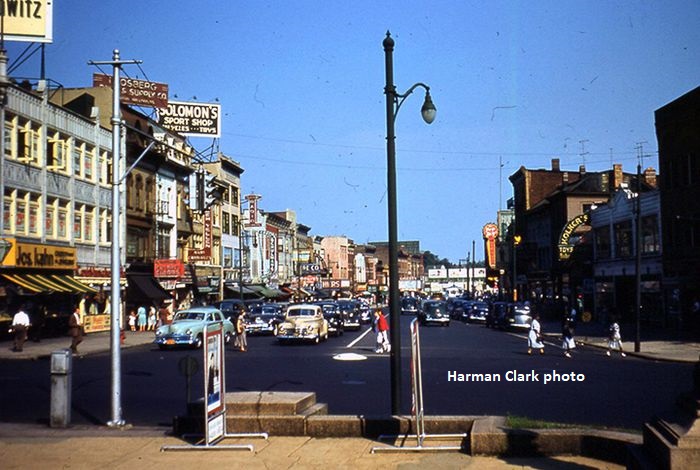
The city of Elizabeth was home to American Gas Accumulator and Signal Service Corp. The downtown views above are both circa 1950. The black and white photo shows an AGA with the pre-1931 circular doors and a NO TURNS box sign. The Kodachrome photo shows a beautiful 3-way cluster in silver.
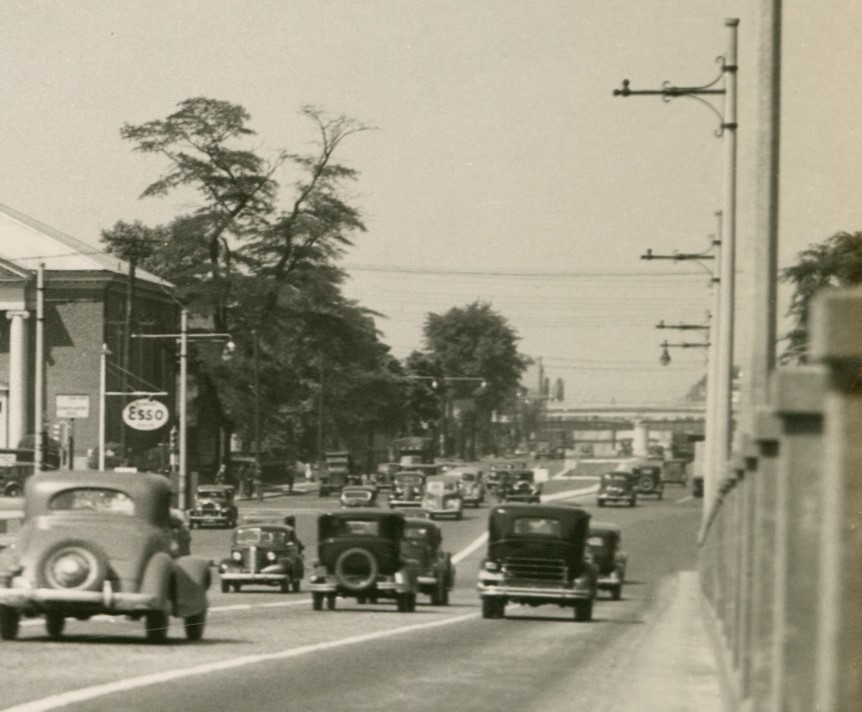
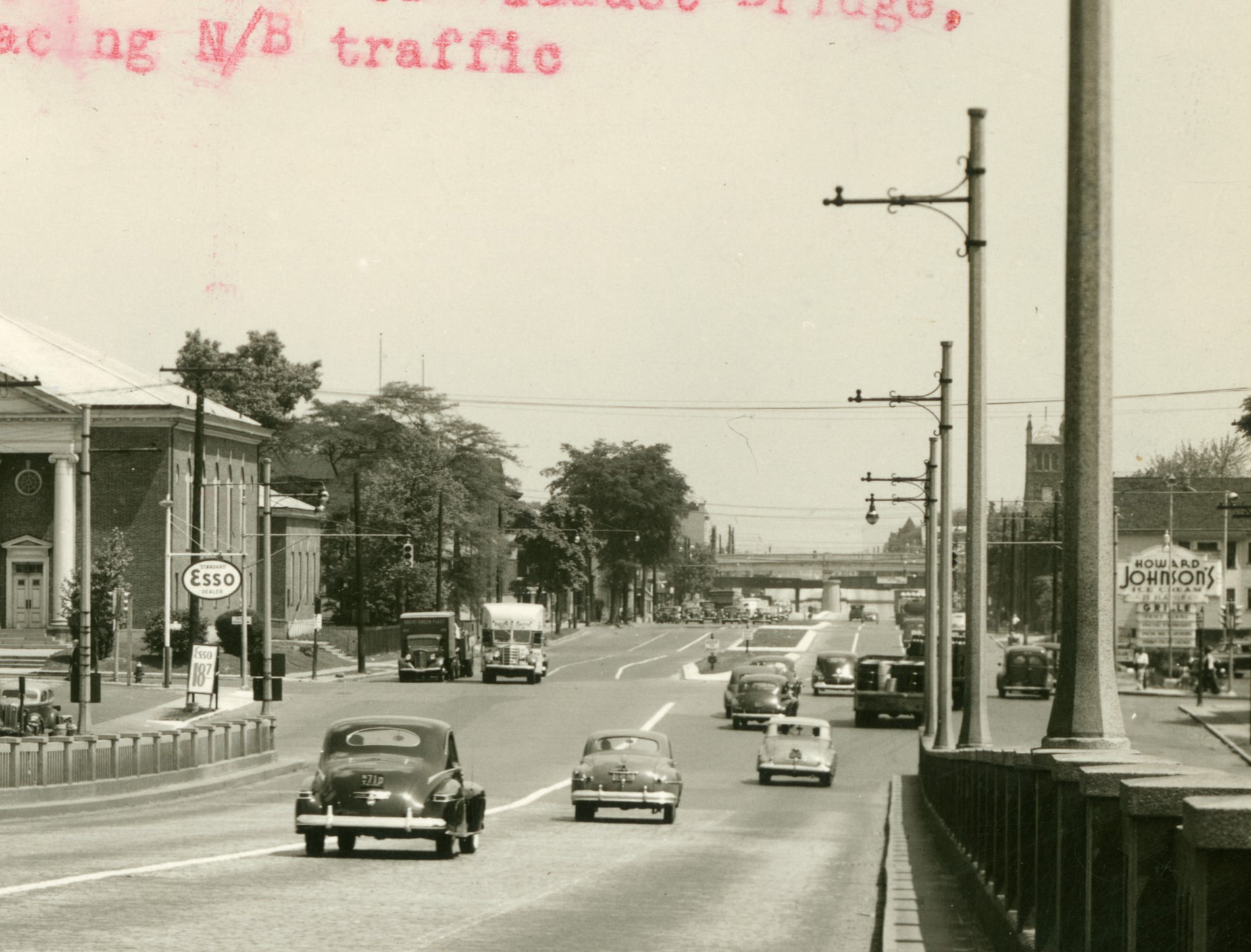
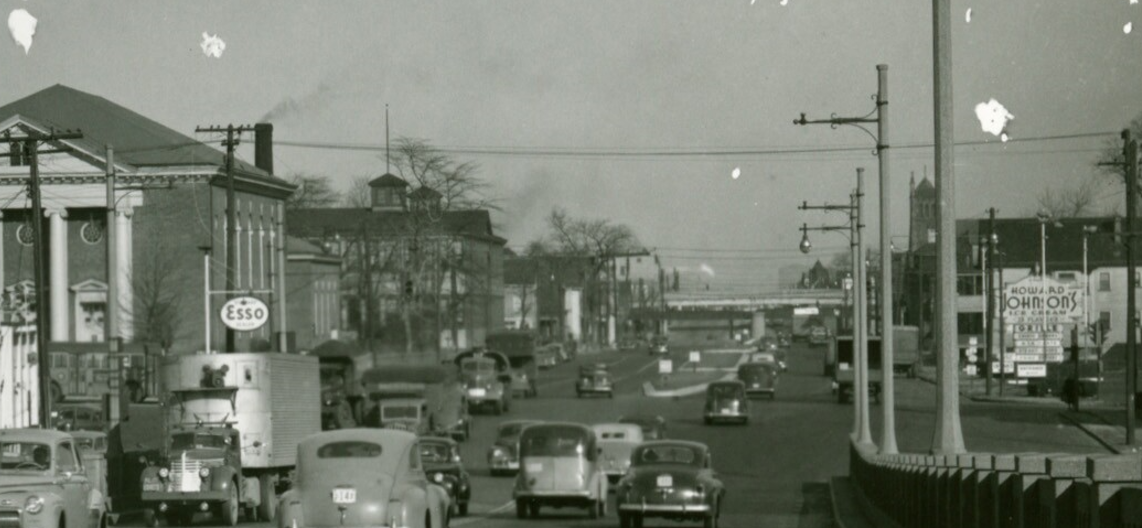
Above, we get a rare glimpse of the progression of signals at an Elizabeth intersection over several years. On the left, in 1938, pedestal-mounted, Elizabeth-manufactured AGA/SSC signals (look below the Esso sign) controlled the wide intersection at the base of the viaduct. In the center, by 1941, the highway had been upgraded to mast arms, while the cross-street still had the pedestals. While the mast arms were an improvement, it still looked pretty inadequate from a safety standpoint. On the right, by 1946, the signals had been repainted from silver to dark green.
New Brunswick
Monument Square
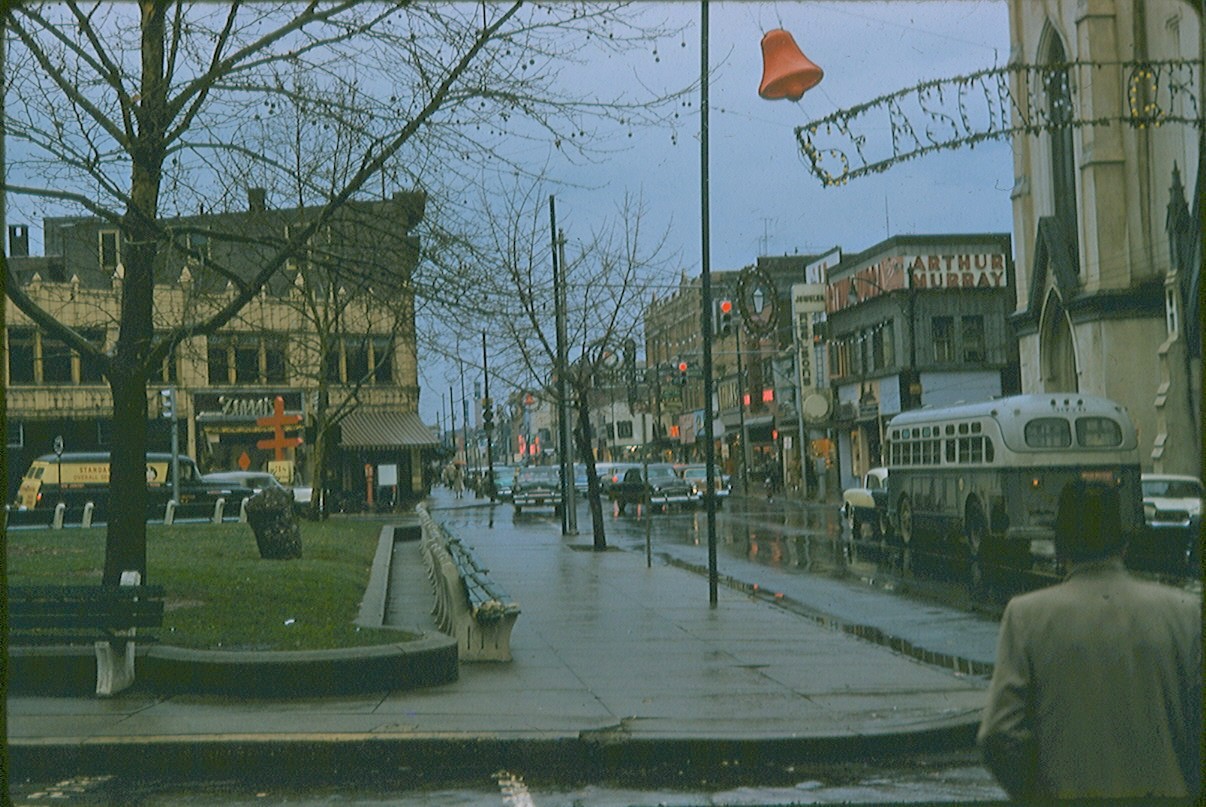

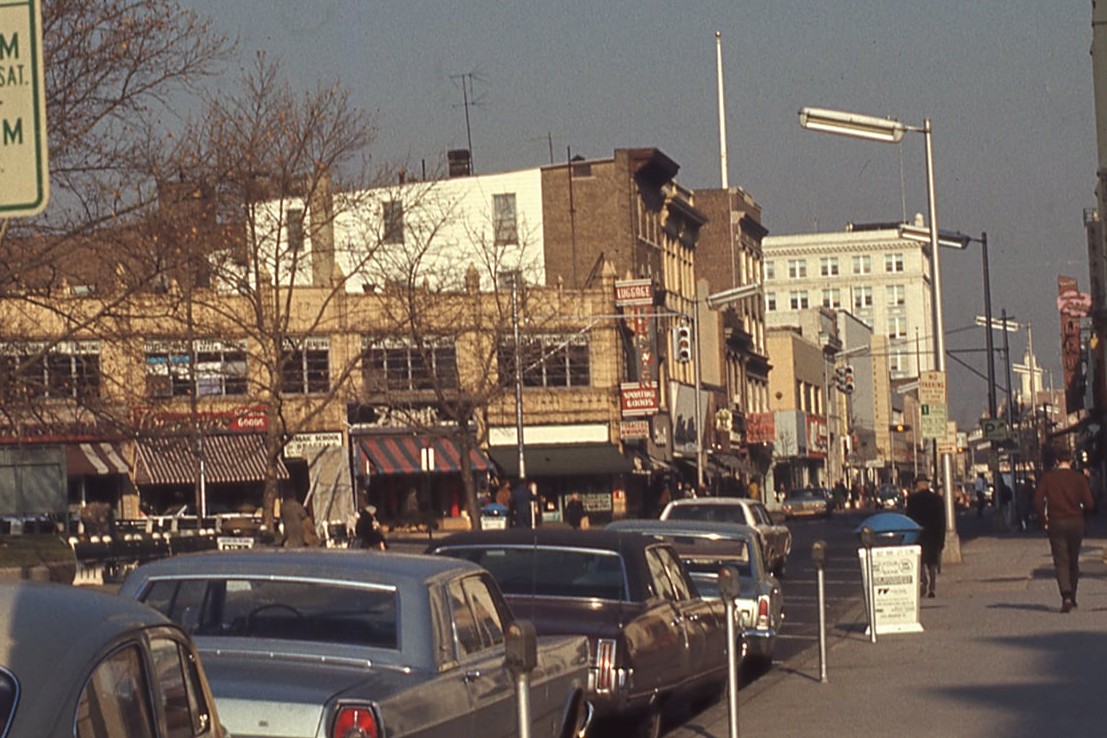
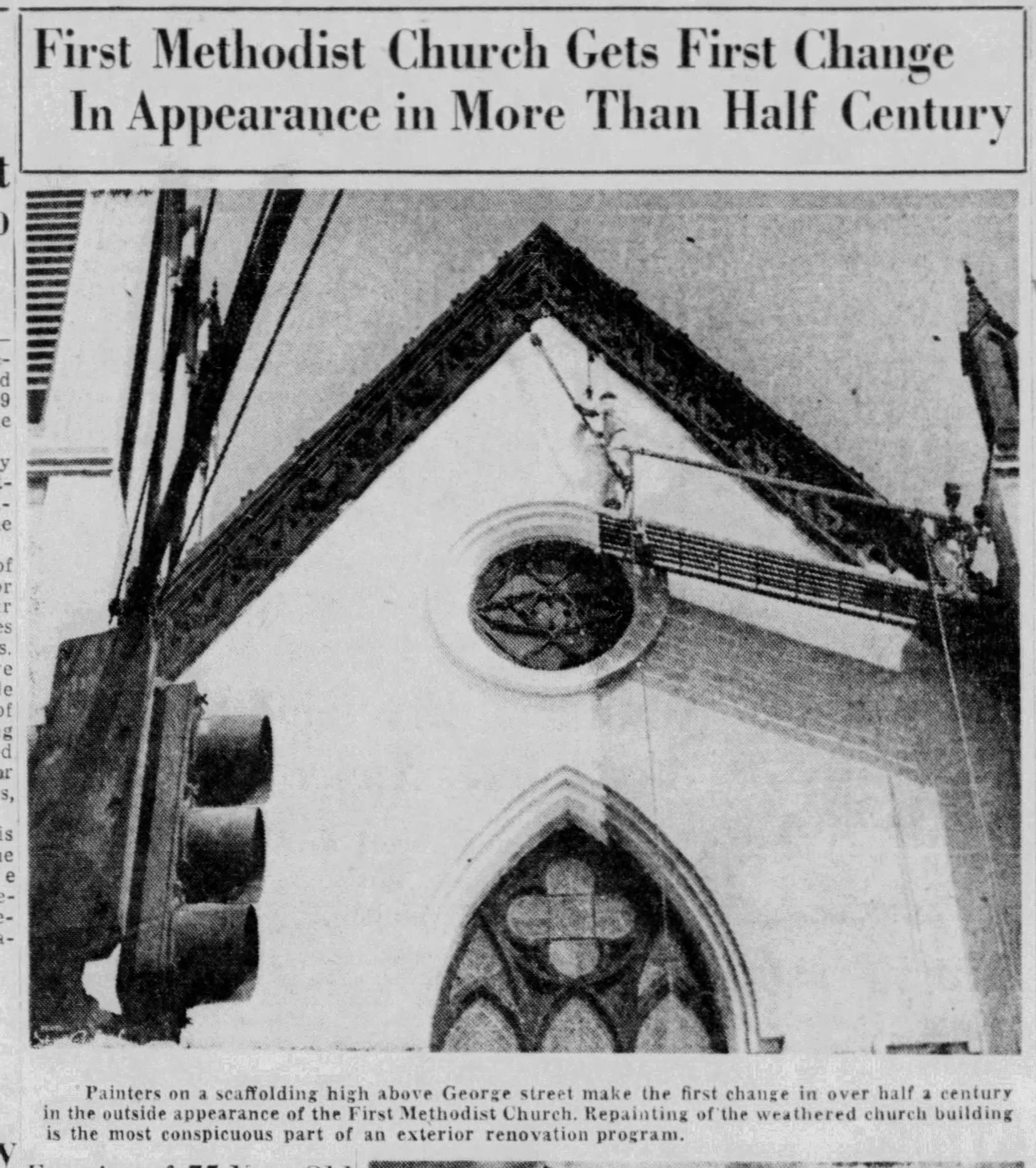
The corner of George and Livingston Streets, at Monument Square, was controlled by a very old (pre-1930) Crouse-Hinds porthole style set of signals that were hung from steel mast arms. Two 3-way clusters were originally set up, but one of those was converted to a 2-way cluster by blanking out the signal head facing Livingston Street. A signal head set up on a pedestal provided a second signal facing Livingston. The black and white newspaper closeup photo on the right shows that the blank-out configuration was done sometime before 1952.
Silver Crouse-Hinds Clusters

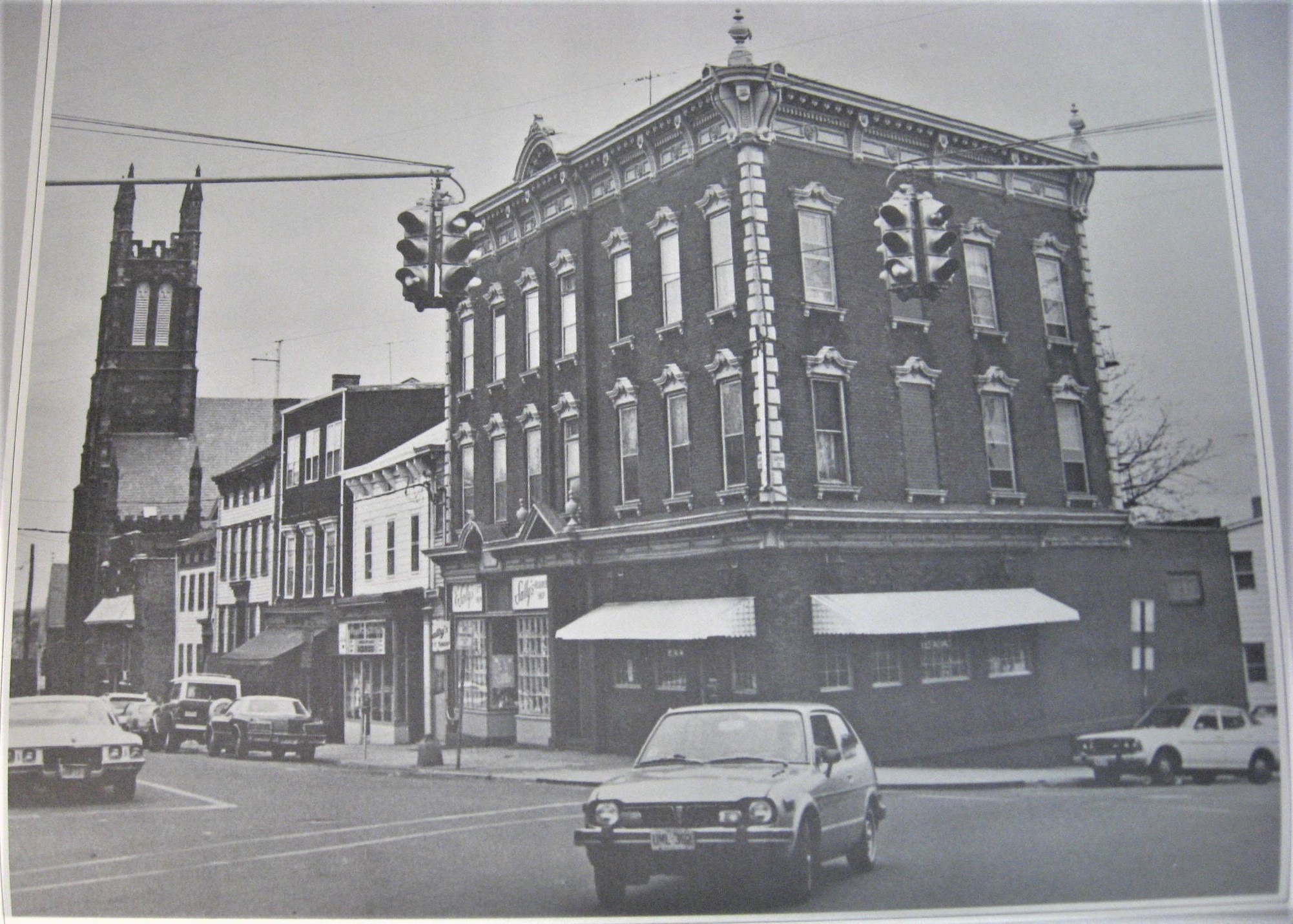
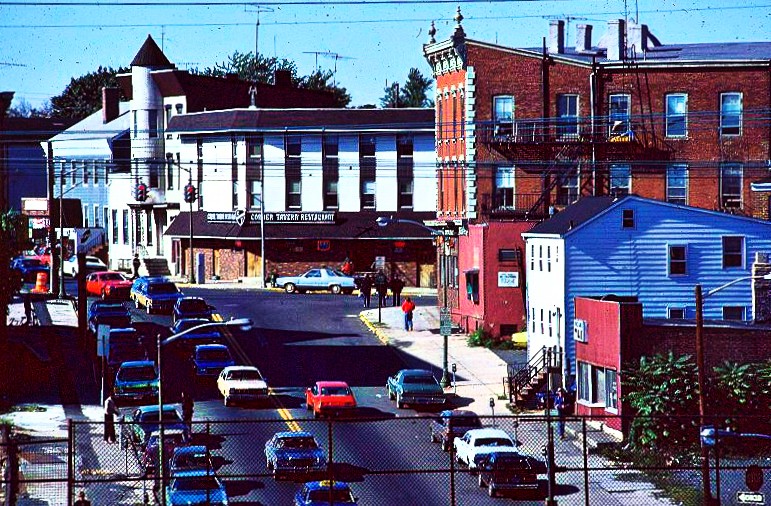
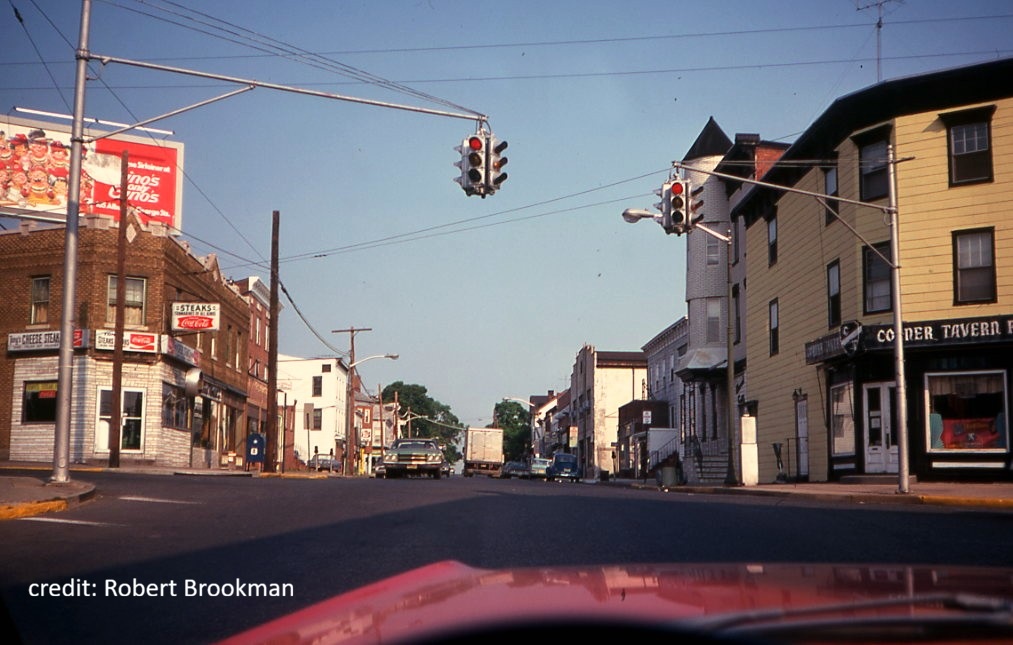
At least two New Brunswick intersections were installed with graceful Crouse-Hinds Type D clusters on steel masts. The postcard image on the left is from the corner of George and Patterson Streets in the heart of the shopping district. The images on the right show the corner of Easton Avenue and Somerset Street, from different perspectives. The black and white photo has good enough resolution to see the octagonal cast cluster hardware that Crouse-Hinds used for some time in the 1930s-40s. These photos are valuable reminders of just how much New Brunswick has changed in the last two generations. Anyone familiar with the city will know how different this section of Easton Avenue is now with all of the high-rises that have been built.
Newark
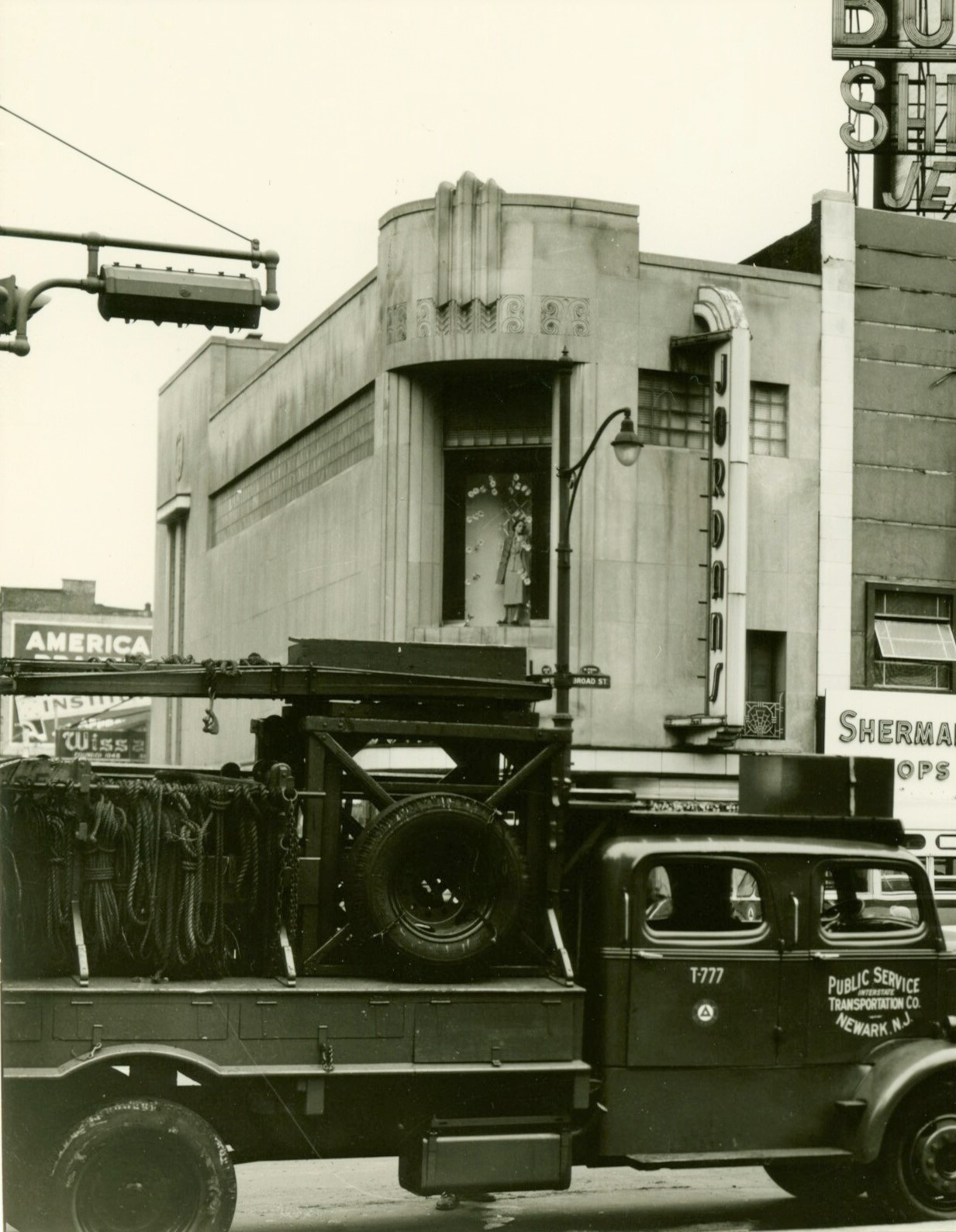
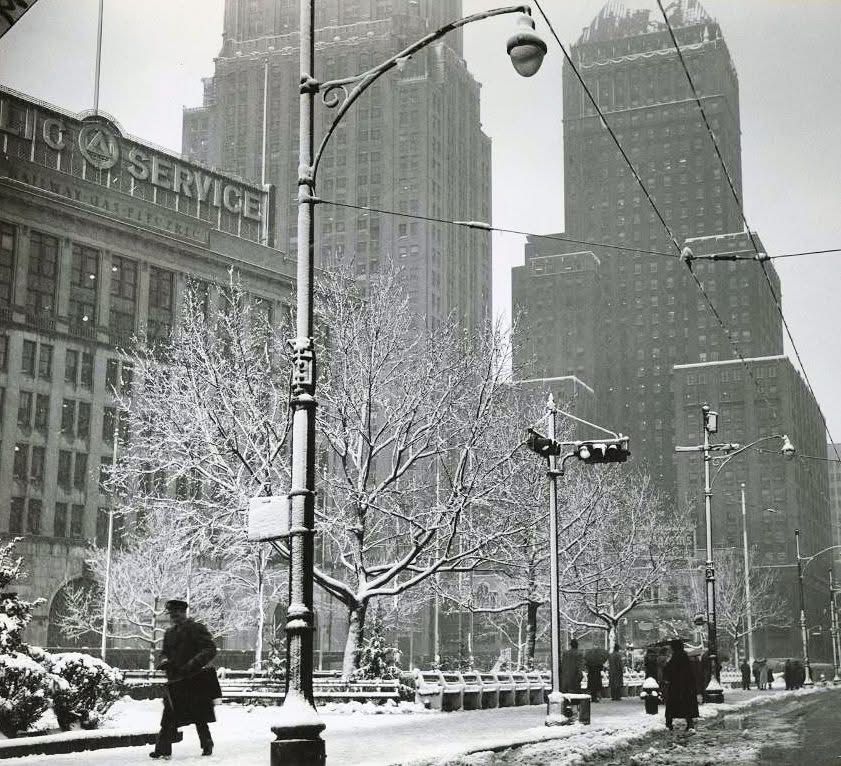
Lovely 1930s solid-cast GE Novaluxes on short horizontal masts grace the curb in front of the Public Service building in Newark in the above two photos (thank you, Chris McNally, for sending the snowy shot).
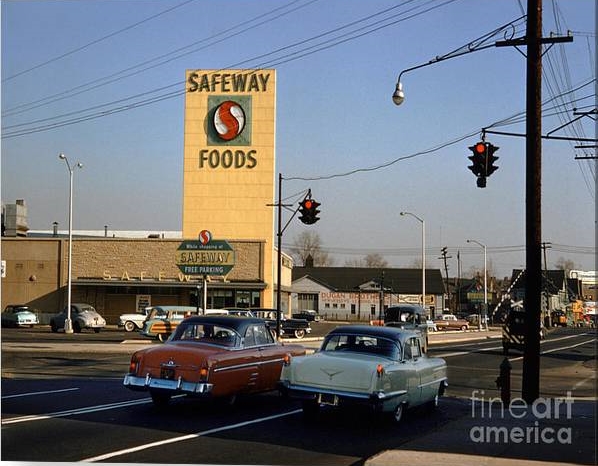
This photo by Wernher Krutein (supposedly taken in Newark, though I’m unsure) shows a lovely set of 4-way clusters, one with a pendant left arrow.
Mercer County
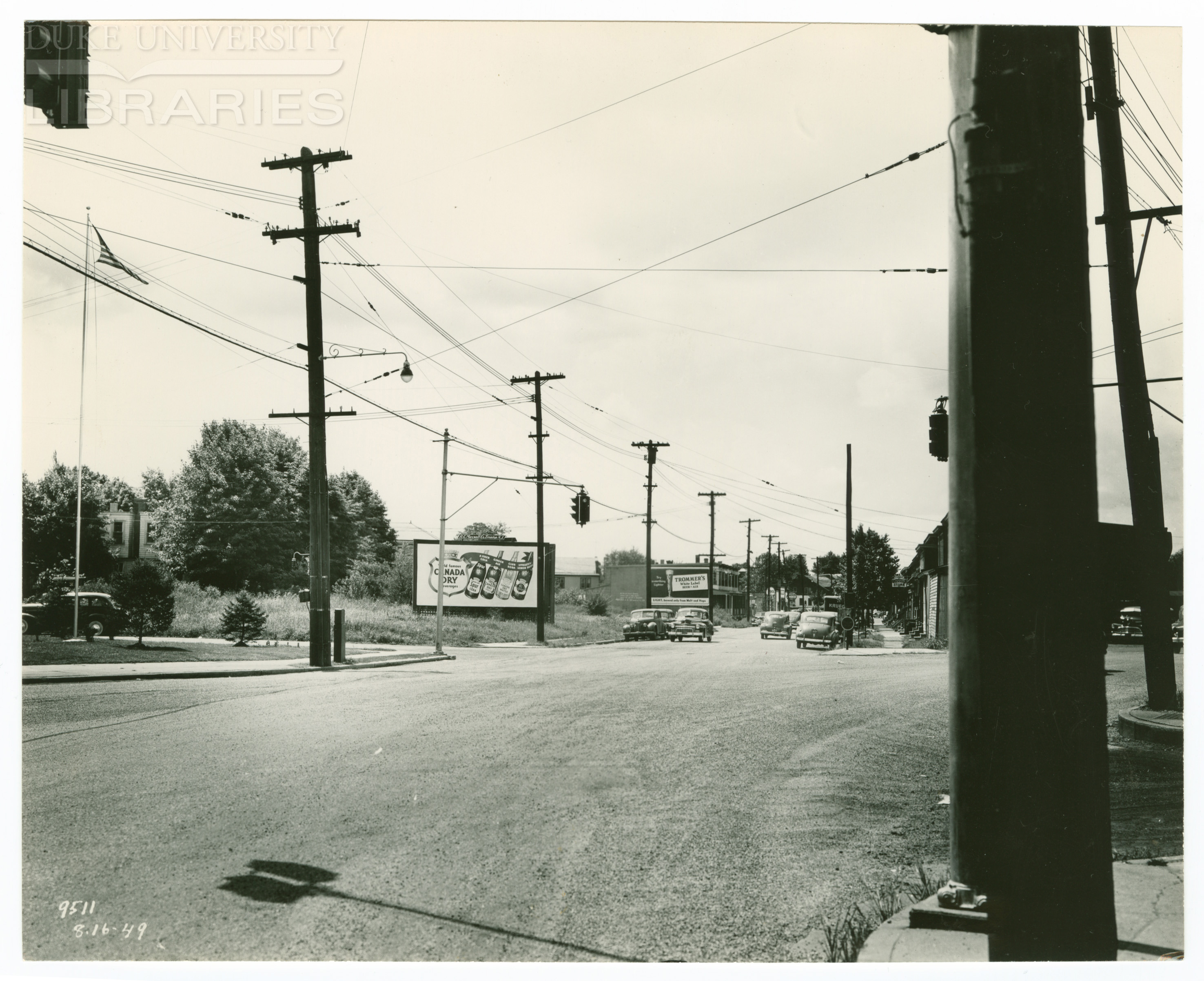
This 1949 image is of an intersection in Trenton that I wish I had more photos of. There are square louvered attachments on some of the signals to hide the indications from opposing lanes coming in a acute angles. An AGA cluster in the background looks like it has a louvered red indication facing the camera – notice the vertical striping when viewing the photo at full size. The signal cluster in the extreme upper left corner is made of sectional Horni signals. Note the decorative seashell covers on the pole base.
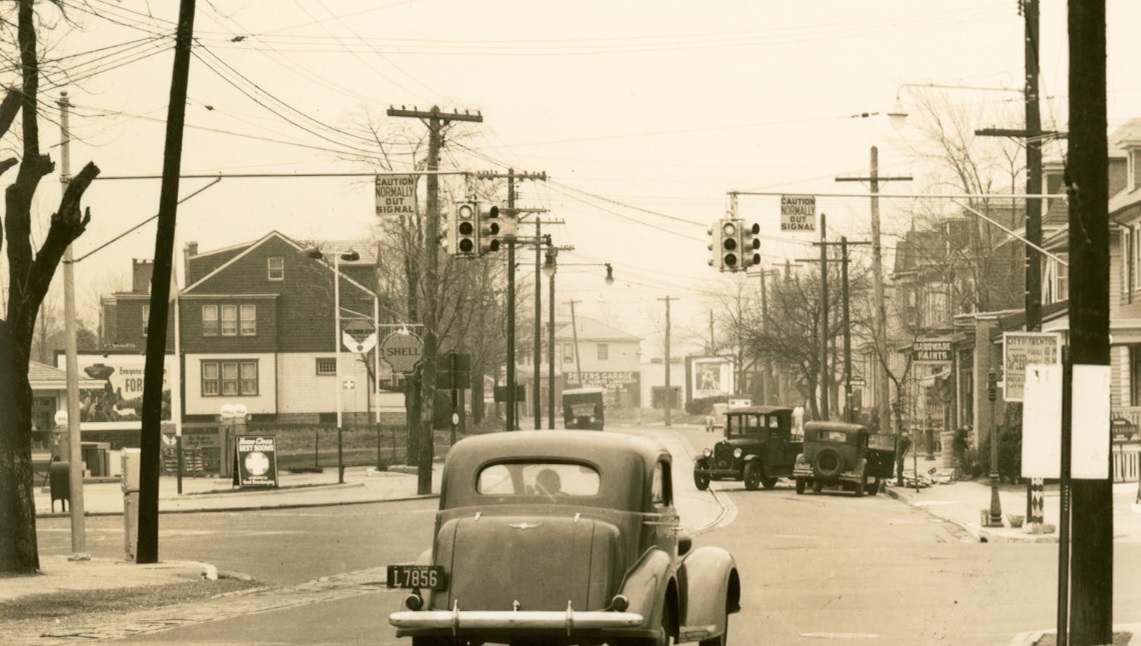
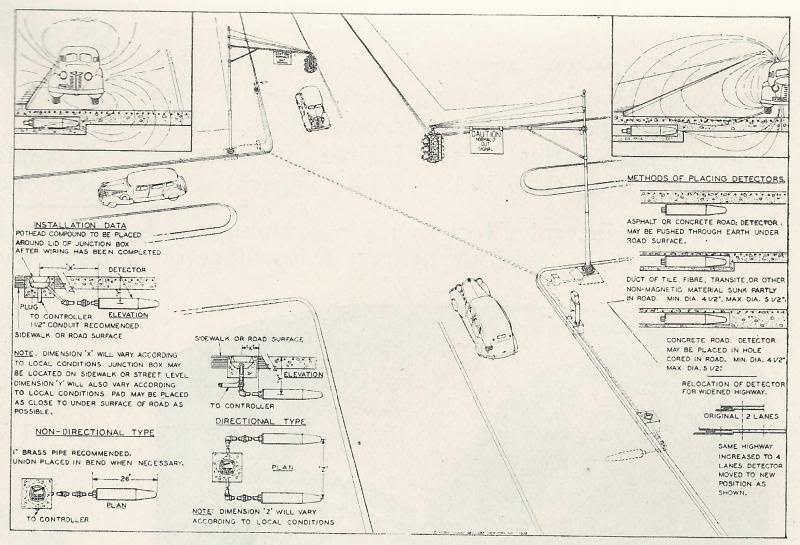
March 1939: An early installation of Horni sectional signal clusters at the corner of Pennington Road (old NJ Route 30) and Parkway Avenue on the Trenton-Ewing border. The illustration on the right, published by Horni Signal in the 1941 Municipal Index, appears to be the same intersection. My assumption, which may be wrong, is that the signs saying CAUTION NORMALLY OUT SIGNAL refers to the fact that these signals only operated at designated rush hour times, and were otherwise left dark or in flash mode (image courtesy of Mike Natale).
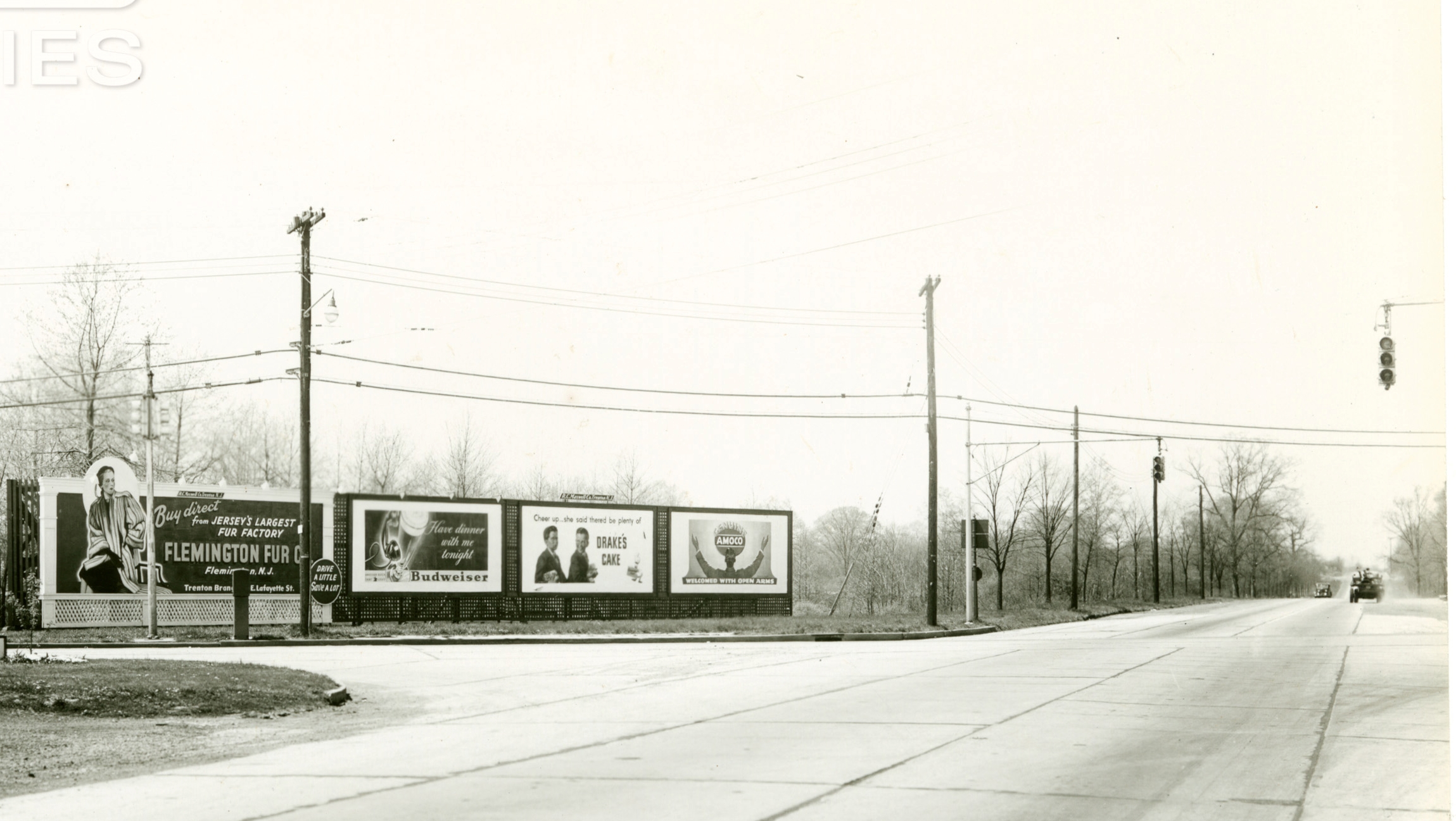
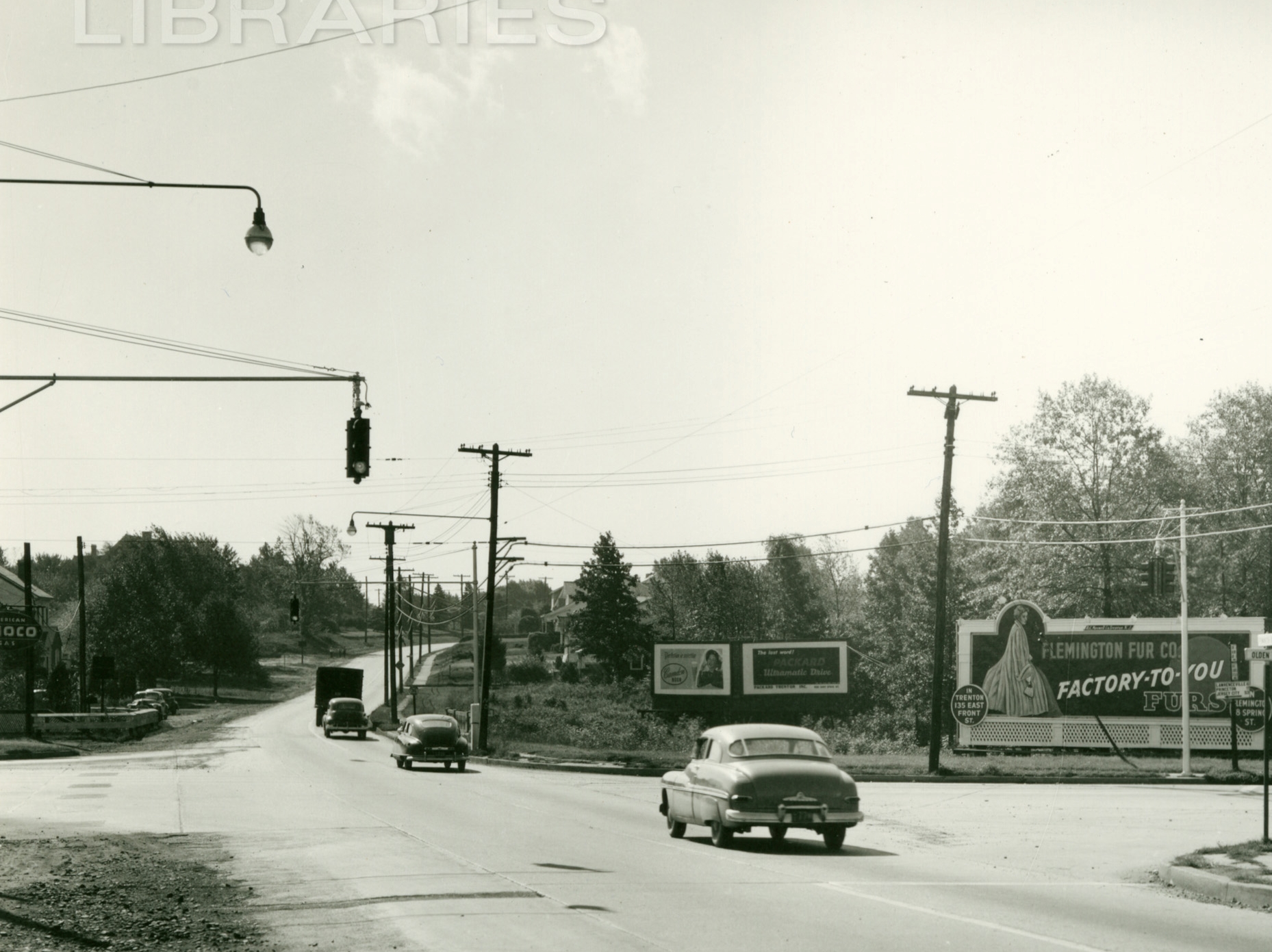
A mere 7/10ths of a mile to the north, at the corner of Pennington Rd and N. Olden Avenue in Ewing Township, these photos were taken three years apart, in 1946 (l.) and in 1949 (r.). I believe this signal was probably installed at the same time as those in the 1939 Trenton photo above. I’m not sure if this was a common pattern, but these lights, like those in the Elizabeth photo series above, were painted silver originally, and then repainted dark green sometime between the photos. Strangely, it appears that the controller boxes got the opposite treatment!
At the time of these photos, Pennington Road was NJ Route 30. In 1953, it was renumbered to NJ Route 69, and then, due to sign theft, it was renumbered again in 1967 to NJ Route 31.
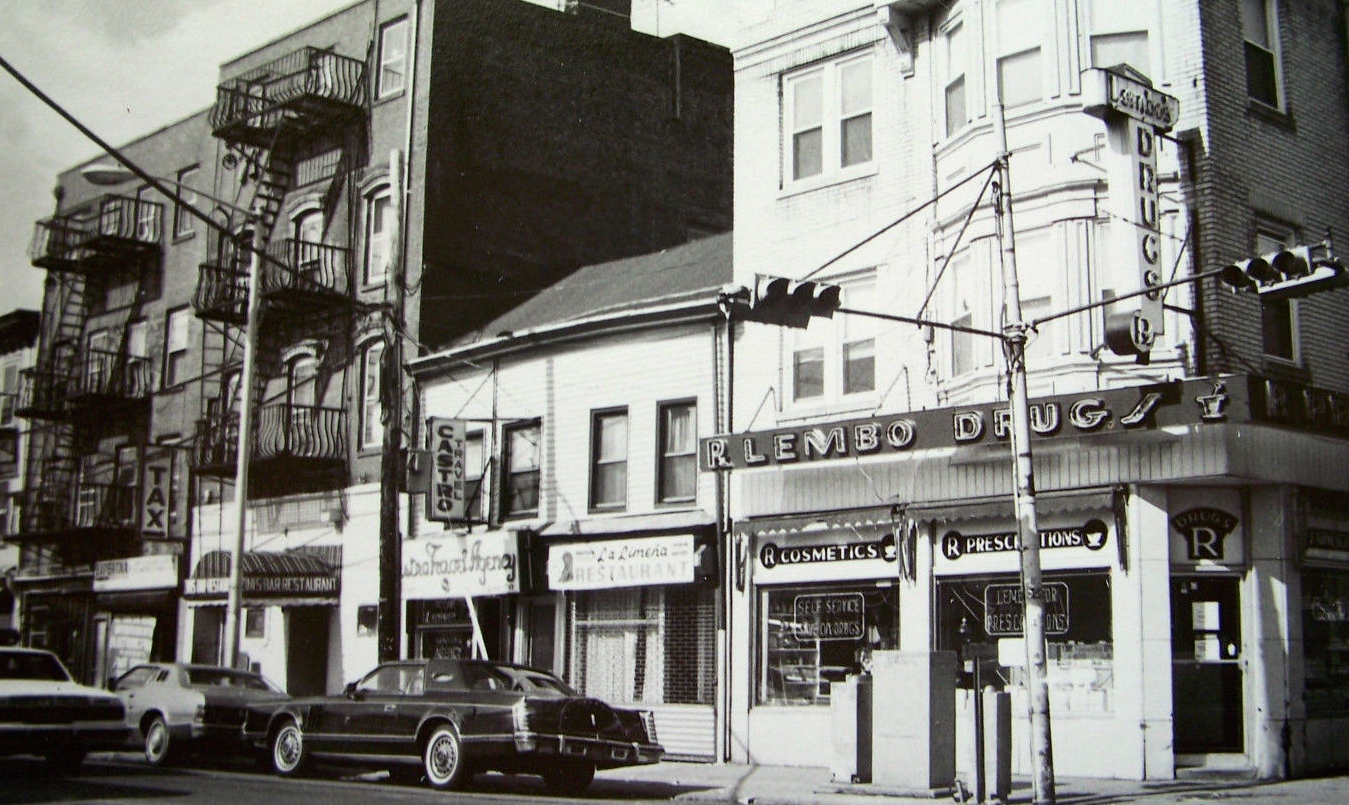
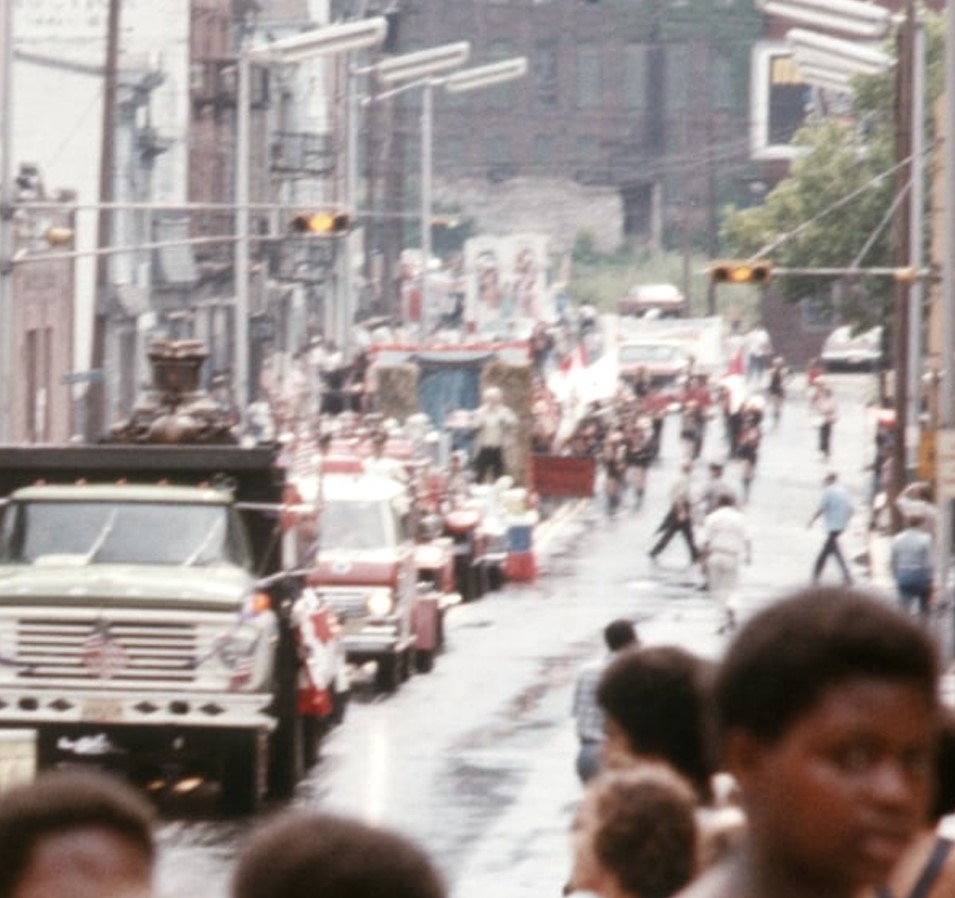
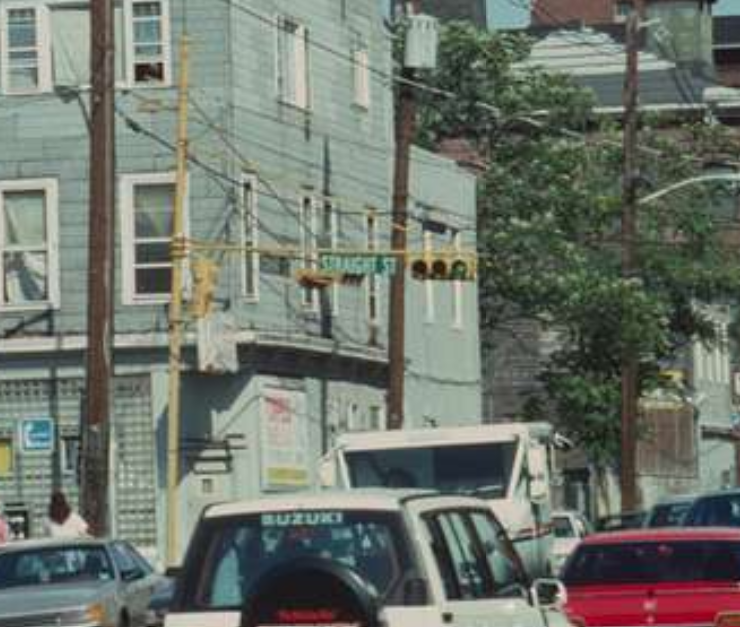
Paterson’s very old, horizontally-aligned signals employed a unique set up with relatively narrow-gauge hardware. I believe these were originally painted green, then repainted yellow by the 1960s. The first two photos in the above mosaic are of the same signals. One of the pairs is made by AGA/SSC.
I remember these very fondly from my youth. They were all gone by the end of the ’80s. In the early ’70s, my parents owned a small grocery store in south Paterson, and the signals next to our store were set up in this style. My brother, our cousin and I would stand on the corner like baseball umpires, calling drivers Safe! or Out!, depending whether they ran a red light or not.
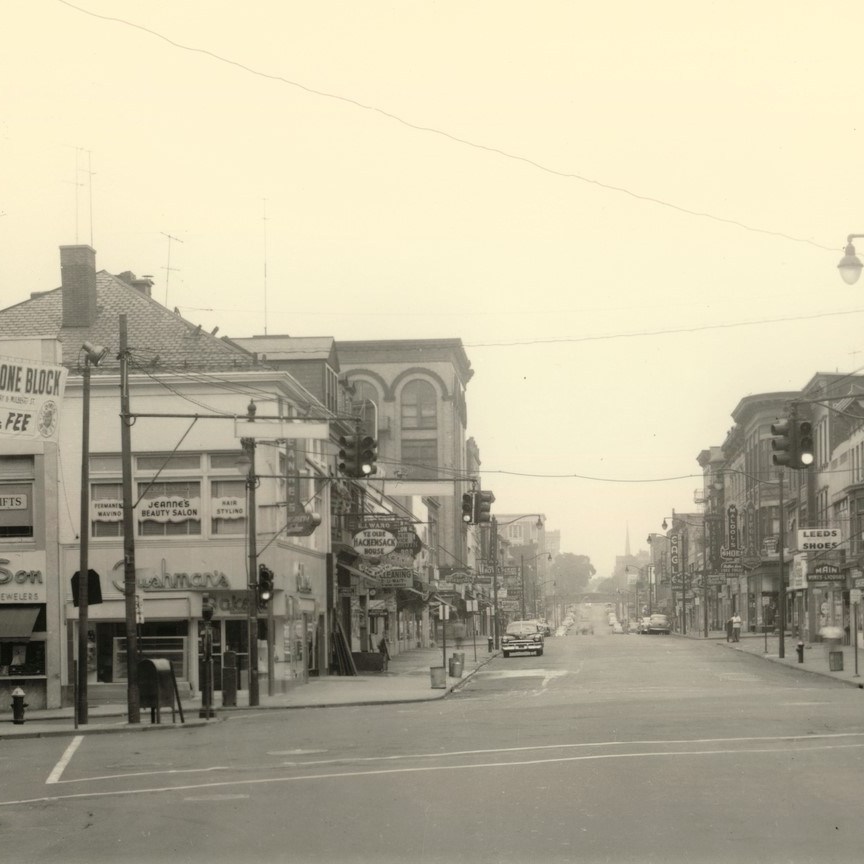
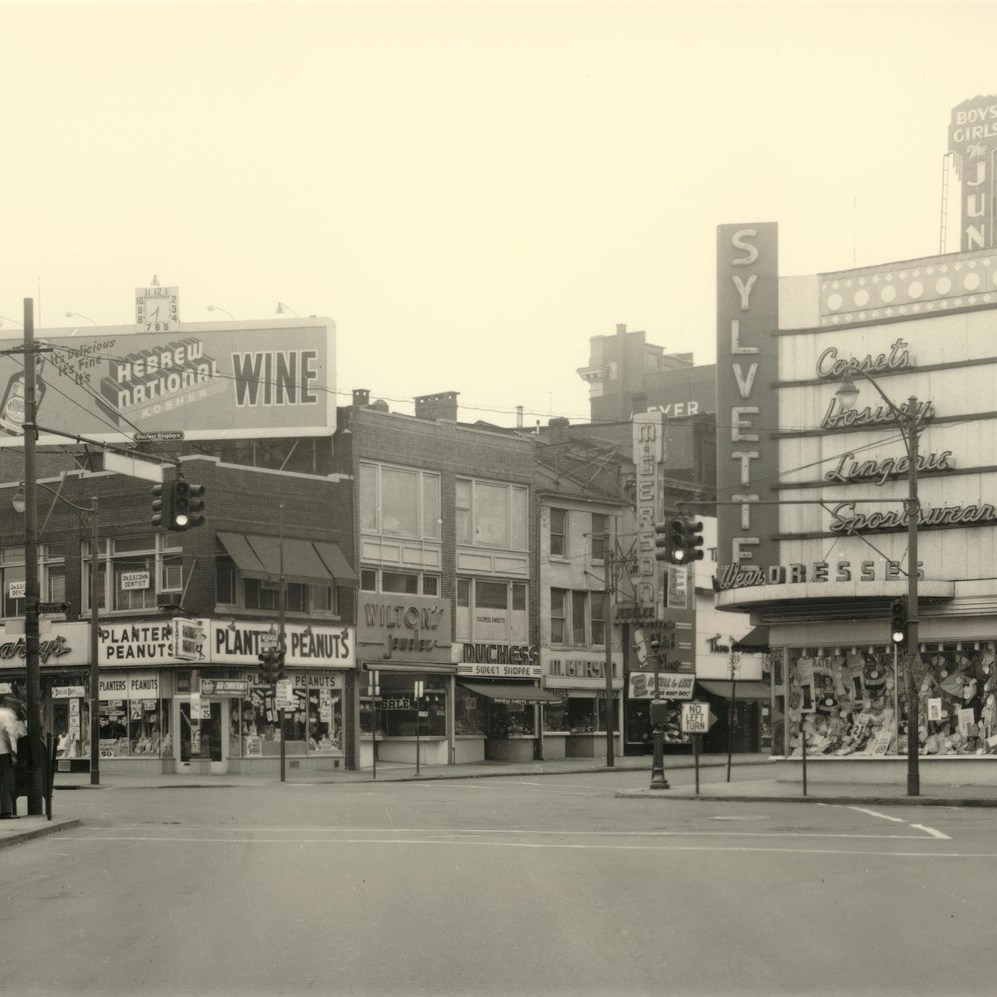

Three views of the 5-way intersection of Main, Broadway and W. Broadway in Paterson in the mid 1940s. The low-hung mast arm on the left side of the first image appears to be for pedestrians. Also interesting is the hardware fastening the side-of-pole heads in pairs with one clamp around the pole. These are Horni sectional signals.

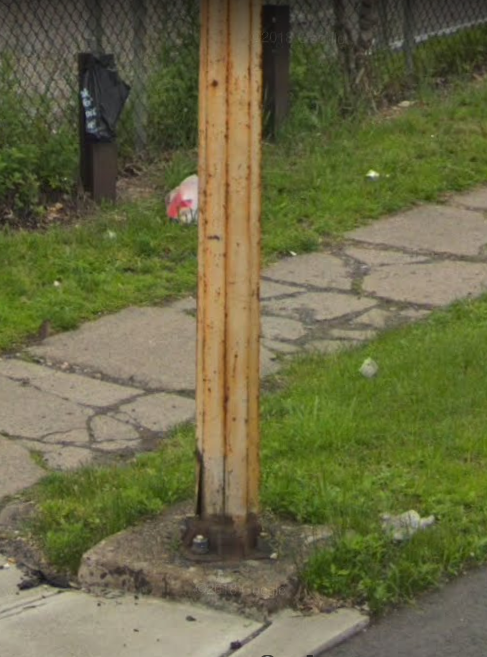
The oldest signal remaining in Paterson is this pair of GE “Groove Backs” from the late 1930s or 1940s, at 20th Ave and E 31st Street. Another steel pole and mast is across the street, but with newer signals.
A Blast from my Paterson Past
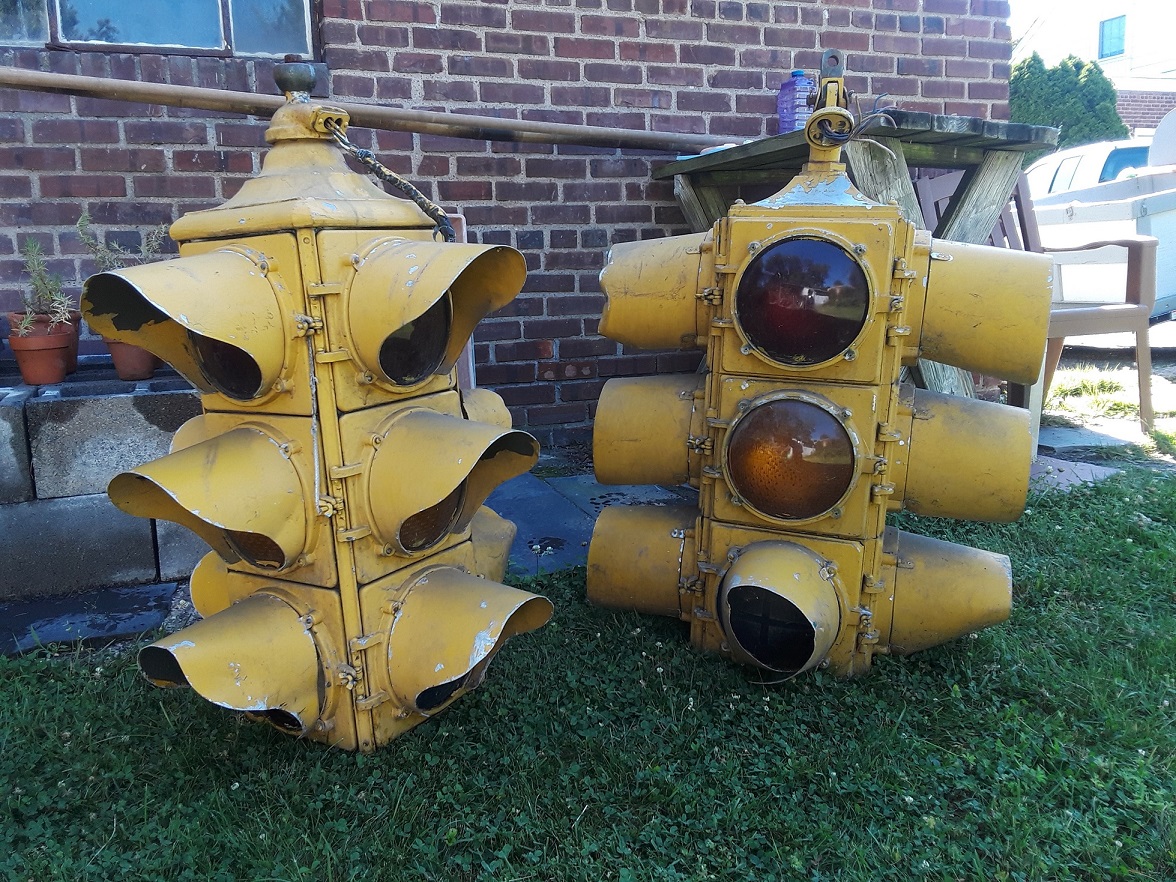
The two 4-way signals above, a GE (left) and a Marbelite, are not mine, but they have a special place in my heart, you could say. These signals served at the corner of Mill & Grand Streets in Paterson from the late 1940s until about 1974, when a car knocked the Marbelite down. The contractor who salvaged them kept them in storage for about 45 years, until 2019, when he put them on Craigslist. When I saw them, I was immediately taken back to my early childhood – and I was able to refresh the contractor’s memory as to the precise corner they came from.
The story goes that, in the old days, Paterson contractors traditionally used to pool the proceeds from the signals they scrapped and then spend that money on an annual celebration. This changed in the early 1970s when Mayor Thomas Rooney claimed that money for the city. Some of the contractors, including the one I met, snubbed this policy change by keeping some of the equipment they removed, rather than scrapping it. These lights were part of his stash.
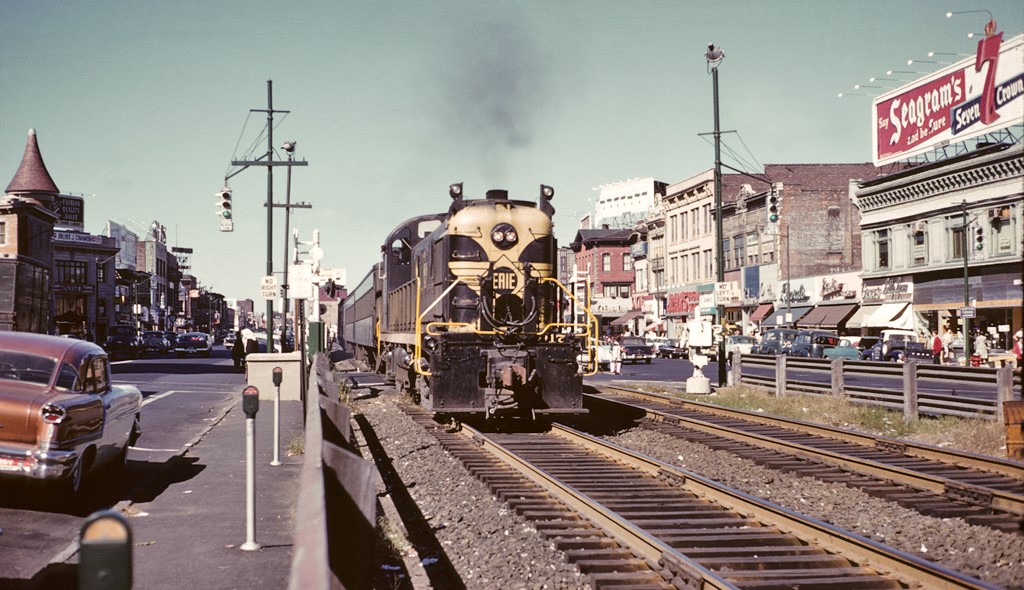
Downtown Passaic in the 1950s. These masts could be from the late ’20s. They were replaced in the early ’70s. Best I can tell, these appear to be Crouse-Hinds type D signals, as the edges look clean (i.e., no latches/hinges) and the blank sides are simply flat faces.
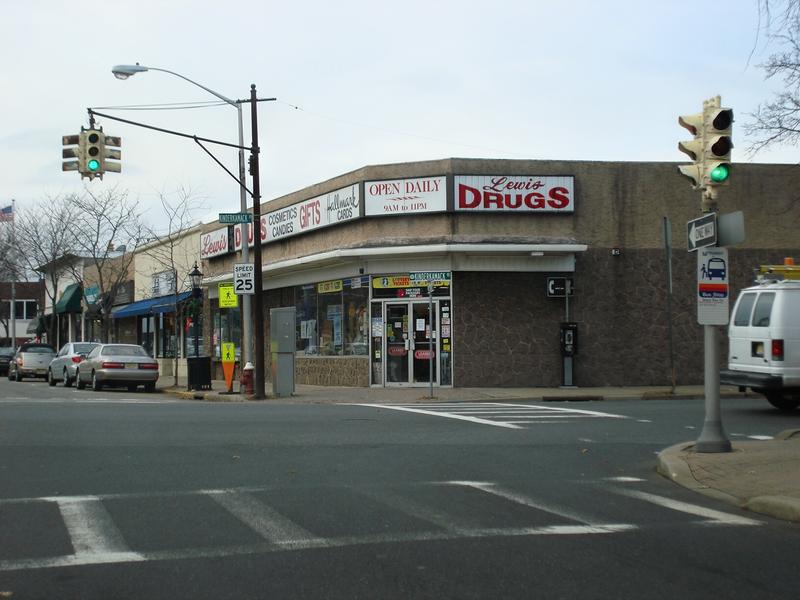
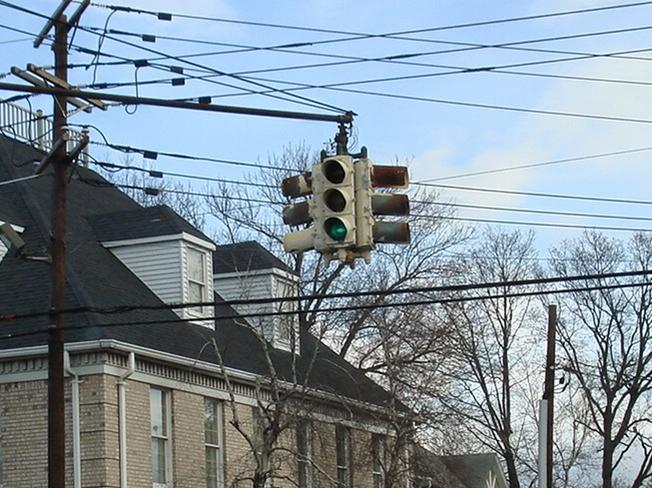
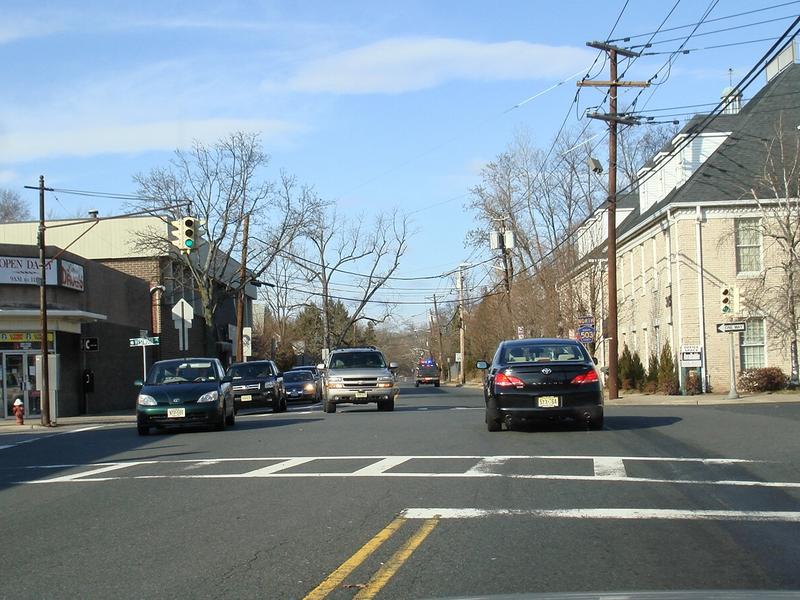

Westwood native Steven Conboy captured the above images of this lovely 1930s-40s Eaglelux 4-way cluster gracing the center of his boyhood town. As widely popular as Eagle Signal equipment has been across the country, it was always less common in New Jersey, so this is an unusual sight. The pedestal signals look like GEs, probably added to the corner in the early ’50s.
An old-time signal (not sure of the make) overhead at an old-time parade in or near Medford. Anyone recognize that signal’s manufacturer?

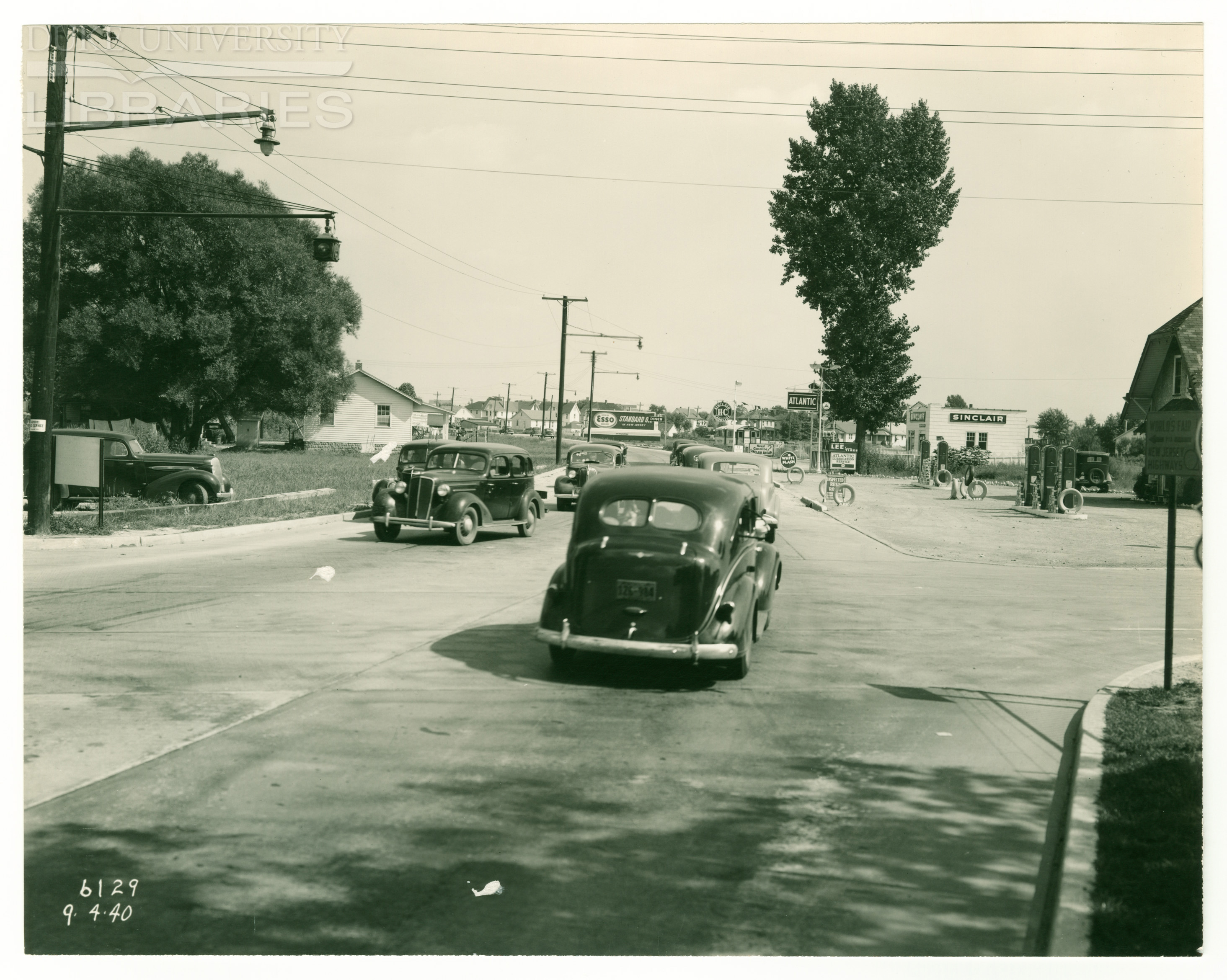
Look closely for the Crouse-Hinds porthole-style blinker light in this 1940 photo from Pennsville.
Banner photo: One of my snapshots of old signals in service: a horizontal guy-wire mast signal at one of the GSP overpasses in Bloomfield.
 Garden State Signals
